


On this route
November is the month most people mean when they say they want to see Japan in autumn, and it is also the month when the colour is hardest to pin to a date. The peak runs from the north and the mountains in October down to Tokyo and Kyoto in late November and early December, it shifts by a week or more from year to year, and the two forecasting agencies revise their dates monthly through the season. Plan around a window and a region, not a day and a garden, and November delivers.
The short answer for 2026: the first 2 September forecast from the Japan Meteorological Corporation expects a warm autumn and a season that is normal to later than normal, with Tokyo's maples around 29 November and Kyoto's city reference trees around 11 December. Weathernews puts Arashiyama around 24 November and Nikko's Irohazaka road around 31 October. That makes the middle two weeks of November the window for Hakone plus the first Kyoto colour, the last ten days the window for Kyoto and Tokyo at their best, and the first week the one for Nikko and the Japanese Alps. If you want the route that fits those windows, the 14-day November itinerary is built on them; this guide explains the timing itself.
How autumn colour moves across Japan
Leaves turn when nights get cold, so the season starts in Hokkaido and on the high peaks in late September and works south and downhill. Hokkaido and northern Tohoku are largely over by early November. The Japanese Alps, Nikko's upper valleys and Hakone's highest stations peak in late October and the first days of November. Tokyo, Osaka, Nagoya and Kyoto at street level peak in the last week of November and the first half of December. JNTO's own guide gives the national picture as "from mid-November to early December, the trees turn vivid hues of red, orange, and yellow", which is right for the big cities and two to four weeks late for the mountains.
Two forecasters publish dates. The Japan Meteorological Corporation (JMC) issues a first forecast in early September for the major cities and about 700 named spots, then updates it roughly monthly. Weathernews publishes its own spot forecasts a few days later. Both give a "peak" date and a comparison with the average year; both are regularly a week out at the first issue. A useful rule: the colour at any one spot lasts two to three weeks, with the best week centred on the forecast date, so a plan that places you in a region for three or four days across the forecast has a good chance even when the date slips.
One trap in the city forecasts: the JMC's date for "Kyoto" refers to the reference maple at the city's weather observation site, which turns late. The famous temple gardens in the eastern hills and Arashiyama sit higher and cooler and usually peak two to three weeks earlier. That is why the Kyoto city date can read "11 December" while Arashiyama reads "24 November"; both are right.
The 2026 forecast, region by region
| Region or spot | 2026 forecast peak | Typical timing | Source |
|---|---|---|---|
| Nikko, Irohazaka (Tochigi) | around 31 October | late October | Weathernews, 4 Sep 2026 |
| Kamikochi (Nagano) | around 21 October | mid-October | Weathernews, 4 Sep 2026 |
| Nagano city, maples | 21 November (9 days late) | mid-November | JMC, 2 Sep 2026 |
| Takayama town | no spot forecast read | late October to mid-November; Shirakawa-go mid-October to early November | Regional tourism guides; JMA normals |
| Hakone: Owakudani, Lake Ashi | no spot forecast read | late October to mid-November | Odakyu Hakonenavi |
| Hakone: Sengokuhara, Gora, Sounzan | no spot forecast read | early to mid-November | Odakyu Hakonenavi |
| Hakone-Yumoto | no spot forecast read | mid to late November | Odakyu Hakonenavi |
| Mount Takao (Tokyo) | around 22 November | mid-November | Weathernews, 4 Sep 2026 |
| Tokyo: ginkgo | 26 November (normal) | late November | JMC, 2 Sep 2026 |
| Tokyo: maples | 29 November (normal) | late November to early December | JMC, 2 Sep 2026 |
| Kanazawa: maples | 30 November (normal) | late November | JMC, 2 Sep 2026 |
| Nagoya: ginkgo / maples | 17 November / 2 December | late November | JMC, 2 Sep 2026 |
| Kyoto: Arashiyama | around 24 November (late) | mid to late November | Weathernews, 4 Sep 2026 |
| Kyoto: city reference trees | 27 November ginkgo / 11 December maples | late November to early December | JMC, 2 Sep 2026 |
| Osaka: ginkgo / maples | 24 November / 4 December | late November to early December | JMC, 2 Sep 2026 |
Read the table as ranges. The JMC and Weathernews first forecasts have "later than normal" written across most of the map because of a warm autumn; if October turns cold, the dates move earlier again in the next issue. Check both forecasters a week before you fly and adjust the order of your days, not the trip.
Early, mid or late November
1 to 10 November
Nikko is at or just past peak, the Alps around Takayama and Kamikochi are finishing, Shirakawa-go's valley is turning, and Hakone's highest stations around Owakudani and the lake are in colour. Tokyo and Kyoto are green with the first yellow in the ginkgo. This is the window for a Nikko day trip from Tokyo and for Takayama as the mountain stop, and the wrong window for a trip built around Kyoto's gardens. Hotels are easier and the Culture Day holiday on Tuesday 3 November is a single day, not a long weekend.
11 to 20 November
Hakone's middle stations, Sengokuhara, Gora and the museum gardens, are at their best, Mount Takao outside Tokyo is close to peak, and the early Kyoto gardens are turning. It is the most balanced window for a two-week trip that starts in Tokyo and ends in Kyoto, because the mountain stop peaks while you are there and Kyoto is starting when you arrive. Crowds are building but the long weekend has not arrived.
21 to 30 November
Kyoto's gardens, Tokyo's ginkgo and maples, Nagoya and Osaka all peak in this window in a normal year, and the 2026 forecast pushes some of them into early December. It is also the busiest ten days of the year in Kyoto: Labour Thanksgiving Day falls on Monday 23 November in 2026, so 21 to 23 November is a national three-day weekend. If your Kyoto nights include it, book them first and expect queues at the famous illuminations. Hakone-Yumoto, the lowest part of Hakone, is the part still in colour.
Weather and daylight you are planning around
| Place | Daily high | Daily low | Rain | Notes |
|---|---|---|---|---|
| Tokyo | 16.7 C | 8.8 C | 96 mm, about 7 rain days | Down from 235 mm in October; December drier still at 58 mm |
| Kyoto | 17.3 C | 8.4 C | 74 mm | 141 hours of sunshine; December drops to a 7.2 C mean |
| Osaka | 17.8 C | 10.2 C | 73 mm | Mildest of the four |
| Nagoya | 17.3 C | 8.6 C | 79 mm | Transfer city for Takayama |
| Takayama | 13.1 C | 2.9 C | 94 mm | First snow possible; December averages 1.6 C with 66 cm of snowfall |
| Hakone (855 m station) | not recorded at this station | not recorded | 197 mm | Twice Tokyo's rain; 404 mm in October |
Layers are the answer to the temperature table: mornings at 8 degrees, afternoons at 17 in the cities, and a jump of ten degrees colder in Hakone or Takayama. An umbrella matters more in Hakone than anywhere else on the route. Snow is a December story in Takayama and not a November one in most years, but the low of 2.9 degrees means a mountain evening feels like winter.
Kyoto in late November: the hotel problem
The Kyoto City Tourism Association surveys 110 major hotels every month. In November 2025 they ran at 86.9 percent occupancy with an average room rate of 29,085 yen, against 80.6 percent and 21,286 yen for the year as a whole, and foreign guest nights were up 8.5 percent on the previous November. A late-November room therefore costs about 37 percent more than the annual average and sells out first on weekends. On top of the rate, Kyoto's accommodation tax has been tiered since 1 March 2026 and is charged per person per night: 200 yen on rooms under 6,000 yen, 400 yen up to 19,999 yen, 1,000 yen up to 49,999 yen, 4,000 yen up to 99,999 yen and 10,000 yen from 100,000 yen. It is settled at the hotel, so budget for it.
Three practical responses. Book Kyoto first, before flights if your dates are flexible, and only then the shinkansen seats and the mountain stop. Stay for a run of nights and use Nara and Osaka as day trips (48 and 28 minutes by train) rather than moving hotels in peak season. And if Kyoto is out of reach, base in Osaka and commute; it is cheaper and easy by train, but you give up the 06:00 temple starts that make peak Kyoto bearable, which is a real cost in the last ten days of November.
Night illuminations and timed entries
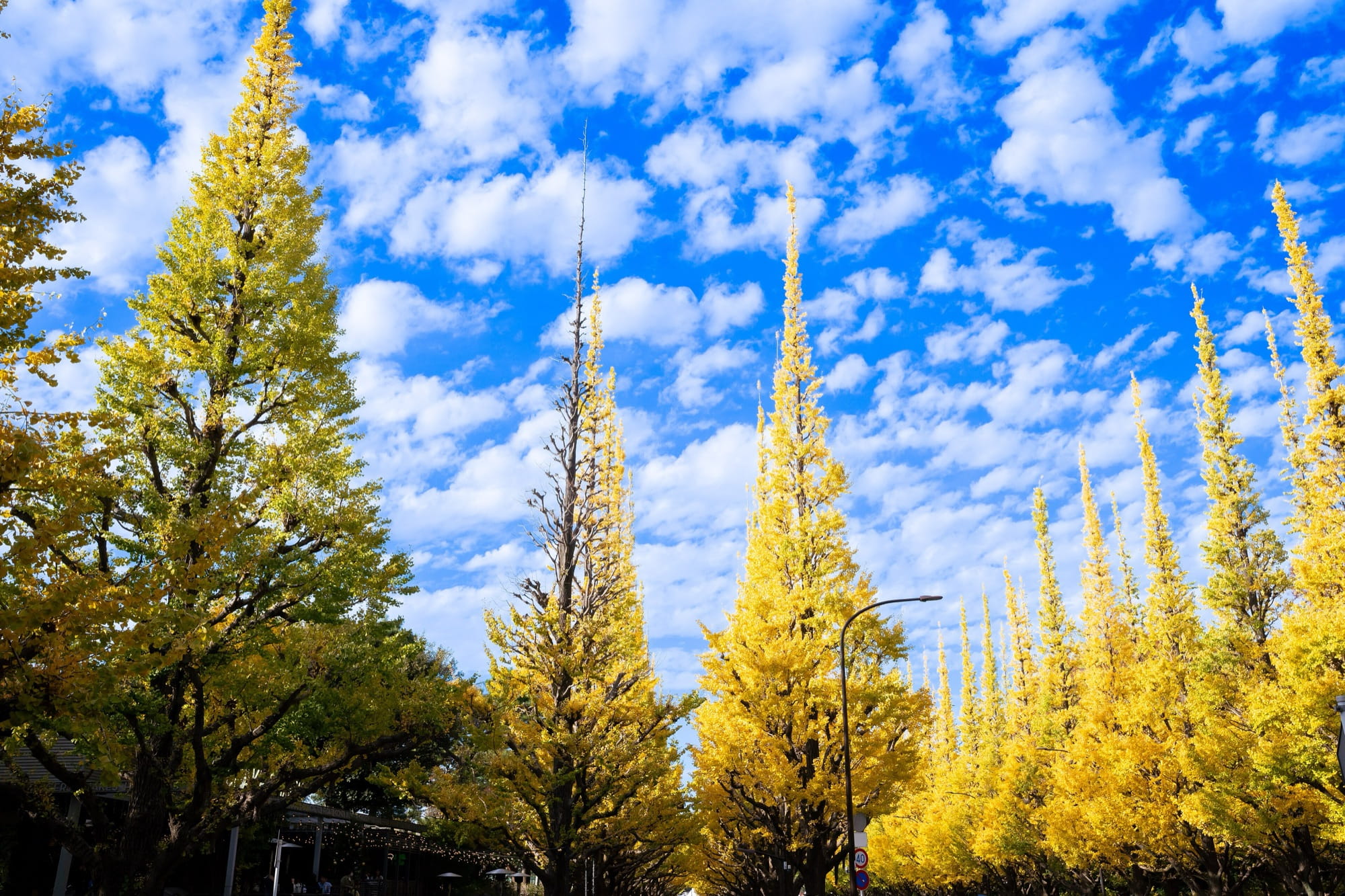
Two of Kyoto's big three had published their 2026 dates by mid-September. Kiyomizu-dera's autumn night viewing runs from 21 to 30 November, open until 21:30 with last entry at 21:00, and the temple opens at 06:00 every day of the year. Eikando's autumn exhibition runs from 11 November to 6 December by day (adults 1,500 yen) and its night visit from 20 November to 10 December, reception 17:30 to 20:30 for 1,000 yen, with a note that the period may change with crowding and that cars and coaches are barred from the precincts. Kodai-ji had not posted 2026 dates; in 2025 it ran from 24 October to 14 December. Expect the popular ones to queue on the holiday weekend, and check each temple's site the week before. In Tokyo the Meiji Jingu Gaien ginkgo avenue, forecast for 26 November, is the late-November fixture; Rikugien usually adds an evening garden illumination in the same weeks, so check the Tokyo parks site for 2026 dates.
If you are too early or too late
Too early in the cities means go up. Hakone's ropeway stations, Mount Takao on Tokyo's western edge, Nikko and the Alps are all ahead of Tokyo and Kyoto by two to four weeks, and ginkgo turns before maple wherever you are. Too late means go down and south: Hakone-Yumoto, Kyoto's Tofuku-ji and the southern temples, Osaka's parks hold colour into early December, and the 2026 forecast has already moved the city peaks that way. The trip that is hardest to rescue is one that lands in Kyoto in the first days of November expecting the postcard; that is an Alps trip with a Kyoto ending, not a Kyoto trip.
What this means for your route
For a two-week trip that starts in Tokyo, the timing argues for five nights in Tokyo, two in the mountains and six in Kyoto, in that order, so the mountain stop comes mid-trip and Kyoto comes last when it is most likely to be in colour. Which mountain stop depends on the window: Hakone for the middle and late month, Takayama for the first ten days, as the Hakone or Takayama comparison shows with the travel times and fares. And because the route has only two long train legs, the Japan Rail Pass does not pay for it; the tickets add up to about 25,000 yen against a 50,000 yen pass.
Frequently asked questions
Short answers on timing a November trip to Japan around the autumn colours.
Is November a good month to visit Japan?
When do the autumn leaves peak in Kyoto in 2026?
When do the autumn leaves peak in Tokyo in 2026?
Which November dates are busiest?
What should I pack for Japan in November?
Should I plan the trip around a single forecast date?
Photo credits
Maple trees from Tsuten-kyo bridge at Tofuku-ji, Kyoto by Luka Peternel, CC BY-SA 4.0 (cover; resized for web display). Meiji Jingu Gaien ginkgo avenue by Dick Thomas Johnson, CC BY 2.0. All via Wikimedia Commons.