


On this route
The Japan Rail Pass is a good product for one kind of trip and an expensive mistake for the most common kind. Since its price rose in October 2023, a 7-day ordinary pass costs 50,000 yen, and from 1 October 2026 the exchange orders sold through overseas agencies go up again to 53,000 yen. A Tokyo to Kyoto shinkansen ticket is 14,170 yen. The arithmetic is not hard, but it has to be done on your actual legs, on your actual dates, with the non-JR legs and the Nozomi rule counted. This article is the method, followed by a fully priced example on the 14-day Tokyo, Hakone and Kyoto route.
The short answer for that route: every JR ticket from the Kodama to Odawara to the Haruka to Kansai airport adds up to about 25,000 yen per person, and no pass can beat it. A 7-day pass cannot even span Day 6 to Day 14, so the relevant comparison is the 14-day pass at 80,000 yen. The pass starts to pay only when a week holds three or more long shinkansen legs, and even then Hikari rather than Nozomi.
What the pass costs and what it covers in 2026
The official online site lists the ordinary pass at 50,000 yen for 7 days, 80,000 yen for 14 days and 100,000 yen for 21 days (Green car 70,000, 110,000 and 140,000). Exchange orders bought at overseas travel agencies on or after 1 October 2026 cost 53,000, 84,000 and 105,000 yen (Green 74,000, 116,000 and 147,000). JNTO's notice on the increase says the official website will keep the pre-October prices for a promotion whose end date is to be announced, so the online price is worth checking on the day you buy. Children aged 6 to 11 pay half.
The pass is sold only to foreign nationals entering Japan as Temporary Visitors, with the passport registered to the pass. It covers JR trains nationwide, including Hikari, Kodama, Sakura and the other shinkansen, limited expresses, local trains, some JR buses and the Miyajima ferry. It does not cover Nozomi or Mizuho trains, the fastest ones on the Tokyo to Osaka and Hiroshima line, in either reserved or non-reserved seats; pass holders who want a Nozomi must buy a separate "Nozomi Mizuho ticket" on top. Refunds of an exchanged pass cost a 10 percent handling fee, and a pass in use cannot be extended.
What it also does not cover is the list that matters on a Tokyo to Kyoto trip: Odakyu trains and the Hakone Freepass, the Kintetsu express to Nara, Nankai to Kansai airport, the Tokyo Metro, Kyoto's city buses and subway, and every airport limousine bus. On a route like the November itinerary, a large share of the local spending is off-JR whatever you do.
The method in six steps
- List every rail leg with a date. Airport to hotel, each city-to-city move, each day trip, hotel to airport. Write the date next to each; the pass is a consecutive-day product and the dates decide which window it has to cover.
- Price each leg for that date. Use smartEX for Tokaido and Sanyo shinkansen fares (its prices run 200 yen below the ticket counter) and a planner such as Jorudan for everything else. Reserved-seat prices in regular season are the honest baseline; a 200 to 400 yen seasonal adjustment applies on peak dates.
- Mark the legs the pass does not cover. Private railways, subways, buses, and any Nozomi you would want. Those come out of both columns.
- Choose the window. Find the 7, 14 or 21 consecutive days that contain the most expensive JR legs. Everything outside the window is paid separately in both columns.
- Add the Nozomi decision. With a pass you ride Hikari (Tokyo to Kyoto 2 hours 34 instead of 2 hours 15) or pay the supplement. Without a pass, the Nozomi is the default and it is 320 yen more than the Hikari.
- Compare against the discounts you would otherwise use. EX Hayatoku 21 advance fares, the HARUKA one-way ticket, the Hakone Freepass, the Kyoto day pass and regional JR passes all reduce the ticket column. The pass column has none of them.
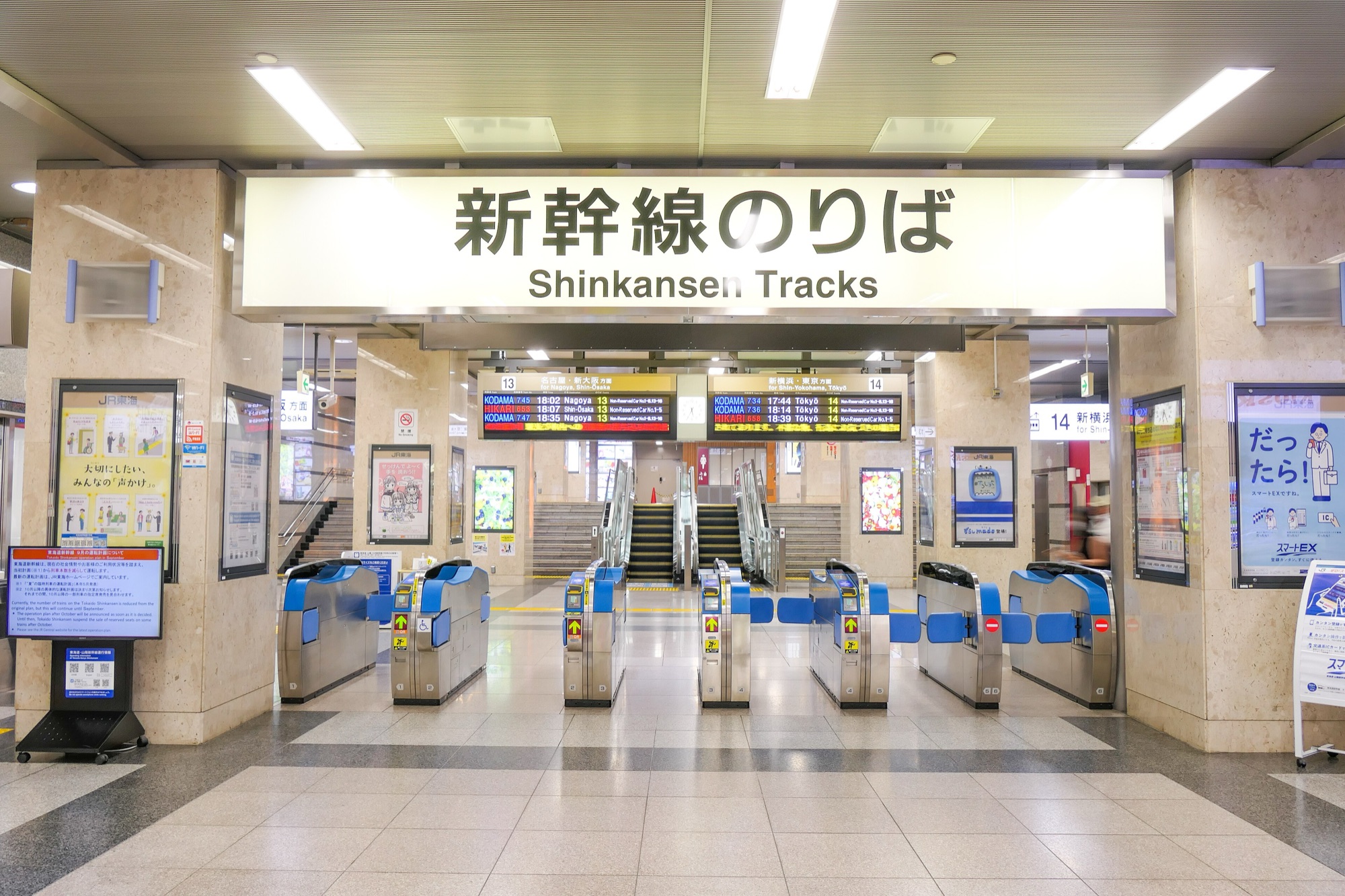
Worked example: the 14-day November route
Tokyo 5 nights, Hakone 2, Kyoto 6, fly out of Osaka. Fares are adult, reserved, regular season, read for 17 to 19 November 2026 dates at counter prices unless stated.
| Day | Leg | Operator | Fare | Covered by the JR Pass? |
|---|---|---|---|---|
| 1 | Haneda to Shinjuku (Keikyu and Yamanote) | Keikyu / JR | 590 | Partly (Yamanote only) |
| 2 to 3 | Tokyo metro and Yamanote days | Metro / JR | about 1,000 | Partly |
| 4 | Tokyo to Kamakura return | JR | 2,080 | Yes |
| 6 | Kodama 813 Tokyo to Odawara | JR Central | 3,810 | Yes |
| 6 to 7 | Hakone Freepass, 2 days from Odawara | Odakyu | 6,000 | No |
| 8 | Hikari 637 Odawara to Kyoto | JR Central | 12,300 | Yes |
| 9 to 13 | Kyoto buses and subway, five days | Kyoto City | about 3,000 | No |
| 10 | Kyoto to Nara return | Kintetsu (JR alternative 1,440) | 1,520 | No (JR line yes) |
| 11 | Kyoto to Saga-Arashiyama return | JR | 480 | Yes |
| 12 | Kyoto to Osaka return | JR | 1,160 | Yes |
| 13 | Kyoto to Inari return | JR | 300 | Yes |
| 14 | Haruka Kyoto to Kansai airport | JR West | 3,590 | Yes |
| JR legs only (with JR to Nara) | about 25,000 | |||
| All rail including non-JR | about 36,000 |
Now the window. The JR legs worth covering run from Day 4 (Kamakura) or Day 6 (Odawara) to Day 14 (the airport), which is nine to eleven days. A 7-day pass started on Day 6 expires on Day 12 and leaves the 3,590 yen Haruka and the Inari trip outside it; inside it, the JR legs are worth about 19,000 yen against a 50,000 yen pass. The 14-day pass covers everything from Day 1 to Day 14 and replaces about 25,000 yen of tickets for 80,000 yen, or 84,000 yen bought abroad after 1 October. Neither is close. The verdict for this route is individual tickets, with the smartEX and advance fares below taking another 1,500 to 2,000 yen off.
When the pass does win
Divide the pass price by the Hikari fare between Tokyo and Kyoto, 13,850 yen at the counter: a 7-day pass is worth about 3.6 of those rides. That is the test. A round trip Tokyo to Kyoto and back (27,700 yen) does not pass it. Tokyo to Kyoto to Hiroshima and back to Tokyo comes closer: using smartEX Hikari and Sakura fares, Tokyo to Kyoto is 13,650 yen, Kyoto to Himeji 5,070, Himeji to Hiroshima 8,240 and Hiroshima back to Tokyo 18,710, a total of 45,670 yen before day trips. Add Nara (1,440 yen on JR) and the loop is about 47,000 yen inside seven days, still under the 50,000 yen online price; a Miyajima day on JR trains and the JR ferry takes it to roughly the pass price. Push on to Hakata, or start the week with a Tokyo to Nikko or Kanazawa leg, and the pass is clearly ahead.
So the pass wins for fast, wide loops: three long shinkansen legs inside seven days, plus JR day trips, plus a willingness to ride Hikari and Sakura instead of Nozomi. It loses for the trip most people take, which is Tokyo, one stop, Kyoto and out, because that trip has one long leg and a lot of local transport the pass does not touch. A 14-day pass at 80,000 yen needs about 5.8 Tokyo to Kyoto equivalents, which means two big loops or a run to Kyushu and back.
Cheaper than the counter: the tickets that beat the pass
smartEX. JR Central's online booking for the Tokaido, Sanyo and Kyushu shinkansen prices reserved seats 200 yen below the counter (Tokyo to Kyoto Nozomi 13,970 yen, Hikari 13,650; Odawara to Kyoto Hikari 12,100). You can pick trains up to a year ahead from the tentative timetable; the actual train and seat are confirmed after 08:00 Japan time one month before boarding, and you pay at reservation. Tickets load onto an IC card or come as a QR code.
EX Hayatoku 21. Book at least 21 days ahead on smartEX and a Nozomi seat from Tokyo to Kyoto is 12,430 yen, Tokyo to Nagoya 10,370 and Tokyo to Hiroshima 15,390 (prices from 13 March 2026, same on all days). It cannot be changed after booking, only refunded for a fee, so it suits a fixed itinerary.
HARUKA One-way Ticket. JR West sells foreign passport holders with Temporary Visitor status a 2,200 yen non-reserved ticket for the Kansai-airport to Kyoto section of the Haruka (regular fare 3,590 reserved), bookable on its online reservation site from one month ahead or through overseas agencies; the page lists prices as current at February 2025, so recheck, and confirm at booking that your airport-bound date is offered.
Hakone Freepass. 6,000 yen for two days from Odawara (6,400 for three), or 7,100 and 7,500 from Shinjuku, covering the Tozan train, cable car, ropeway, lake cruise and buses. Nothing JR sells replaces it.
Takayama-Hokuriku Area Tourist Pass. 19,800 yen for five consecutive days from Nagoya through Takayama and Shirakawa-go to Kanazawa and on to Kyoto and Osaka, with six reserved seats. It is the regional pass that makes sense for the Takayama variant of the route if you add Kanazawa; it does not cover the Tokaido Shinkansen or the Haruka.
Kyoto Subway and Bus 1-day pass. 1,100 yen, against a 230 yen flat bus fare; it pays on any day with five rides.
Baggage, seats and timing
Whichever column you choose, the same rules apply on the shinkansen. Bags up to 160 cm in total dimensions need no reservation. Anything from 161 to 250 cm must be booked with a seat that has an oversized baggage area, at no extra charge; turning up with one unreserved costs a 1,000 yen fee. Seats for the November holiday weekend of 21 to 23 November 2026 sell from the one-month mark, and Nozomi trains run all-reserved in the busiest periods. Pass holders who bought online can reserve seats before picking up the pass; everyone else reserves at machines, counters or on smartEX.
Frequently asked questions
Short answers on the Japan Rail Pass against individual tickets in 2026.
Is the Japan Rail Pass worth it for Tokyo, Hakone and Kyoto?
How much does the Japan Rail Pass cost in 2026?
Can I ride the Nozomi with the Japan Rail Pass?
When does the pass pay for itself?
What is the cheapest way to buy Tokyo to Kyoto shinkansen tickets?
Do I need to reserve a seat for a large suitcase?
Photo credits
Tokyo Station Shinkansen bullet train by BWard 1997, CC BY 4.0 (cover; resized for web display). Tokaido Shinkansen ticket gate at Odawara Station by MaedaAkihiko, CC BY-SA 4.0. All via Wikimedia Commons.