


On this route
Two weeks in Japan in November is enough for Tokyo, Kyoto and one mountain stop, and not enough for the four-city sprint that most sample itineraries sell. The plan below keeps three bases only: five nights in Tokyo, two nights in Hakone on the way, and six nights in Kyoto with Nara and Osaka as day trips. It uses the direct Hikari that stops at Odawara every two hours, sends your suitcase ahead by courier so the mountain stop is a two-night bag, and leaves two half-days empty on purpose because November evenings end at half past four.
The short answer: fly into Tokyo, ride a 33-minute Kodama to Odawara on Day 6, do the Hakone loop on a 6,000 yen Freepass, take the 10:11 Hikari from Odawara to Kyoto on Day 8, and fly home from Osaka's Kansai airport on Day 14. That is 13 nights, three hotels, no rental car and no rail pass. If your ticket returns from Tokyo, or you want Takayama instead of Hakone, the variations below show exactly what changes and what it costs.
- Duration
- 14 days / 13 nights
- Bases
- 3
- Transport
- Shinkansen, Hakone Freepass, local trains; no car, no rail pass
- Pace
- Balanced, with two buffer half-days
- Best season
- October to November (autumn colours mid-November to early December)
Your two weeks at a glance
| Day | Plan | Overnight | Main transport |
|---|---|---|---|
| 1 | Arrive at Haneda or Narita; check in, IC card, an easy dinner | Tokyo | Keikyu or Monorail (Haneda), Skyliner (Narita) |
| 2 | Senso-ji before 09:00, Ueno museums, Yanaka in the late afternoon | Tokyo | Metro and walking |
| 3 | Meiji Jingu, Harajuku, Shibuya, Shinjuku evening | Tokyo | Yamanote line |
| 4 | Day trip to Kamakura (or Nikko in early November) | Tokyo | JR Yokosuka line, 64 min |
| 5 | Send the suitcase to Kyoto; Tsukiji, Ginza, a garden; buffer half-day | Tokyo | Walking, courier from the hotel desk |
| 6 | Kodama to Odawara, Hakone loop: Tozan train, cable car, ropeway, lake cruise | Hakone | Shinkansen 33 min, then the Freepass |
| 7 | Open-Air Museum, Sengokuhara or Gora gardens, onsen afternoon | Hakone | Tozan train and buses on the Freepass |
| 8 | Hikari 637 from Odawara at 10:11, Kyoto at 12:14; Nishiki Market and downtown | Kyoto | Shinkansen, about 2 h |
| 9 | Higashiyama on foot: Kiyomizu-dera at opening, Kodai-ji, Nanzen-ji, Eikando, Gion | Kyoto | Bus and walking |
| 10 | Nara day trip: Todai-ji, the deer park, Kasuga Taisha | Kyoto | Kintetsu express, 48 min |
| 11 | Arashiyama early, then Kinkaku-ji and Ryoan-ji | Kyoto | JR Sagano line 17 min, buses |
| 12 | Osaka day trip: castle, Kuromon, Dotonbori at night | Kyoto | JR special rapid, 28 min |
| 13 | Fushimi Inari at dawn, Tofuku-ji; buffer afternoon; last dinner | Kyoto | JR Nara line, 7 min |
| 14 | Haruka to Kansai airport, 84 min; fly home | Departure | Limited express from Kyoto Station |
Base sequence
- Tokyo 5 nights
- Hakone 2 nights
- Kyoto 6 nights
Who this route suits, and who should change it
This is a first-visit plan for people who want the two big cities properly, one night in an onsen inn that is worth the fuss, and autumn colour without building the whole trip around a forecast. Every transfer is by train, no day is longer than about three and a half hours door to door, and the day trips start from a hotel you do not have to check out of.
Change it if you have 15 days or more and want the Japanese Alps: swap Hakone for Takayama, which costs about five extra hours in trains and roughly 13,000 yen more in fares (the Hakone or Takayama comparison prices both). Change it if your dates are the first week of November, when Kyoto is still mostly green: move the Tokyo day trip to Nikko and accept that the Kyoto gardens will be turning rather than turned. And change it if you must fly home from Tokyo: cut Kyoto to five nights and ride the Nozomi back on Day 13.
Five decisions to make before you book
Fly into Tokyo and out of Osaka
An open-jaw ticket removes the return leg to Tokyo, which is 2 hours 15 minutes on the Nozomi and 14,170 yen per person at the counter. Kansai airport is 84 minutes from Kyoto Station on the Haruka. If open-jaw fares are much higher than a Tokyo round trip, the difference is rarely more than that train fare plus a night, so compare before you decide.
Hakone, not Takayama, as the mountain stop
Hakone sits on the Tokaido Shinkansen line, so the mountain stop adds no detour at all: you get off at Odawara, 33 minutes from Tokyo, and get back on two days later. Takayama needs Nagoya both ways and about seven and a half hours of trains between Tokyo and Kyoto instead of two and a half. In mid to late November Hakone is also the better colour bet, because its lake and lower valleys peak then while Takayama has usually finished by the middle of the month.
Six nights in Kyoto, and book them first
Kyoto's major hotels ran at 86.9 percent occupancy in November 2025 with an average room rate of 29,085 yen, against 80.6 percent and 21,286 yen for the year as a whole. That is the city's peak, and in 2026 the Labour Thanksgiving holiday makes 21 to 23 November a three-day weekend. Book Kyoto before anything else, then the shinkansen seats a month out, then Hakone. Nara and Osaka are day trips from the same bed for a reason: two extra hotel changes in peak season cost more than the 28-minute and 48-minute rides.
Individual tickets, not the Japan Rail Pass
Every JR leg on this route, from the Kodama to Odawara to the Haruka to the airport, adds up to about 25,000 yen per person. The 7-day pass is 50,000 yen on the official site and 53,000 yen through overseas agencies from 1 October 2026, and a 7-day pass cannot even span Day 6 to Day 14. The pass-or-tickets method shows the arithmetic leg by leg.
Which part of November
The Japan Meteorological Corporation's first 2026 forecast, issued on 2 September, expects colour to peak at normal to later-than-normal dates because of a warm autumn: Tokyo's maples around 29 November, Kyoto's city reference trees around 11 December, with famous gardens such as Arashiyama forecast around 24 November by Weathernews. Mid to late November gives you Hakone and the Kyoto gardens in colour; early November gives you Nikko and Takayama instead. The November planning guide goes region by region.
Day-by-day plan
Day 1: Arrive in Tokyo
Most flights from North America and Europe land in the afternoon, and the sun sets at 16:34 in Tokyo on 15 November. From Haneda, the Keikyu line to Shinagawa and the Yamanote line reach Shinjuku in about 40 minutes for 590 yen. From Narita, the Skyliner to Nippori and a Yamanote train take about 1 hour 15 for 2,840 yen, or ordinary trains 1 hour 36 for 1,480 yen. Buy or load an IC card at the airport, check in, and keep the evening to a walk and dinner. Nationals of the United States, Canada, the United Kingdom and every EU country enter visa-free for tourist stays of up to 90 days.
Day 2: Old east Tokyo
Be at Senso-ji in Asakusa before 09:00, when Nakamise is still opening and the main hall is quiet. Walk the Sumida river or cross to the Skytree area, then take the Ginza line to Ueno for the park and the Tokyo National Museum after lunch. Museums close around 17:00 and it is dark by 16:40, so the outdoor sights go first. Finish in Yanaka, the low-rise temple district a short walk north of Ueno, for its shopping street at dusk.
Day 3: West Tokyo
Meiji Jingu's forest is calm early. Walk through to Harajuku and Omotesando, on to Shibuya, and end the day in Shinjuku. Shinjuku Gyoen closes at 16:00 in the winter months, so it is a lunchtime stop, not an evening one. The ginkgo avenue at Meiji Jingu Gaien is forecast to peak around 26 November in 2026; if you are in town then, it is a short hop east of Harajuku on the Ginza line or on foot.
Day 4: Kamakura, or Nikko in early November
The JR Yokosuka line runs from Tokyo Station to Kamakura in 64 minutes for 1,040 yen. Hase-dera and the Great Buddha in the morning, Komachi-dori for lunch, and the Enoden tram along the coast to Enoshima if you want the sea. Kamakura works on any November date. If you travel in the first week of November, Nikko is the better day: the Revaty limited express from Asakusa reaches Tobu-Nikko in 1 hour 53 for 3,050 yen, and Weathernews forecasts Irohazaka's colours around 31 October in 2026. Nikko is a longer day with an earlier start, so keep Day 5 light.
Day 5: Send the suitcase, then a slow Tokyo day
After the courier form, the day is yours: Tsukiji outer market for breakfast, Ginza, the Imperial Palace East Garden, or Rikugien if its late-November illumination is running. This is the first buffer: anything rained off on Days 2 to 4 moves here.
Day 6: Kodama to Odawara, then the Hakone loop

Kodama 813 leaves Tokyo at 09:27 and reaches Odawara at 10:00; the reserved seat is 3,810 yen at the counter or 3,610 yen on smartEX. At Odawara, buy the two-day Hakone Freepass for 6,000 yen at the Odakyu machines. It covers the Hakone Tozan train, the cable car, the ropeway, the Lake Ashi sightseeing cruise and the Tozan buses, and its validity counts calendar days from purchase, so buying it on Day 6 morning gives you Day 6 and Day 7.
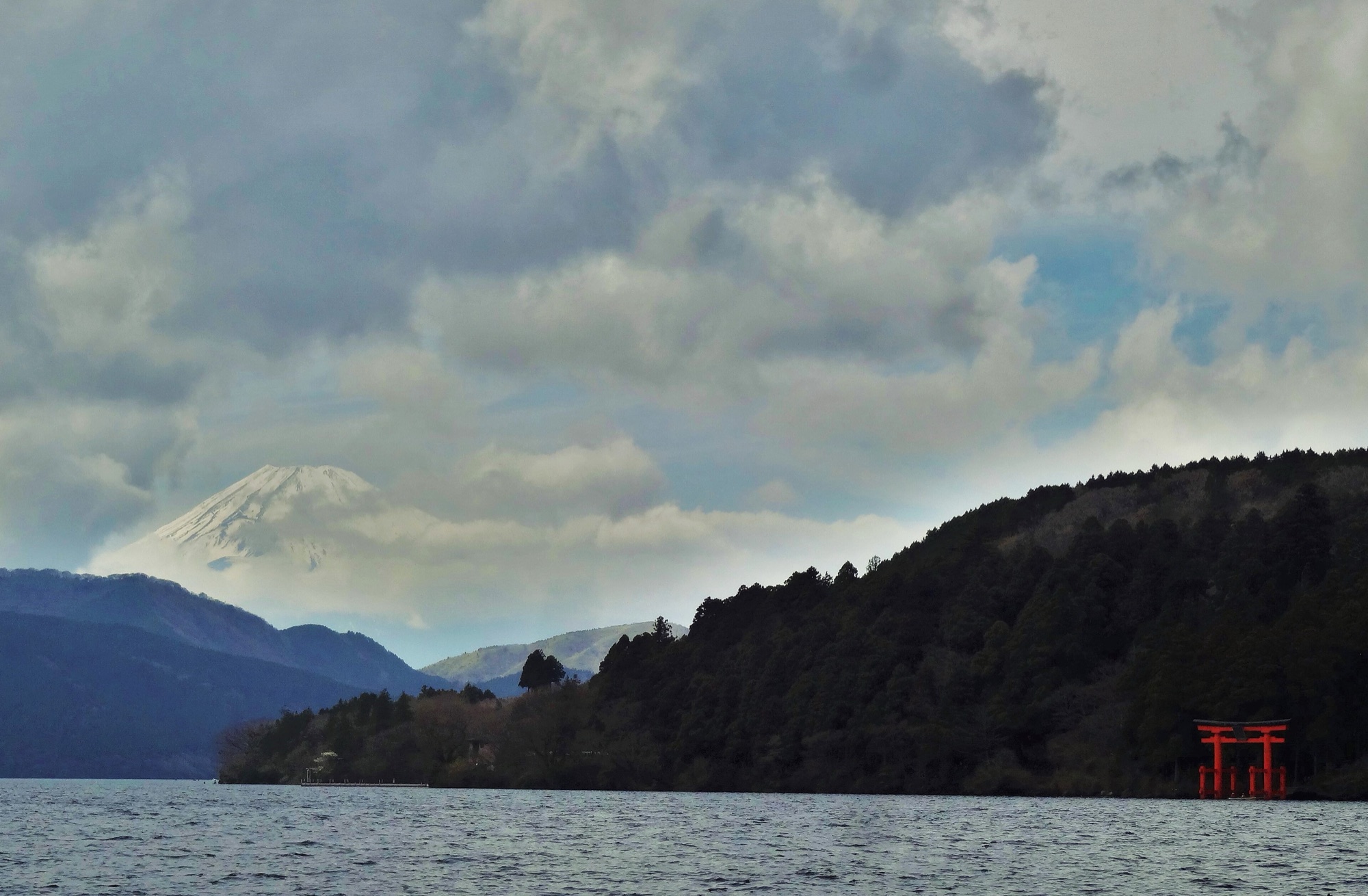
The classic loop runs clockwise: Tozan train to Gora, cable car to Sounzan, ropeway over the steaming Owakudani valley to Togendai (about 45 minutes in three sections), the cruise across Lake Ashi to Moto-Hakone, the Hakone Shrine torii at the water's edge, and a bus back to your inn. Allow three hours of riding plus stops. The ropeway runs 09:00 to 17:00 in November and stops in strong wind or when volcanic activity at Owakudani rises; a replacement bus covers the same corridor when it does. Ryokan dinners are usually served between 18:00 and 19:00, so be back by then.
Day 7: A second Hakone day, and why it exists
Hakone's weather station, at 855 metres, averages 197 mm of rain in November, twice Tokyo's 96 mm. The second day is the hedge: if Day 6 was wet or the ropeway was closed, repeat the loop in better weather. If Day 6 was clear, spend this one on the Hakone Open-Air Museum, the pampas grass fields at Sengokuhara, Gora Park or the Hakone Museum of Art garden, and an afternoon in the onsen. Colour cascades down the valley through the month: Owakudani and the lake in early November, Sengokuhara and Gora in the first half, Hakone-Yumoto in the second half.
Day 8: Odawara to Kyoto on the direct Hikari
Nozomi trains do not stop at Odawara, and only some Hikari do. In the timetable in force from 14 March 2026, direct Hikari from Odawara to Kyoto leave at 06:56, 08:11, 10:11 and 12:07, arriving 09:08, 10:14, 12:14 and 14:13. Hikari 637 at 10:11 is the one to book: the Tozan train from Hakone-Yumoto to Odawara takes about 15 minutes, so a 09:30 departure from the inn is enough. The reserved seat costs 12,300 yen at the counter or 12,100 yen on smartEX. Miss the 10:11 and the choices are the 12:07 or a Kodama to Nagoya with a change to a Nozomi.
Your forwarded suitcase should be at the hotel. Spend the afternoon downtown: Nishiki Market, Teramachi, the Kamo river at dusk. Kiyomizu-dera's 2026 autumn night opening runs from 21 to 30 November, with the gates open until 21:30 and last entry at 21:00; if your Day 8 falls inside it, the temple lit up above the city is the right first evening.
Day 9: Higashiyama on foot
Kiyomizu-dera opens at 06:00 all year; be there. Walk down Sannenzaka and Ninenzaka before the shops open, into Kodai-ji and Maruyama Park, and take a bus north to Nanzen-ji. Eikando next door is Kyoto's best-known maple garden; its 2026 autumn exhibition runs from 11 November to 6 December by day (1,500 yen) and its night visit from 20 November to 10 December (17:30 to 20:30 reception, 1,000 yen), with the temple warning that dates can change with crowding. Continue along the Philosopher's Path to Ginkaku-ji if legs allow, and end in Gion. A Subway and Bus one-day pass is 1,100 yen; a single bus ride is 230 yen.
Day 10: Nara
The Kintetsu express from Kyoto Station reaches Kintetsu-Nara in 48 minutes for 760 yen, and it drops you closer to the park than JR does. Todai-ji's Great Buddha Hall, the deer, the lantern paths to Kasuga Taisha and the old lanes of Naramachi fill a day without hurry. Be back in Kyoto by 18:00. The rain plan is the Nara National Museum.
Day 11: Arashiyama and the northwest
The JR Sagano line puts you at Saga-Arashiyama in 17 minutes for 240 yen; arrive by 08:30 and the bamboo grove is still walkable. Tenryu-ji's garden and the Togetsukyo bridge follow. Weathernews forecasts Arashiyama's colour peak around 24 November in 2026, later than a typical year. Take a bus east to Kinkaku-ji, then Ryoan-ji's rock garden, and go downtown for the evening.
Day 12: Osaka for the day and the night
The JR special rapid runs Kyoto to Osaka in 28 minutes for 580 yen. Osaka Castle park in the morning, Kuromon market for lunch, Shinsekai or the Umeda Sky Building in the afternoon, and Dotonbori after dark, which is when Osaka is at its best. Trains back to Kyoto run past 23:00. If neon and street food are not your thing, trade this day for Kurama and Kibune in Kyoto's northern hills.
Day 13: Fushimi Inari at dawn, then the second buffer
Two stops on the JR Nara line, 7 minutes and 150 yen, and you are at Fushimi Inari before the tour buses. Climb to the Yotsutsuji viewpoint, then get off one stop back at Tofuku-ji, whose maple valley is one of the city's great November views. The afternoon is empty by design: Uji, the Kyoto National Museum, or anything that got rained off. Repack, because Day 14 starts at Kyoto Station.
Day 14: Haruka to Kansai airport
The Haruka limited express runs Kyoto to Kansai airport in 84 minutes; the 10:00 departure arrives at 11:24. A reserved seat is 3,590 yen at the counter. JR West also sells a HARUKA one-way ticket to foreign passport holders with Temporary Visitor status for 2,200 yen on the Kansai-airport to Kyoto section, non-reserved; check at booking that it is offered for the airport-bound direction on your date. Leave the hotel three and a half hours before an international departure. If you are flying from Tokyo instead, see the variations below.
How to book the transport
Shinkansen seats can be selected on smartEX up to a year ahead from the tentative timetable, and the actual train and seat are confirmed after 08:00 Japan time one month before boarding, with payment at reservation. Book the Day 6 Kodama and the Day 8 Hikari there and collect QR tickets or pick them up at the machines. Suitcases up to 160 cm in total dimensions need no reservation; anything from 161 to 250 cm must go with a seat that has an oversized baggage area, which costs nothing extra when reserved and 1,000 yen when it is not.
The Hakone Freepass is sold at Odakyu machines at Odawara and online through EMot. The Kintetsu express to Nara, the JR special rapid to Osaka and the Kyoto local lines need no advance booking; an IC card covers all of them. The Haruka can be reserved on JR-WEST's online reservation site from one month before.
Autumn colours on this route
In practice, a trip in the middle two weeks of November gives you Hakone's upper stations and lake in colour on Days 6 and 7, and the Kyoto gardens beginning to turn on Days 9 to 13, with Eikando, Tofuku-ji and Arashiyama at or near peak if your Kyoto nights fall after the 20th. A trip in the last ten days of November is the safer bet for Kyoto and Tokyo, at the cost of the busiest hotels of the year. The first week of November is the Nikko and Takayama week, when the two big cities are still mostly green.
Shorter, slower and reversed versions
Takayama instead of Hakone. Day 6: Nozomi Tokyo to Nagoya (1 hour 39, 11,300 yen) and the Hida limited express to Takayama (2 hours 24, 6,140 yen). Day 7: Shirakawa-go by Nohi bus (about 50 minutes, 2,800 yen each way, most departures reservation-only). Day 8: Hida to Nagoya and Nozomi to Kyoto, 3 hours 22 in total, 11,720 yen. That is roughly 13,000 yen more per person than the Hakone version, the Freepass falls away, and the mountain stop peaks in the first half of November rather than the second. Everything else stays the same.
One night in Hakone. Do the loop on Day 6 and leave on Day 7 with the 08:11 or 10:11 Hikari. Kyoto gains a seventh night for Uji or Kurama. You lose the weather hedge.
Flying home from Tokyo. Keep Kyoto to five nights (Days 8 to 12) and drop the Osaka day. On Day 13 take the Nozomi from Kyoto to Tokyo, 2 hours 15 for 14,170 yen, or 12,430 yen if you buy an EX Hayatoku 21 fare at least 21 days ahead, and sleep near Tokyo Station or on the Haneda line. Day 14 is the flight.
Ten days. Tokyo 4, Hakone 1, Kyoto 4, with Nara kept and Osaka and Kamakura dropped. Anything shorter should skip the mountain stop rather than shave another night from the cities.
What to leave for another trip
Hiroshima and Miyajima, Kanazawa, and a second mountain stop. Each adds at least one hotel change and a long leg, and in late November every night taken from Kyoto is a night at the one place that is at its best. Hiroshima from Kyoto is about 1 hour 40 on the Nozomi each way and is possible as a very long day trip, but it turns Day 12 or 13 into a train day rather than a buffer, which is the thing this plan protects.
Common mistakes
Booking a Nozomi and expecting it to stop at Odawara; it never does. Buying a 7-day Japan Rail Pass for a route whose JR legs cost about 25,000 yen. Sleeping in Osaka to save on Kyoto hotels, then missing the 06:00 temple starts that make peak-season Kyoto bearable. Carrying a large suitcase onto the Hakone cable car. Arriving on Friday 20 November, the eve of the 21 to 23 November long weekend, without a Kyoto room. Planning the whole trip around one forecast date: colours run for two to three weeks at any given spot, and the forecast itself moves.
Entry rules and practical notes for autumn 2026
Nationals of 74 countries and regions, including the United States, Canada, the United Kingdom and every EU member state, enter Japan without a visa for tourist stays of up to 90 days. Kyoto charges an accommodation tax per person per night, from 200 yen on rooms under 6,000 yen to 1,000 yen on rooms between 20,000 and 49,999 yen and 10,000 yen on rooms of 100,000 yen or more; it is added at the hotel. Tokyo's November normals are a daily high of 16.7 degrees and a low of 8.8, Kyoto's 17.3 and 8.4, with 96 and 74 mm of rain respectively; Hakone, at altitude, is wetter and several degrees colder. Sunrise is around 06:16 and sunset 16:34 in Tokyo in mid-November, and a quarter of an hour later in Kyoto, so plan for ten hours of daylight and start early.
Frequently asked questions
Short answers to the decisions that change a two-week November route through Japan.
Is 14 days enough for Tokyo, Kyoto and a mountain stop?
Why Hakone rather than Takayama?
Do I need the Japan Rail Pass for this route?
When in November are the autumn colours best?
How do I get my luggage from Tokyo to Kyoto if I stop in Hakone?
Can I fly home from Tokyo instead of Osaka?
Photo credits
Kiyomizu-dera, Kyoto, November 2016 by Martin Falbisoner, CC BY-SA 4.0 (cover; resized for web display). View of Mt. Fuji and the Hakone shrine from Lake Ashinoko by WorldContributor, CC BY-SA 4.0. Tokyo Station Shinkansen bullet train by BWard 1997, CC BY 4.0. All via Wikimedia Commons.