


On this route
For most two-week trips in November, Hakone. It sits on the Tokyo to Kyoto shinkansen line, so the mountain stop costs no detour: 33 minutes from Tokyo to Odawara, two nights, then a direct Hikari to Kyoto in about two hours. Its lake and lower valleys are in colour through the middle and second half of the month, and it gives you the onsen night that most first trips want. Takayama is the better choice in three cases: your dates fall in the first ten days of November, when its old town and Shirakawa-go peak and Hakone's best stations are only starting; the Edo-period streets, morning markets and gassho farmhouses matter more to you than Fuji views and a ropeway; or you have 15 days or more and can absorb about five extra hours of trains and roughly 13,000 yen more in fares.
This comparison prices both stops on the same 14-day route as the November itinerary, which commits to Hakone and carries Takayama as the alternative. Every time and fare below was read for November 2026 dates.
The two stops in one table
| Criterion | Hakone | Takayama |
|---|---|---|
| Position on the route | On the Tokaido Shinkansen (Odawara); no detour | Off the line via Nagoya; about 5 h extra in trains across the two legs |
| Tokyo to the stop | Kodama 33 min to Odawara, then Tozan train; about 2 h to Gora | Nozomi 1 h 39 to Nagoya, Hida 2 h 24; about 4 h 30 with the change at Nagoya |
| Stop to Kyoto | Direct Hikari from Odawara, about 2 h, roughly every 2 h | Hida to Nagoya and Nozomi, 3 h 22 with one change |
| Rail fares for the two legs | 3,810 + 12,300 = 16,110 yen | 11,300 + 6,140 + 11,720 = 29,160 yen |
| Local transport | 2-day Hakone Freepass 6,000 yen covers train, cable car, ropeway, cruise, buses | Walkable town; Shirakawa-go bus 2,800 yen each way, reservation on most departures |
| Nights needed | 1 or 2 | 2 (3 with Shirakawa-go and a slow day) |
| Autumn colour, typical | Late October at Owakudani and the lake, early to mid-November at Sengokuhara and Gora, mid to late November at Hakone-Yumoto | Late October to the first half of November in town; Shirakawa-go mid-October to early November |
| November weather | 197 mm of rain at the 855 m station; ropeway suspended in strong wind or raised volcanic activity | Daily high 13.1 C, low 2.9 C, 94 mm of rain; snow is a December story |
| What you get | Onsen ryokan, Fuji views on clear days, the ropeway over Owakudani, Lake Ashi, the Open-Air Museum | Sanmachi's preserved merchant streets, morning markets, sake breweries, Hida beef, Shirakawa-go's farmhouses, a real mountain town in the cold |
| Japan Rail Pass fit | Poor: the Freepass and Odakyu are not JR | Better on paper (all JR to Takayama), but the route still does not reach the pass price |
Getting there and away
Hakone
Kodama 813 leaves Tokyo at 09:27 and reaches Odawara at 10:00, 3,810 yen reserved at the counter or 3,610 yen on smartEX. From Odawara the Hakone Tozan line climbs to Hakone-Yumoto and Gora, all on the Freepass. Leaving, the trick is the Hikari: Nozomi trains never stop at Odawara, and only some Hikari do. In the timetable in force from 14 March 2026, direct Hikari from Odawara to Kyoto depart at 06:56, 08:11, 10:11 and 12:07 and arrive at 09:08, 10:14, 12:14 and 14:13. The 10:11 (Hikari 637) is the natural one after a ryokan breakfast; it costs 12,300 yen reserved. Between those departures you can take a Kodama to Nagoya and change to a Nozomi, which adds about half an hour and around 200 yen.
From Shinjuku there is also the Odakyu Romancecar straight to Hakone-Yumoto, 95 minutes for 2,470 yen, paired with the Freepass from Shinjuku at 7,100 yen for two days. It is the cheaper way in if your Tokyo hotel is on the west side, and it changes nothing about the way out.
Takayama
Nozomi 61 leaves Tokyo at 08:00 and reaches Nagoya at 09:39, 11,300 yen reserved. The Hida limited express leaves Nagoya at 10:48 and arrives in Takayama at 13:12, 2 hours 24 minutes and 6,140 yen reserved; the Nohi highway bus does the same for 3,600 yen in about 2 hours 35 to 2 hours 50. Leaving, Hida 8 departs Takayama at 11:35 and reaches Nagoya at 14:04; Nozomi 397 at 14:23 is in Kyoto at 14:57. That is 3 hours 22 minutes and 11,720 yen with one change. The Nohi bus from Takayama to Kyoto Station takes 4 hours 37 minutes for 6,500 yen if you want to save money and can spare the afternoon.
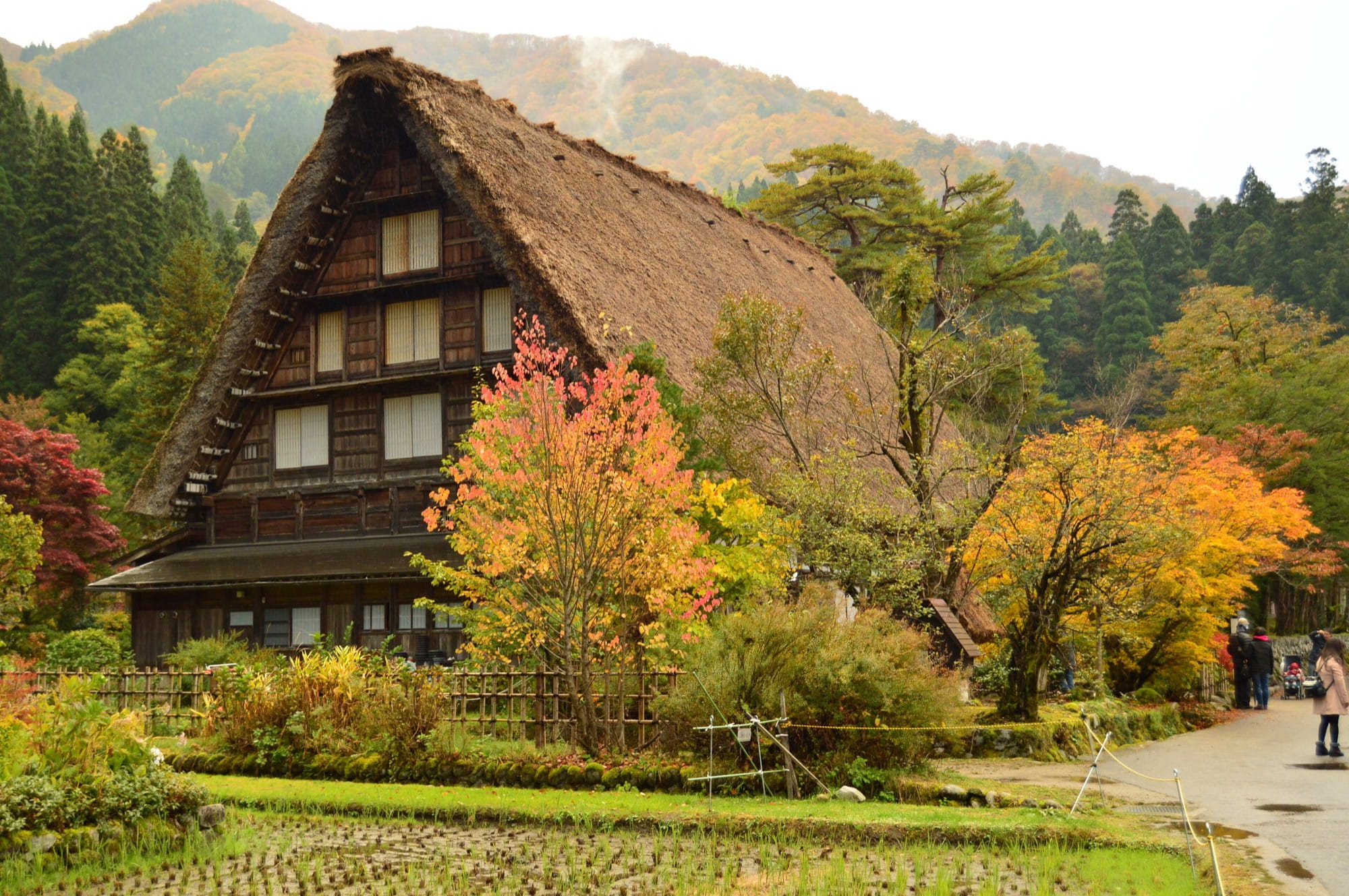
Shirakawa-go is 50 minutes from Takayama's Nohi Bus Center, 2,800 yen each way, with 16 round trips a day and reservations required on most of them. Book both directions the day you arrive; the return buses fill on fine days in the colour season.
What each stop costs on the route
Take the pillar's Days 6 to 8 and price them per person, regular season, reserved seats, counter fares.
| Item | Hakone version | Takayama version |
|---|---|---|
| Tokyo to the stop | 3,810 (Kodama to Odawara) | 17,440 (Nozomi to Nagoya 11,300 + Hida 6,140) |
| Local transport | 6,000 (2-day Hakone Freepass) | 5,600 (Shirakawa-go bus return) plus walking |
| Stop to Kyoto | 12,300 (Hikari 637) | 11,720 (Hida 8 + Nozomi 397) |
| Total | 22,110 | 34,760 |
| Travel time, station to station | 33 min + 2 h 03 | 1 h 39 + 2 h 24 + 3 h 22 |
Takayama costs about 12,650 yen more per person and about five hours more in trains (7 h 25 against 2 h 36 station to station), before the Shirakawa-go day is counted as a full day rather than an add-on. The Japan Rail Pass does not rescue the Takayama version: even with all of its legs on JR, the whole 14-day route's JR fares reach roughly 38,000 yen against a 7-day pass at 50,000 yen (53,000 yen through overseas agencies from 1 October 2026), and a 7-day pass cannot span Day 6 to Day 14. There is one regional pass worth a look if you go via Takayama and want more of the Alps: the Takayama-Hokuriku Area Tourist Pass, 19,800 yen for five consecutive days, covers Nagoya to Takayama, the Nohi buses to Shirakawa-go and Kanazawa, and trains on to Kyoto via the Hokuriku line. It pays only if you add Kanazawa, which turns the mountain stop into a four-night loop and is a different trip.
Autumn timing: which stop matches your dates
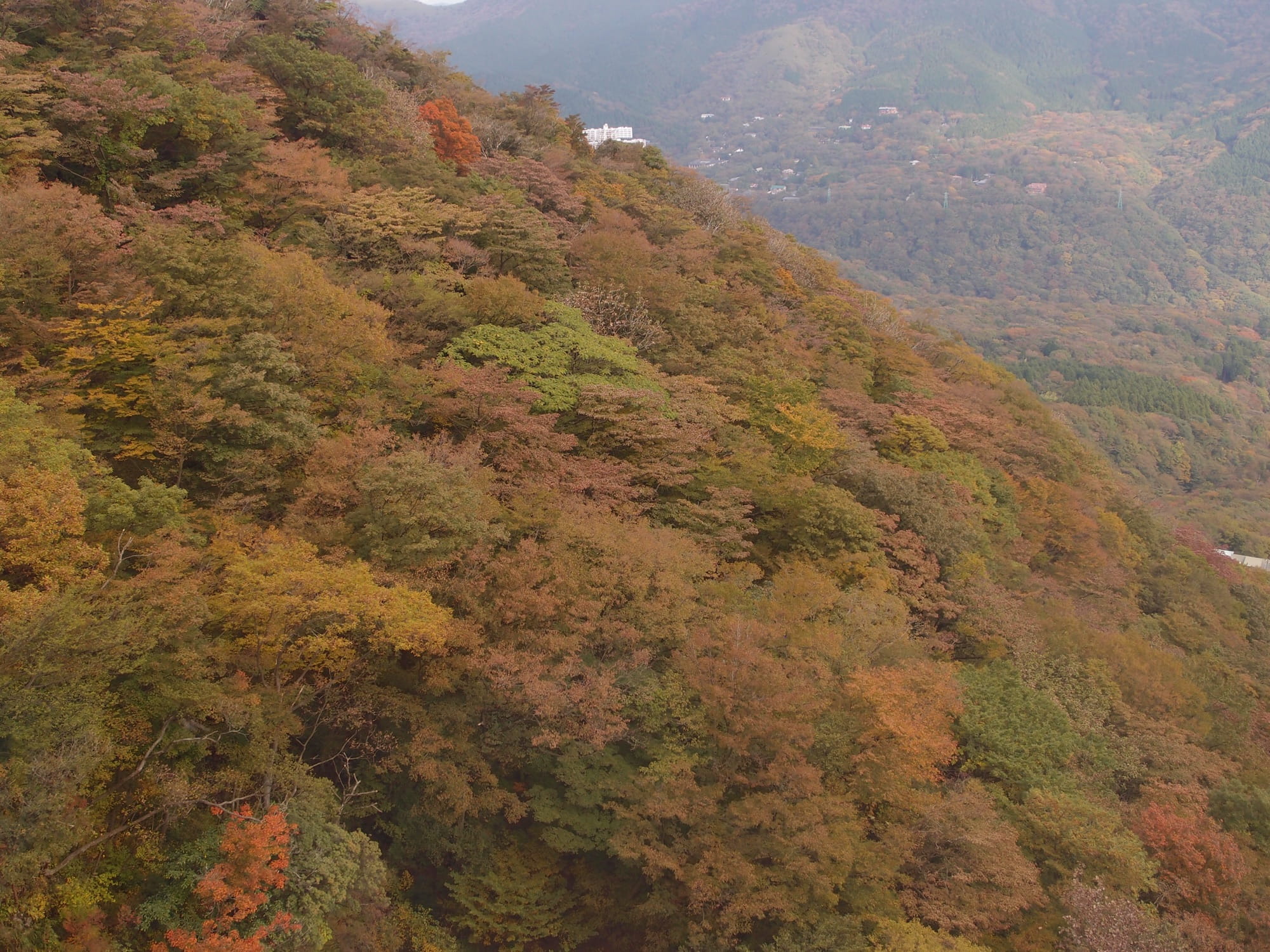
Hakone's colour cascades down the valley over a month. Odakyu's own guide gives late October to mid-November for Owakudani and Togendai, early November for Lake Ashi, early to mid-November for Sengokuhara, Gora, Sounzan and the Hakone Museum of Art, and mid to late November for Hakone-Yumoto. Whenever you arrive in November, some section of the loop is at its best; the ropeway and the lake are the early-month prize, the Gora gardens and Yumoto the late-month one.
Takayama is earlier and shorter. Regional guides put the town's peak in the first half of November with a late-October start, and Shirakawa-go from mid-October to early November; by the third week the colour is on the ground and the first snow is possible on the passes. The 2026 forecasts are running normal to later than normal after a warm autumn, which stretches Takayama's window a few days but does not move it into late November. If you are choosing Takayama for the leaves, aim for 1 to 12 November.
Weather cuts the other way. Hakone's weather station at 855 metres records 197 mm of rain in an average November, twice Tokyo's, and the ropeway closes in winds above 30 metres per second and when volcanic activity at Owakudani increases, with a replacement bus on the same corridor. A second night in Hakone is the hedge against a wet loop day. Takayama is drier at 94 mm but cold, with a normal daily low of 2.9 degrees, and its old town is at its best in crisp weather.
Nights: how each choice changes the 14 days
The pillar route is five nights in Tokyo, two in Hakone and six in Kyoto. With Takayama the split stays 5, 2 and 6: Day 6 becomes a long travel day arriving at 13:12, Day 7 is Shirakawa-go or the town, and Day 8 reaches Kyoto at 14:57 rather than 12:14, which costs one Kyoto afternoon. If you want Shirakawa-go and a full day in Takayama, go to 4, 3 and 6 and give up the Tokyo buffer day, sending the suitcase to Kyoto a day earlier. One night in Hakone is workable (loop on Day 6, Hikari on Day 7, seven Kyoto nights); one night in Takayama is not, because the arrival is early afternoon and the departure is late morning.
Who should pick Hakone
First-time visitors with 14 days or fewer. Anyone whose dates are after 10 November and who wants the mountain stop in colour while Kyoto is peaking at the end of the trip. Travellers carrying big suitcases, because the stop needs only a two-night bag and the main luggage goes straight from Tokyo to Kyoto by courier. People who want one ryokan night with an onsen and dinner, which Hakone does at every price. And anyone flying home from Osaka who wants the shortest chain of trains on the middle days.
Who should pick Takayama
Travellers in the first ten days of November. People who have seen Hakone, or who would rather walk preserved streets and eat Hida beef at a morning market than ride a ropeway. Anyone adding Kanazawa, for whom Takayama and Shirakawa-go are on the way and the Takayama-Hokuriku pass starts to make sense. And trips of 15 days or more, where the five extra hours of trains are not taken out of Kyoto.
Doing both
Not in 14 days. Hakone and Takayama are on different lines out of Tokyo, so doing both means Tokyo to Hakone, back to the shinkansen, Nagoya, Takayama, Nagoya again and Kyoto: four long legs and three hotel changes in the middle of the trip, with about 31,000 yen of shinkansen and Hida fares against about 16,000. At 17 or 18 days it becomes reasonable, with Hakone as a one-night stop on the way out of Tokyo and Takayama as a three-night base with Shirakawa-go.
Frequently asked questions
Short answers on choosing the mountain stop between Tokyo and Kyoto.
Is Hakone or Takayama better for a first trip to Japan?
How much longer does Takayama take than Hakone?
How much more does Takayama cost?
Can I use the Japan Rail Pass for either?
Is one night enough in Hakone or Takayama?
Photo credits
One of the three main streets in Sanmachi-Suji, Takayama by Maarten Heerlien, CC BY 2.0 (cover; resized for web display). Hakone Ropeway from Sounzan to Owakudani by Guilhem Vellut, CC BY 2.0. Shirakawa-go by Miguel Romay, CC BY 2.0. All via Wikimedia Commons.