


On this route
Cape Town is easy to move around in and hard to move around from. Inside the city, the e-hailing apps do almost everything, and the MyCiTi buses cover the Atlantic seaboard. The moment you want the Cape Peninsula, the Winelands or the coast at Hermanus, there is no scheduled public transport worth planning around, and the real choice is between a hire car, day tours and private transfers. This guide costs out those three approaches for the days that need them, with the facts we checked in September 2026: the airport bus is still suspended, the Southern Line train does not reliably reach Simon's Town, Uber and Bolt are authorised at the airport, and the Foreign Office has specific advice about the airport road.
The short version: for two or more people on a ten-day trip, a hire car collected at the airport is the cheapest and most flexible way to cover the Peninsula loop, the move to the Winelands, a Hermanus day and the run back to the airport, provided you are comfortable driving on the left and follow the routing advice. For a solo traveller, a nervous driver or anyone who wants to taste wine without a designated driver, the mix works: e-hailing in the city, one full-day Peninsula tour, a private transfer to Franschhoek, the Wine Tram on foot, and a transfer back. The section-by-section costs are below, and the route they serve is in the 10-day Cape Town and Winelands itinerary.
From the airport
Cape Town International is 19 km from the city centre, about 20 minutes without traffic and up to 45 in the morning peak. Airports Company South Africa lists the only transport operators it authorises at the terminal: Uber and Bolt (app-based, from the designated e-hailing pick-up), Citi Hopper and Centurion Tours (pre-booked shuttles, meeting passengers in the arrivals hall), and the authorised airport taxi walk-in service at the transport kiosks. It warns not to accept rides from unsolicited drivers, and the UK Foreign Office adds that scammers and unregulated drivers posing as app drivers operate at airports: book in the app, check the plate, and wait in the designated area.
There is no bus. The MyCiTi A01 airport service was suspended on 1 December 2022 because demand had not recovered after the pandemic and diesel prices had risen 50% in a year, and the MyCiTi website still stated in September 2026 that the airport service is temporarily suspended. Third-party guides that describe it are out of date.
If you are hiring a car, the airport is the place to collect it: the rental firms are at the airport, the day rate is lowest on a ten-day booking, and the N2 into town is the same road every option uses. Which brings us to the routing.
Around the city
Uber and Bolt run everywhere in the city and along the Peninsula's near side; Uber lets you reserve a ride up to 30 days ahead, which is useful for a 07:30 Peninsula start or an airport run, and lists UberXL for groups of up to six. Fares are shown in the app before you confirm; the sample city fares Uber publishes are in the R50 to R65 range for short hops. The MyCiTi bus network is good for the Atlantic seaboard (Sea Point, Camps Bay, Hout Bay) and the Waterfront, and fares are distance-based, loaded on a myconnect card (the fare calculator is on myciti.org.za). Walking works in the City Bowl, the Waterfront and along the Sea Point promenade; the Foreign Office's crime advice applies to quiet streets after dark.
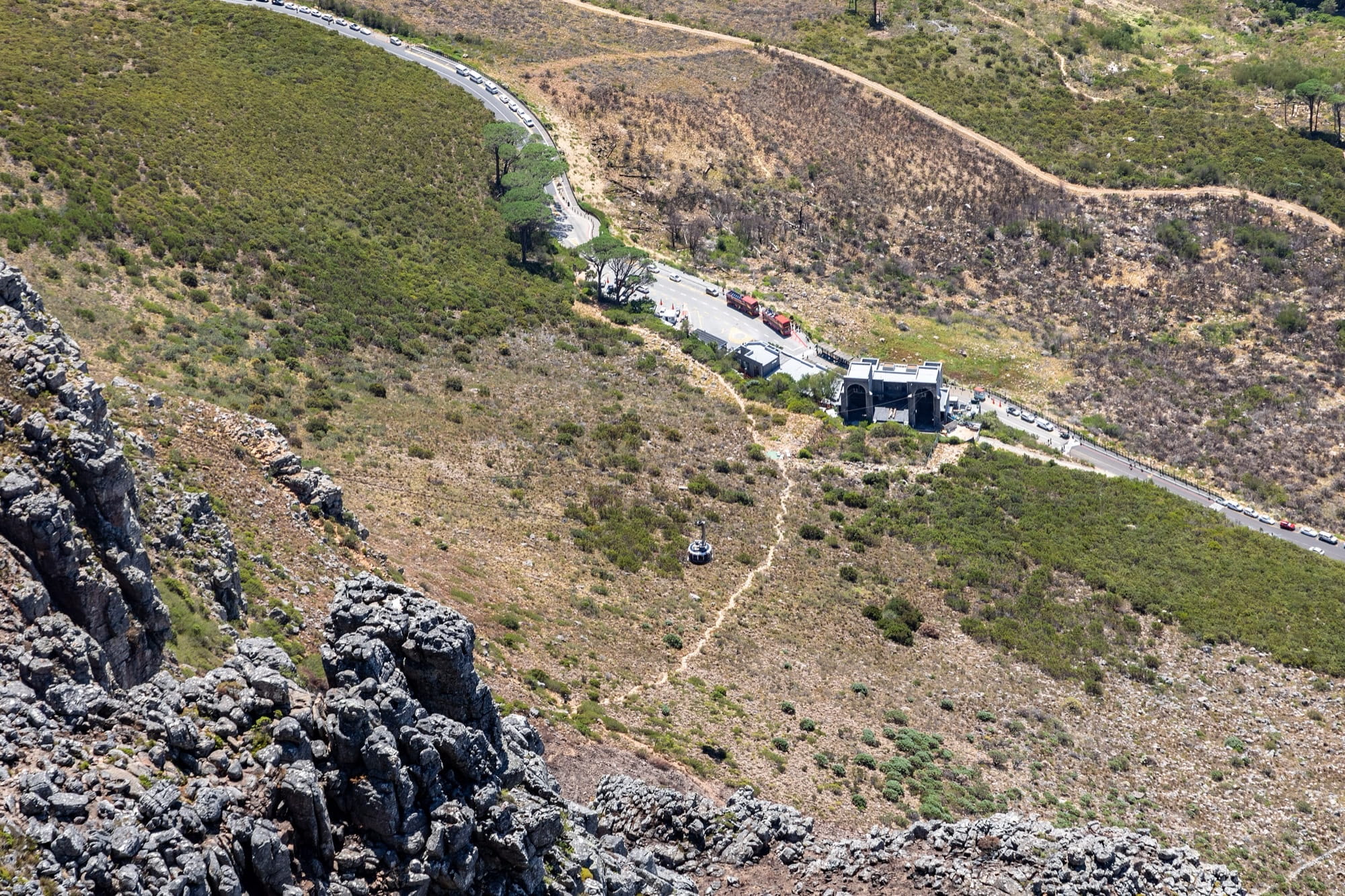
Table Mountain's Lower Cable Station is 6 km from the centre on Tafelberg Road, where parking fills early in peak season, so an app ride is simpler than driving. Kirstenbosch is 13 km out with free parking, and the City Sightseeing bus stops there (first bus about 09:50, every 20 minutes in summer, last 16:20 according to SANBI). Groot Constantia is a short drive further south.
The Cape Peninsula: car, tour or train
The loop from the city to Boulders (40 km), on to Cape Point (23 km) and back via Chapman's Peak or Ou Kaapse Weg is 130 to 150 km and a full day. Three ways to do it:
| Option | What it costs | Pros | Cons |
|---|---|---|---|
| Hire car | The day's share of the rental plus fuel, R68 Chapman's Peak toll if open, R515 Cape Point and R245 Boulders per international adult (2025/26 tariff) | Boulders at gate opening, Cape Point after the coaches leave, stops wherever you like | Baboon discipline at Cape Point (windows shut, no food visible), parking at Boulders, the 18:00 gate and R500 late-exit fine |
| Full-day tour (shared or private) | Tour price plus the same park fees, usually included or paid on the day | No driving, no navigation, a guide; City Sightseeing runs a Cape Point and penguin day tour | Fixed times, mid-morning arrival at Boulders with everyone else, less time at Cape Point |
| Train plus taxi | Metrorail Southern Line to Fish Hoek (R12 per trip in January 2026 reporting) then e-hailing | Cheap and scenic along False Bay to Muizenberg and Kalk Bay | The Fish Hoek to Simon's Town stretch has run only intermittently for years (sand on the tracks, infrastructure faults), so the train does not reliably reach Boulders and never reaches Cape Point |
Chapman's Peak Drive between Hout Bay and Noordhoek is a toll road (R68 for a car) that closes in bad weather and for rockfall or maintenance work; it was closed on the day we checked in September, and it closes for the Cape Town Cycle Tour on 14 March 2027. Its website shows the live status. If it is shut, Ou Kaapse Weg over the mountain takes about the same time.
The Winelands: how each mode really works
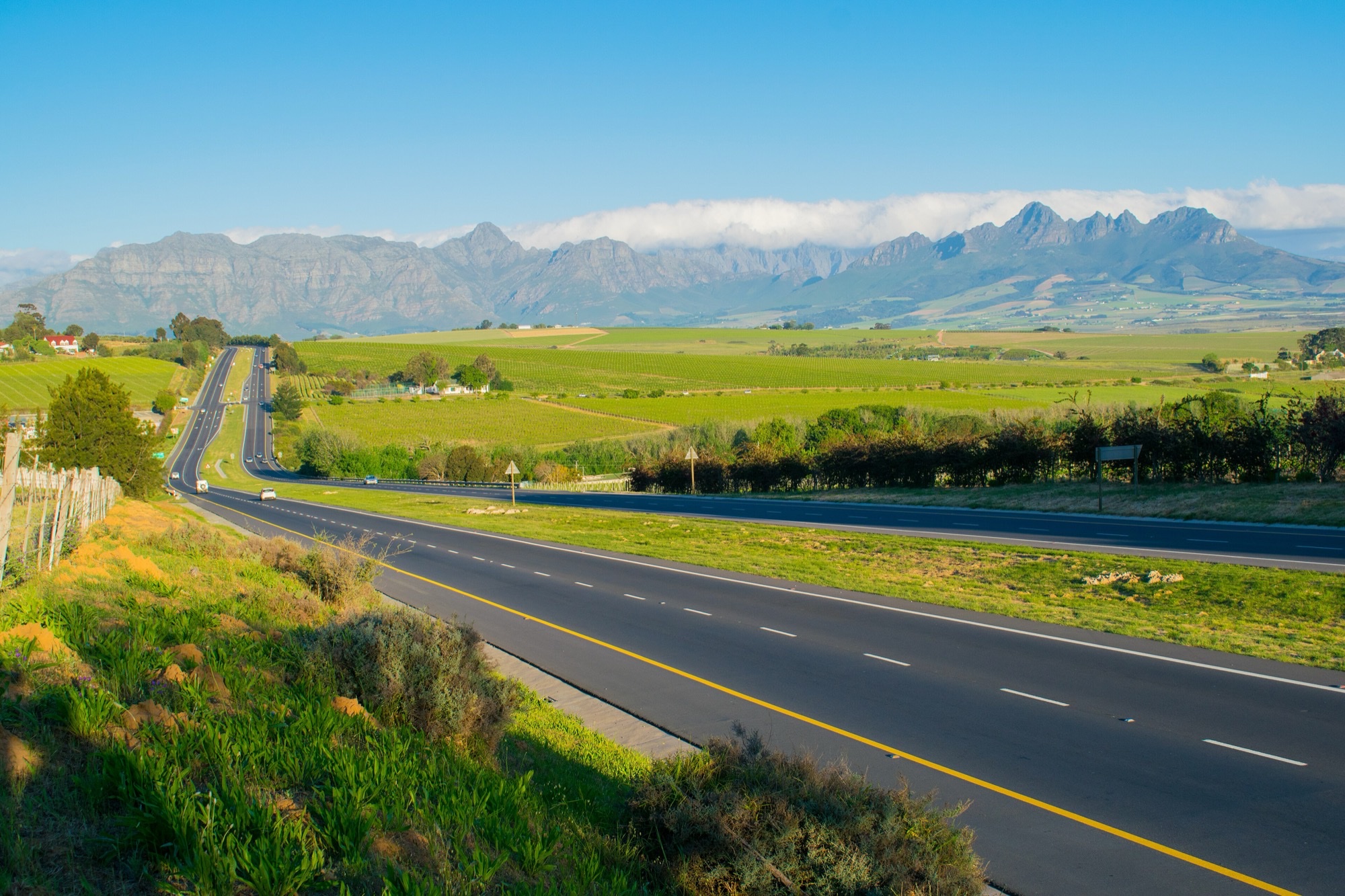
From the city, Stellenbosch is 54 km (about 45 minutes) and Franschhoek 75 km (just under an hour); from the airport, 34 km and 71 km. No scheduled bus or train serves the visitor usefully on these legs, so the options are:
- Hire car. The simplest for the move itself and for a Stellenbosch estate day with a designated driver. Once in Franschhoek, park it: the tram day and the village evenings are on foot.
- Private transfer. Book a car and driver for the Cape Town to Franschhoek leg and the airport run at the end; ask your accommodation for a licensed operator. The Franschhoek Wine Tram also sells its own return transfer from Cape Town with the tram ticket, bookable at least 48 hours before the tour date, which turns the tram into a car-free day trip from the city.
- E-hailing. Uber lists Stellenbosch and long-distance "intercity" products in Cape Town, so an app ride out to the Winelands is possible. The problem is the return from a valley estate in the late afternoon, when few cars are nearby; treat e-hailing as a one-way tool, not a plan.
- Hop-on hop-off, once you are there. Franschhoek: the Wine Tram, R350 per adult, five colour lines leaving the Franschhoek Terminal between 08:45 and 13:00, tastings R60 to R260 per estate extra, lunches booked 24 hours ahead. Stellenbosch: the Vine Hopper, R450, three routes each on set weekdays (Northern Monday, Wednesday and Friday; Southern Tuesday, Thursday, Saturday and Sunday; Eastern weekdays), tastings R55 to R120 extra.
- Guided Winelands day tour from Cape Town. The no-decisions option if you are not sleeping in the Winelands at all: typically several estates in one day with transport included. It is the right answer for a three- or four-night city stay and the wrong one for the ten-day route, which gives the Winelands four nights.
Hermanus and the coast
Hermanus is 118 km from Cape Town (about an hour and a half), 93 km from Franschhoek over the Franschhoek Pass, and 103 km from the airport. It is a day trip by car from the Winelands or a two-night third base; there is no scheduled service a visitor can plan around, and a guided Hermanus day from Cape Town is a long day for a summer visit with no whales (the season is June to November). The scenic way back from Hermanus is Clarence Drive (R44) along the cliffs through Betty's Bay and Gordon's Bay to the N2, which adds distance but passes the Stony Point penguin colony.
Hiring a car: the rules and the habits
Licence. South Africa drives on the left. Rental companies require a valid, unexpired physical home-country licence with a photograph (digital licences are not accepted). For licences in a Latin-script language other than English, an International Driving Permit is recommended for translation; for licences in a non-Latin script it is required, and it must be issued in your home country before you leave (South Africa's Automobile Association issues them only to South African licence holders). Check your chosen company's terms, because they differ.
Speed and road rules. The Foreign Office notes limits of 120 km/h on highways and 60 km/h on major roads, and that at four-way stops (and at traffic lights that are out) the first vehicle to arrive has priority. Distances are short by South African standards but the Peninsula and the passes are slow roads; use the engine estimates in this guide as a floor, not a promise.
Habits that cover most of the advice. Keep bags and phones off the seats and out of sight. Do not stop for people flagging you down. Park in attended or well-lit places and use the car guards where they operate. Refuel before returning the car. On Day 10, allow 90 minutes from Franschhoek to the airport plus the return, and follow the same N2 routing as on arrival.
Power. The scheduled power cuts that once affected traffic lights and fuel stations had not happened for 490 consecutive days as of 18 September 2026 according to Eskom, which reported no scheduled cuts and a summer outlook still to be published. Check its status page before travel rather than planning around it.
Which approach for which traveller
| Traveller | Recommended mix | Days it covers |
|---|---|---|
| Two or more, confident drivers | Hire car from the airport for all ten days; e-hailing for city evenings; tram and Vine Hopper for the estates | Every day; the car sits parked on days 2, 4, 5 and 7 |
| Non-drivers or solo | E-hailing in the city, one full-day Peninsula tour, private transfer to Franschhoek, Wine Tram on foot, Stellenbosch by transfer or skip, transfer to the airport | Days 3, 6 and 10 by tour or transfer; the rest on foot and by app |
| City stay only (3 to 5 nights) | No car; e-hailing, MyCiTi, one Peninsula tour, one Winelands tour or the tram's Cape Town transfer | Everything from a Cape Town bed |
| Families with young children | Hire car with seats booked in advance; Boulders and Kirstenbosch by car; skip the ferry if the sea is up | Every day; the car is the changing room |
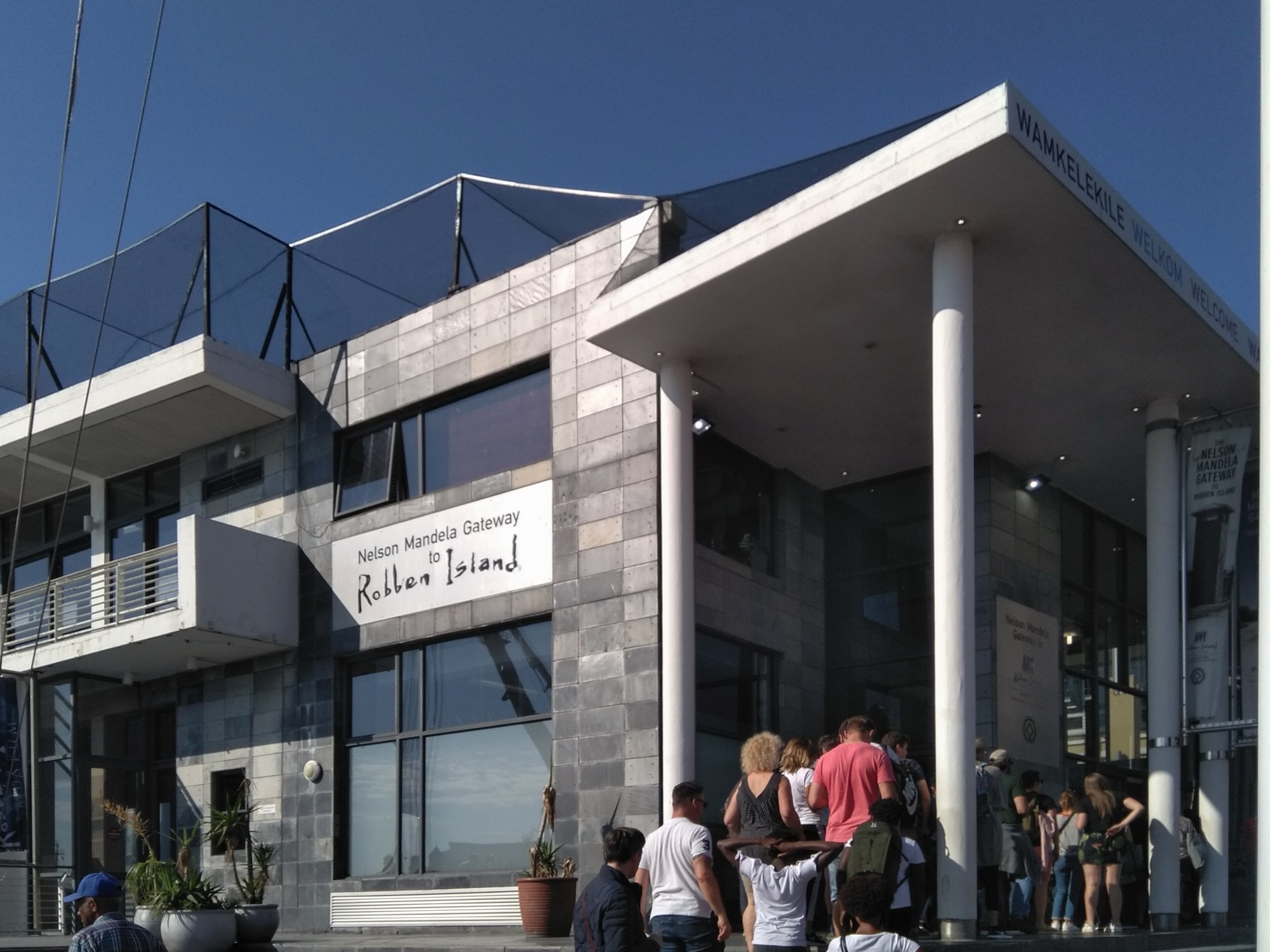
Whichever you choose, the fixed bookings are the same: the Table Mountain cableway ticket (online, valid seven days, so the wind cannot strand it), the Robben Island sailing, the tram line and any estate lunch. The month-by-month weather that decides the beach and mountain days is in Cape Town in January, and the base question that decides how much driving the Winelands days involve is in Stellenbosch or Franschhoek.
Getting around Cape Town FAQ
Is there a bus from Cape Town airport to the city?
Is Uber safe and available in Cape Town?
Do I need a car in Cape Town?
Can I take the train to Boulders Beach or Cape Point?
Can I drive in South Africa with my European or US licence?
Is the road from Cape Town airport dangerous?
How do I get to the Winelands without a car?
Photo credits
Hero: the Franschhoek Wine Tram, by South African Tourism, CC BY 2.0, via Wikimedia Commons. Lower Cable Station from Table Mountain by Dietmar Rabich, CC BY-SA 4.0, via Wikimedia Commons. Road to Stellenbosch by Andrew Atina, CC BY-SA 4.0, via Wikimedia Commons. Nelson Mandela Gateway by Moheen Reeyad, CC BY-SA 4.0, via Wikimedia Commons. All resized.