


On this route
Cape Town is the rare city where the airport, the mountain, the penguins and the vineyards all sit within an hour of each other, and that is exactly why ten-day plans go wrong. People try to give every corner of the Western Cape a bed of its own and spend the trip packing. This plan does the opposite. It keeps two bases: five nights in Cape Town for the mountain, the Peninsula, Robben Island and a reserve day, then four nights in Franschhoek for the wine tram, the Stellenbosch estates and one long day to the coast at Hermanus. Nine nights, one real move, and the last morning ends 71 km from the airport.
The honest answer to the question in the title is two. A third base only pays when you can give it two nights, and in the November to March window it costs you something visible: a Winelands day, or the reserve day that saves a wind-cancelled cable car. Below you will find the route, the arithmetic behind the base decision, every gate fee and opening time we checked against the operators in September 2026, what the summer south-easter does to the plan, and what it would really cost in nights to add the Garden Route.
- Duration
- 10 days / 9 nights
- Bases
- 2 (Cape Town 5, Franschhoek 4)
- Transport
- Hire car or private transfers; e-hailing in the city; Wine Tram and Vine Hopper for the estates
- Pace
- Balanced, with one reserve day
- Best season
- November to March (southern summer)
Your 10-day route at a glance
Bases and nights
- Cape Town 5 nights (days 1 to 5)
- Franschhoek 4 nights (days 6 to 9)
Day 1 lands you in Cape Town in the morning, as most overnight flights from Europe do, and keeps the afternoon to the V&A Waterfront. Day 2 is Table Mountain on the first clear, calm morning, then Bo-Kaap and the city centre. Day 3 is the Cape Peninsula loop: Boulders at gate opening, Cape Point before the coaches, home over Chapman's Peak if the road is open. Day 4 pairs the Robben Island ferry with an afternoon at Kirstenbosch. Day 5 is deliberately empty: it absorbs whichever booking the wind cancelled, and otherwise becomes a beach and Constantia wine day. Day 6 drives out through Stellenbosch and over the Helshoogte Pass to Franschhoek. Day 7 is the Wine Tram, Day 8 the Stellenbosch estates or Paarl, Day 9 an optional run over the Franschhoek Pass to Hermanus, and Day 10 is a slow valley morning before the hour's drive to the airport for an evening flight.
How many bases do you really need?
Every base costs two half days: the morning you pack and check out, the afternoon you arrive and settle. With nine nights, a third base turns roughly a full day of sightseeing into logistics, so it has to buy something you cannot get as a day trip. The table shows the realistic options for this window and what each one costs and gains.
| Option | Nights | What you gain | What it costs you |
|---|---|---|---|
| Two bases (this plan) | Cape Town 5, Franschhoek 4 | One move, a reserve day for wind, four unhurried Winelands days, Hermanus as a day trip | Hermanus is a 93 km drive each way over the Franschhoek Pass; no coastal evening |
| Three bases with Hermanus | Cape Town 5, Franschhoek 2, Hermanus 2 | Cliff path at dawn, Hemel-en-Aarde estates, a quieter last two days, airport 103 km away | One Winelands day and the choice between the tram and the Stellenbosch estates; in summer there are no whales, so the coast is the prize, not the wildlife |
| Three bases with the Peninsula | Cape Town 4, Simon's Town 2, Franschhoek 3 | Boulders at opening from the doorstep, Cape Point in the late afternoon, Kalk Bay evenings, warmer False Bay water | The city reserve day; Robben Island has to fit Day 2 or Day 5; one Winelands day |
| Two bases, Stellenbosch instead | Cape Town 5, Stellenbosch 4 | Walkable evenings, a bigger town, lower prices, the Wine Tram still a 31 km day trip | Harder without a car, because the Stellenbosch estates are spread around the town |
| Garden Route inside 10 days | Cape Town 3, Franschhoek 1, coast 5 | Knysna and Plettenberg Bay | Two driving days of about six hours, Cape Town cut to three nights, the Winelands to a stop; see the longer version below |
Our recommendation is the first row for a first visit. Take the second row if you have already seen Cape Town, or if the coast matters more to you than a second Winelands day. Take the third if you are travelling with children who will want the beach every afternoon. The Stellenbosch swap is covered in Stellenbosch or Franschhoek, and the driving question in Getting Around Cape Town and the Winelands.
Who this route suits, and who should change it
This plan is for a first visit to the Cape by people who want the city, the coast and the wine without a safari in the same ten days. It works for couples, for families with children old enough for a 3.5-hour ferry and a full Peninsula day, for self-drivers, and for non-drivers who are willing to pay for one private transfer and use the tram and tours for the rest. It assumes an evening departure on Day 10, which is how most Europe-bound flights leave Cape Town.
Change it if you are here for whales (June to November is the season, so a summer Hermanus stop is about cliffs and wine), if you have only a week (drop the Hermanus day and one Winelands day and keep Cape Town at four nights), or if your dates fall between about 10 December and 12 January, when South African schools are on holiday and the beaches, Boulders and the cableway queue are at their busiest. In that period, book the ferry and the tram before the flights.
Six decisions to make before you book
1. Car, tours or transfers
A hire car makes Days 3, 6, 8, 9 and 10 simple and is the cheaper option for two or more people. Driving is on the left, the airport road needs a little care (see decision 6), and rental firms want a physical photo licence: an International Driving Permit is recommended for licences in a Latin-script language other than English and required for non-Latin scripts, and you have to get it at home. If you would rather not drive, the plan still works: e-hailing in the city, a full-day Peninsula tour on Day 3, a private transfer to Franschhoek on Day 6, the tram on foot, and a transfer to the airport on Day 10. Uber and Bolt both operate in Cape Town and are among the operators authorised to collect at the airport.
2. When inside the window
November and the first week of December are the sweet spot: summer weather, cableway hours already extended, prices and crowds not yet at their peak. Mid-December to mid-January is the busiest and most expensive stretch. February is warm and calmer, and March is the shoulder month, with one big exception: the Cape Town Cycle Tour on 14 March 2027 closes Peninsula roads including Chapman's Peak for the day. Our month guide, Cape Town in January, goes through weather, wind and daylight in detail.
3. The cableway is a window, not an appointment
The Table Mountain Aerial Cableway runs weather permitting and closes in strong wind. Do not build the trip around a fixed cableway day. Buy the ticket online (R475 adult return at the 2026/27 rate, valid seven days from the chosen date), go up on the first clear, calm morning of the stay, and if the wind wins on every day you have, reschedule or refund through Webtickets within the seven days. In December and January the first car is at 08:00 and the last car down at 21:00, which is why the plan puts the mountain on Day 2 with Days 4 and 5 as fallbacks.
4. Book Robben Island as soon as your dates are fixed
Ferries leave the Nelson Mandela Gateway at the V&A Waterfront at 09:00, 11:00, 13:00 and 15:00 in the September to April season, the whole tour takes about 3.5 hours, and sailings are weather and demand permitting. December and January departures fill early, and rough seas cancel them. Book the Day 4 morning sailing online early and keep Day 5 open as the second chance.
5. Franschhoek or Stellenbosch
Franschhoek wins this plan for one practical reason: the Wine Tram turns a full estate day into something you do on foot from a village bed, so nobody drives after tasting. Stellenbosch is the better base for a bigger, cheaper, more lived-in town, and its Vine Hopper does the same job on set days of the week. The full comparison is in Stellenbosch or Franschhoek.
6. Know the airport road before you land
The UK Foreign Office's South Africa advice, last updated in July 2026, is specific about Cape Town International: stay on the N2 and M3 rather than the R300, use the signed airport approach road (exit 16 on the N2) rather than Borcherd's Quarry Road, plan the journey before you leave, and do not let the navigation app take you off the main roads to save two minutes. That applies to Day 1, Day 6 if you leave via the N2, and Day 10. It is a routing habit, not a reason to skip the trip.
Day-by-day plan
Day 1: Arrive, and let the Waterfront do the work
Overnight flights from Europe typically land in the morning, with only a one- or two-hour time difference, so there is no jet lag to sleep off. Collect the hire car or take an authorised e-hailing car from the designated pick-up area to your Cape Town base (19 km to the city centre, about 20 minutes without traffic, longer in the morning peak). Check-in is usually 14:00; leave the bags and walk the V&A Waterfront, where the Two Oceans Aquarium is open 09:30 to 18:00 and the Zeitz MOCAA fills a grain silo with contemporary African art. Buy the cableway ticket tonight if the forecast for the morning looks still.
Where to sleep: the City Bowl and Gardens for walking to restaurants, Sea Point and Green Point for the promenade and easy Waterfront access, Camps Bay for the beach at a price. All of them are within 15 minutes of the Lower Cable Station.
Day 2: Table Mountain first, then Bo-Kaap
Be at the Lower Cable Station on Tafelberg Road for the first car at 08:00. Parking along the road fills quickly in peak season, so an e-hailing car is simpler than driving. Two hours on top is enough for the main walks and the views over the city and the Peninsula. Come down, and give the rest of the day to Bo-Kaap's painted houses and its museum on Wale Street, then the Company's Garden, Greenmarket Square and the District Six Museum. If the wind has shut the cableway, swap today with Day 4 or Day 5 and do the city first. Anyone planning to hike up Platteklip Gorge or Lion's Head instead should go in a group of four or more on the busy marked routes; the Foreign Office notes recent muggings of hikers on Lion's Head and Signal Hill.
Day 3: Boulders, Cape Point and the Peninsula loop
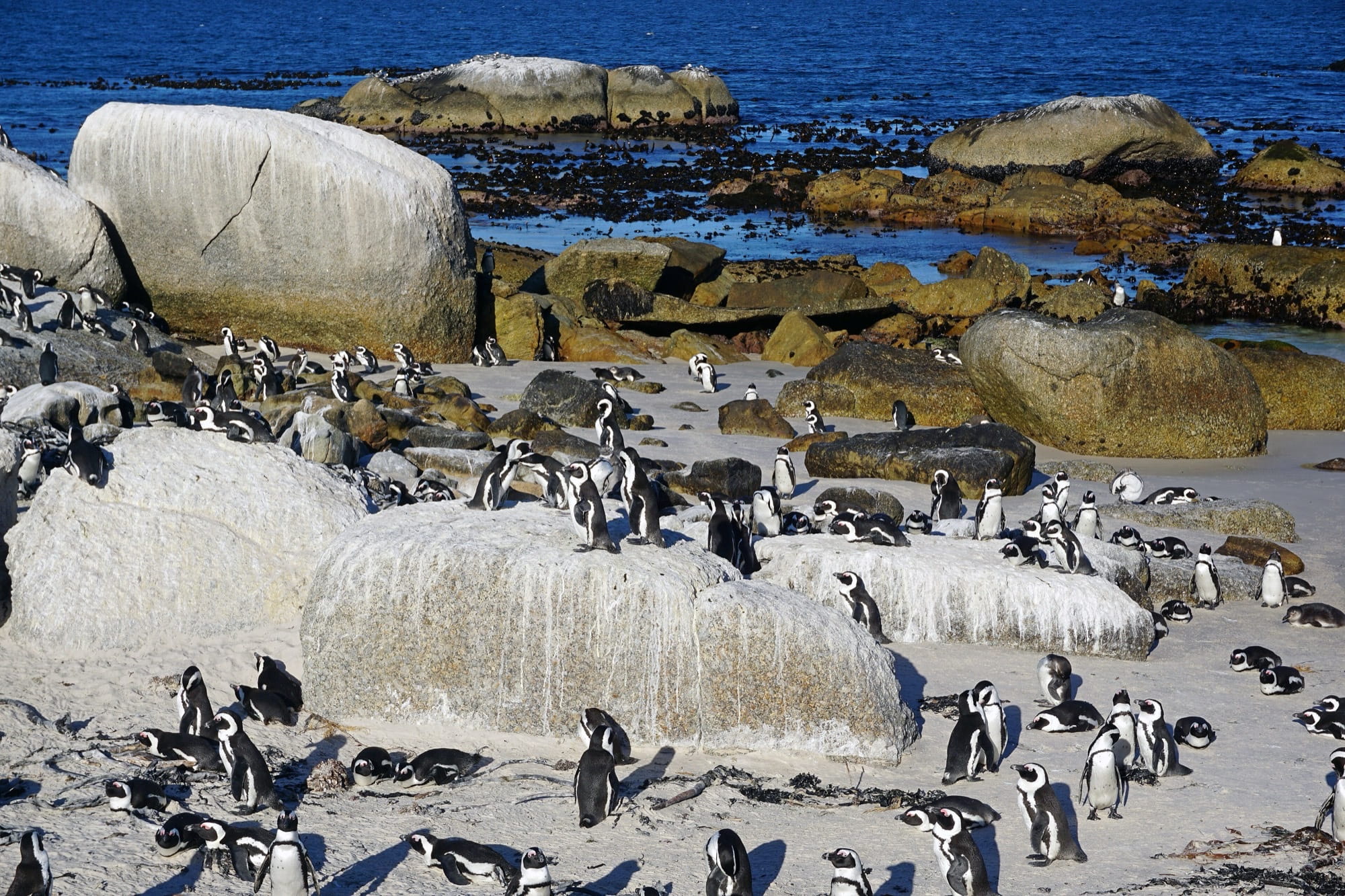
Leave by 07:30. Boulders Penguin Colony at Simon's Town is 40 km and about 40 minutes away, its car park is small, and SANParks itself says to arrive early in peak summer. The gate opens around 07:00 in December and January and 08:00 in the other summer months (SANParks does not publish the hours online, so treat these as indicative). The boardwalks at Foxy Beach put you a few metres from the birds; the conservation fee is R245 per international adult and R120 per child at the tariff valid to 31 October 2026, and the gate takes cards only. December is the penguins' moulting month, when they stay on land for about three weeks, so the colony is very much present.
Continue 23 km south to the Cape of Good Hope section of Table Mountain National Park. Summer gates are 06:00 to 18:00 with exit by sunset, and there is a R500 fine for late exits. Entry is R515 per international adult and R250 per child, paid once per vehicle by card at the gate, and SANParks raises its fees every 1 November, so expect a higher figure for the 2026/27 season. The Flying Dutchman funicular (R115 return) runs 09:00 to 17:30 in summer, or walk the path to the old lighthouse. Baboons here are wild and drawn to food: keep windows and doors shut when they are around, never eat in the open near them, and never feed them. Diaz Beach is not for swimming, because of rip currents.
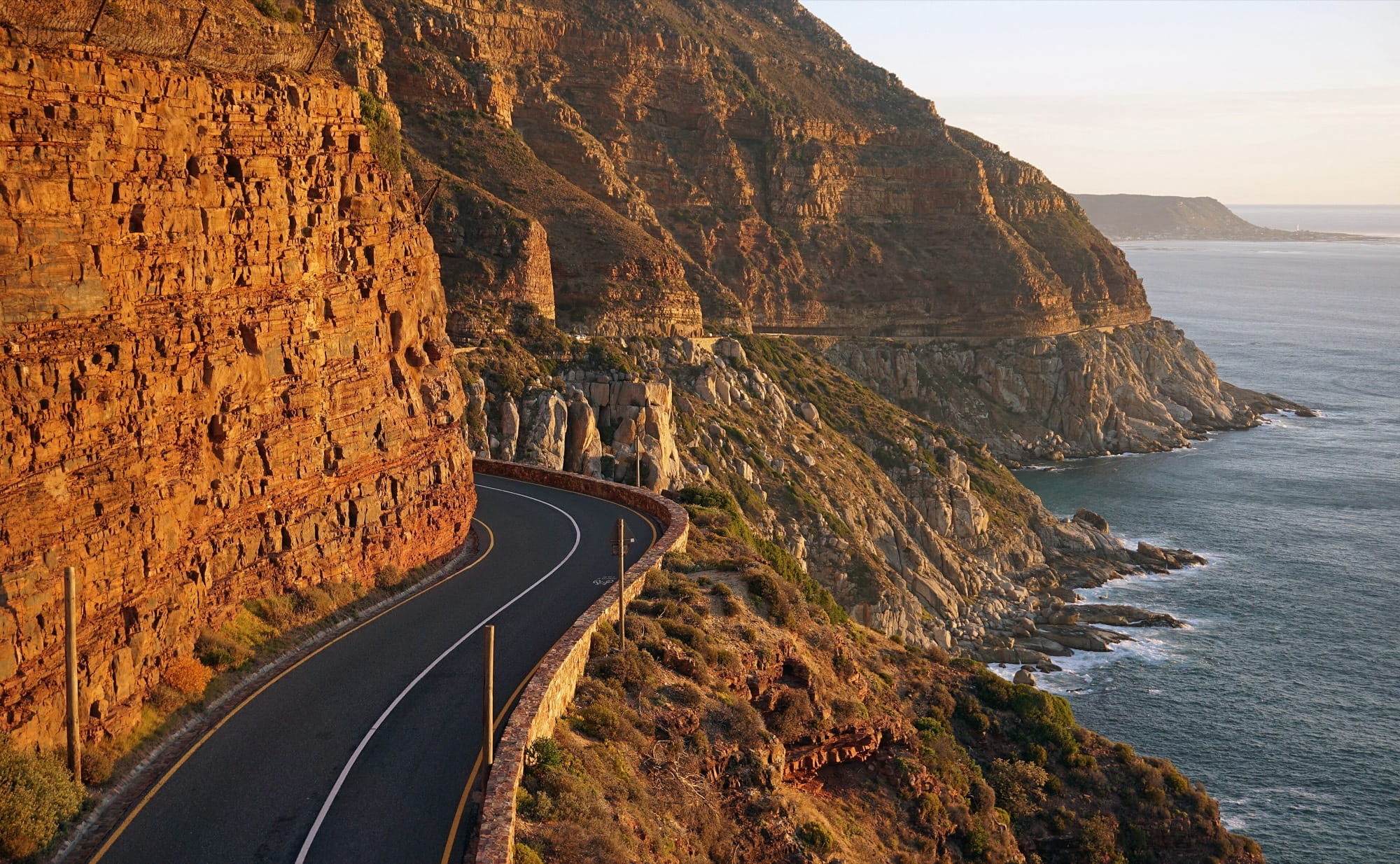
Go home via Chapman's Peak Drive if the live status page shows it open (R68 toll for a car; it closes in bad weather and for rockfall work, and it was closed on the day we checked in September). The alternative over Ou Kaapse Weg is about the same time. Either way you reach Hout Bay for a harbour fish supper and are back in the city 23 minutes later. The whole loop is 130 to 150 km.
Day 4: Robben Island in the morning, Kirstenbosch after
Take the 09:00 or 11:00 sailing from the Nelson Mandela Gateway. The ferry crossing, the tour of the island and the walk through the prison take about 3.5 hours; non-South African adults pay R600 and under-18s R310. Back on land, go straight to Kirstenbosch National Botanical Garden on the eastern slopes of the mountain: 13 km from the centre, open 08:00 to 19:00 from September to March, R270 for adults from outside Africa and R40 for children aged 6 to 17, with free parking at the gates and a City Sightseeing bus stop if you are car-free. The Boomslang canopy walkway and the protea slopes take a couple of hours, and on selected summer Sundays the lawns host evening concerts.
Day 5: The reserve day
This day exists for the south-easter. If the cableway or the ferry was cancelled earlier, this is where it goes. If everything ran, choose the beach by the wind: when the south-easter is blowing, Clifton's four beaches sit in the wind shadow of Lion's Head and are the calmest sand in the city, with Atlantic water at a bracing 12 to 16 degrees; on the rare still or north-westerly day, cross to False Bay for Muizenberg's warmer water and Kalk Bay's harbour. Finish with a tasting at Groot Constantia, South Africa's oldest wine farm (1685), open daily 09:00 to 18:00 with the last tasting ticket at 17:00, which quietly covers the "Cape Town wine" box before you even reach the Winelands.
Day 6: Through Stellenbosch to Franschhoek
Leave after the morning peak. Stellenbosch is 54 km and about 45 minutes away: walk oak-lined Dorp Street, look into Oom Samie se Winkel, and stop at one estate on the way out. Then take the R310 over the Helshoogte Pass, 31 km of vineyard and mountain, into Franschhoek for a 14:00 check-in. Choose a bed in or within walking distance of the village so that tomorrow's tram terminal on Main Road and the restaurants are on foot. Non-drivers should pre-book a private transfer for this leg; the e-hailing apps list intercity products, but the return trip from a valley estate is unreliable.
Day 7: The Wine Tram
The Franschhoek Wine Tram's hop-on hop-off ticket is R350 per adult and R90 for children aged 3 to 17, for a choice of five colour-coded lines that leave the Franschhoek Terminal (corner of Main Road and Cabriere Street) between 08:45 and 13:00; the Navy and Orange lines can also be joined at the Groot Drakenstein Terminal on the R45. Three or four estates make a good day from one of the earlier departures. Tastings are not included and cost roughly R60 to R260 per estate; book the line and time in advance, and reserve any estate lunch at least 24 hours ahead, because the popular ones fill.

Day 8: Stellenbosch estates, or a quieter Paarl day
Drive the 31 km back to Stellenbosch and let the Vine Hopper do the estate driving: R450 per person, three routes that each visit five or six farms, with tastings extra at about R55 to R120 per farm. The catch is the calendar. The Northern route runs Monday, Wednesday and Friday, the Southern route Tuesday, Thursday, Saturday and Sunday, and the Eastern route on weekdays, so match the day to the route you want. Self-drivers with a designated driver can instead work the R310 and R45 side of the valley (Boschendal, Babylonstoren and their neighbours), or spend a slower day in Paarl, 29 km away. This is also the day to drop if you would rather rest.
Day 9: Hermanus, or a last valley day
From Franschhoek the road over the Franschhoek Pass, past Theewaterskloof Dam and down to the N2 and the R43 brings you to Hermanus in 93 km and about 80 minutes. In summer this is a cliff-path, beach and wine day rather than a whale day: the southern right whales are in Walker Bay from June to November, with September to November the near-certain months. Walk a stretch of the cliff path from the Old Harbour, swim from the town beaches, and taste in the Hemel-en-Aarde valley on the way out. Come back the same way, or take the longer coastal loop through Betty's Bay (the Stony Point penguin colony is the quieter alternative to Boulders) and Clarence Drive to Gordon's Bay, then the N2. Leave by 08:30 and you are back for dinner. If a 190 km day is not how you want to end the trip, this is the day to stay put.
Day 10: A valley morning and the airport
Franschhoek to the airport is 71 km and about an hour without traffic, so a late breakfast and a last walk are realistic before an evening long-haul departure. Refuel before you return the car, allow 90 minutes for the drive plus the car return, and follow the same routing advice as on Day 1. If your flight leaves in the morning instead, sleep the last night in Cape Town or next to the airport (the reversed version below solves this more elegantly).
What it costs at the gate
Prices below are the operators' published rates in September 2026, converted at the European Central Bank reference rates of 21 September 2026 (EUR 1 = R18.68, USD 1 = about R16.26) and rounded. SANParks conservation fees are the 1 November 2025 to 31 October 2026 tariff and will rise on 1 November 2026; the cableway rate is the 1 July 2026 to 30 June 2027 one.
| Stop | Rand | Approx. EUR / USD | Notes |
|---|---|---|---|
| Table Mountain cableway, return | R475 online (R530 at the ticket office) | €25 / $29 | Valid 7 days; child 4 to 17 R230 online; weather permitting |
| Boulders Penguin Colony | R245 | €13 / $15 | Child 2 to 11 R120; card only |
| Cape of Good Hope (Cape Point) | R515 | €28 / $32 | Child R250; one card payment per vehicle; funicular R115 return extra |
| Chapman's Peak Drive toll | R68 per car | €4 / $4 | Closes in bad weather; check the live status |
| Robben Island tour | R600 | €32 / $37 | Under-18 R310; 3.5 hours; weather and demand permitting |
| Kirstenbosch | R270 | €14 / $17 | Child 6 to 17 R40; online tickets valid 7 days, no refunds |
| Franschhoek Wine Tram, hop-on hop-off | R350 | €19 / $22 | Child 3 to 17 R90; tastings R60 to R260 per estate extra |
| Vine Hopper, Stellenbosch | R450 | €24 / $28 | Tastings R55 to R120 per farm extra; route depends on weekday |
For a couple, the fixed attraction bill for this plan comes to roughly R5,900 before tastings, meals and the car, or about R6,100 with the Cape Point funicular: around €320. Cape Point and Boulders gates are cash-free, and card payment is the norm at estates and restaurants.
Weather and wind on this route
The Cape has a Mediterranean climate: dry summers, wet winters. The South African Weather Service's long-term normals (published through the WMO) give Cape Town a mean maximum of 23.5°C in November, 24.9°C in December, 26.1°C in January, 26.5°C in February and 25.4°C in March, with 14 to 20 mm of rain a month and about five rain days in January, against 69 to 93 mm a month from May to August. Cape Town Tourism describes January days of 17 to 28°C with occasional spikes to 40°C, and the sun sets around 20:00 through January.
The variable that shapes the plan is wind, not rain. The south-easter, the "Cape Doctor", blows through the summer months and does three things: it closes the cableway for hours or days, it pulls cold Atlantic water to the surface on the Clifton and Camps Bay side, and it makes some beaches unpleasant while leaving others sheltered. The plan's answer is the same in every case: the mountain on the first clear morning, seven-day cableway tickets, the ferry booked early with Day 5 in reserve, and the beach chosen on the day by which way the wind is blowing.
Getting around: car, tours or transfers
In the city, e-hailing does everything this plan needs and the MyCiTi bus network covers the Atlantic seaboard, though its airport route has been suspended since December 2022 and was still suspended in September 2026. The Peninsula loop and the Winelands legs need a car, a tour or a transfer. The Southern Line train runs along False Bay to Fish Hoek and is a pleasant way to reach Muizenberg and Kalk Bay, but the final stretch to Simon's Town has been unreliable for years, so it is not the way to Boulders. Our separate guide, Getting Around Cape Town and the Winelands, costs out the three approaches day by day.
Shorter, longer and reversed versions
Seven days. Cape Town 4 nights, Franschhoek 2: keep Days 1 to 4, move to the valley on Day 5 with the Stellenbosch stop, tram on Day 6, airport on Day 7. You lose the reserve day, so buy the cableway ticket for Day 2 and accept that the wind may win.
Fourteen days with the Garden Route. Do not try to fit it into ten. Cape Town to Knysna is 488 km and about six hours of driving before stops. The workable version adds four nights to this plan: Hermanus one night on the way out (Day 10), Knysna or Plettenberg Bay two nights, and either a sixth driving day back to Cape Town or a one-way rental with a flight home from George. That is the difference between seeing the Garden Route and spending it on the N2.
Reversed, for morning flights. Airport to Stellenbosch is only 34 km and to Franschhoek 71 km, so you can drive straight to the Winelands on arrival, take nights 1 to 4 there and nights 5 to 9 in Cape Town, and sleep 19 km from the airport on the last night. This order also gives the wind-dependent bookings five later days to work with. It is the better order when your flight home leaves in the morning.
What to leave for another trip
The Garden Route, for the reasons above. Safari: the malaria-free reserves are a long drive or a flight away, and a two-night safari inside ten days would take the Winelands out entirely. The West Coast and the Cederberg, which shine in the August and September flower season rather than in summer. Whale watching, which is a June to November plan. And the Robben Island plus cableway plus Peninsula combination in a single day, which tour brochures sell and which the weather rarely allows.
Common mistakes
- Booking a "Table Mountain day" months ahead and refusing to move it. The ticket is valid for seven days precisely so that you can chase the weather.
- Arriving at Boulders at midday in December, when the car park is full and the boardwalk is a queue.
- Reaching Cape Point at 17:30, with the gate closing at 18:00 and a R500 fine for late exit.
- Letting the navigation app route you off the N2 and M3 between the airport and the city.
- Turning up at the tram terminal without a booked line, or at a top estate without a lunch reservation.
- Planning a Vine Hopper day without checking which route runs on that weekday.
- Sleeping in a Franschhoek guest farm 8 km from the village and then needing a car for every dinner.
- Giving Hermanus two summer nights for the whales, which left in November.
Entry rules, money and practical notes
Visas. Ordinary passport holders from the UK, USA, Canada, Australia and most EU countries can visit for up to 90 days without a visa; Poland and Cyprus get 30 days (Department of Home Affairs list of 9 December 2025). The passport should be valid for at least 30 days beyond departure and have two blank pages. Families travelling with children under 18 face additional documentation rules; check the Department of Home Affairs pages before booking.
Two online forms. Since 1 July 2026 every traveller entering or leaving South Africa must submit an online SARS traveller declaration (web portal or the SATMS app) no more than 24 hours before departure on the last leg; nobody is refused entry for missing it, but doing it in advance saves time at customs. South Africa's Electronic Travel Authorisation, launched in 2026, is mandatory only for eligible visa-required nationalities; visa-exempt travellers can apply voluntarily for a faster lane and do not need it. Both rules were new in 2026, so recheck them a month before you fly.
Power. Eskom, the national utility, reported 490 consecutive days without load shedding on 18 September 2026 and no scheduled cuts, and its 2026 winter outlook projected none; the summer outlook was due in the following weeks. Check the Eskom status page before travel, and do not plan around blackout schedules that no longer exist.
Money and time. The rand is the currency; cards are accepted almost everywhere and the national park gates take nothing else. South Africa is on UTC+2 all year, one hour ahead of Central European Time in winter and two ahead of the UK.
Cape Town and Winelands itinerary FAQ
How many bases do you need for 10 days in Cape Town and the Winelands?
Is Hermanus worth a night in summer?
Do I need a car for this itinerary?
How much are the Table Mountain cableway and Cape Point in 2026?
How far ahead should I book Robben Island?
Can I add the Garden Route to a 10-day trip?
What is the best month between November and March?
Is the drive from Cape Town airport safe?
Photo credits
Hero: Table Mountain from Blouberg, by South African Tourism, CC BY 2.0, via Wikimedia Commons. Chapman's Peak Drive by kallerna, CC BY-SA 4.0, via Wikimedia Commons. Boulders Beach penguins by kallerna, CC BY-SA 4.0, via Wikimedia Commons. Franschhoek Wine Tram by South African Tourism, CC BY 2.0, via Wikimedia Commons. All resized.