


On this route
January is Cape Town's high summer and its busiest month, and the two facts that matter for planning are not on the weather apps. The first is that January is dry: the long-term normals from the South African Weather Service give the city a mean maximum of 26.1°C, a mean minimum of 15.7°C and about 15 mm of rain over five or six rain days, against 69 to 93 mm a month in the winter. The second is that the sky being clear says nothing about whether you will get up Table Mountain, onto the Robben Island ferry or into the sea comfortably. That is decided by the south-easter, the summer wind Capetonians call the Cape Doctor, and this guide is about planning around it.
Short version: come in January if you want long hot days, the sun setting at 20:00 and the Winelands at their fullest, and accept that the first two weeks are the peak of South Africa's school holidays. Build the itinerary so that the wind-dependent bookings float inside a window rather than sit on a fixed day, pick beaches by the wind direction on the morning itself, and give the Winelands the days when the Peninsula is blowing. If you can choose within the season, the second half of January (schools reopen on 13 January 2027) and all of February keep the weather and lose much of the crowd.
What January in Cape Town actually feels like
Cape Town Tourism, the city's official tourism body, describes January days of 17 to 28°C with occasional heat spikes to 40°C, mostly dry, with more than 14 hours of daylight and the sun setting after 20:00. The normals confirm it: the coolest summer month is November (23.5°C mean maximum, 14 mm), December brings 24.9°C and 17 mm, January 26.1°C and 15 mm, February is marginally the hottest at 26.5°C, and March eases to 25.4°C with 20 mm. Rain arrives as the odd front and rarely lasts a day. Sunrise is at 05:38 on 1 January 2027 and 06:06 on the 31st; sunset drifts from 20:00 to 19:52. That gives you a usable outdoor day from 06:00 to nearly 21:00, which is the real reason a five-night city stay can fit the mountain, the Peninsula, the island, the garden and a beach.
The Winelands, 50 to 75 km inland, are a few degrees hotter in the afternoon and calmer, which is why a hot, windy Peninsula day is often a perfect Franschhoek day. The False Bay side of the Peninsula gets the wind head-on; the Atlantic side gets it over the mountain. Knowing which is which is most of the skill.
The south-easter: what it closes and what it opens
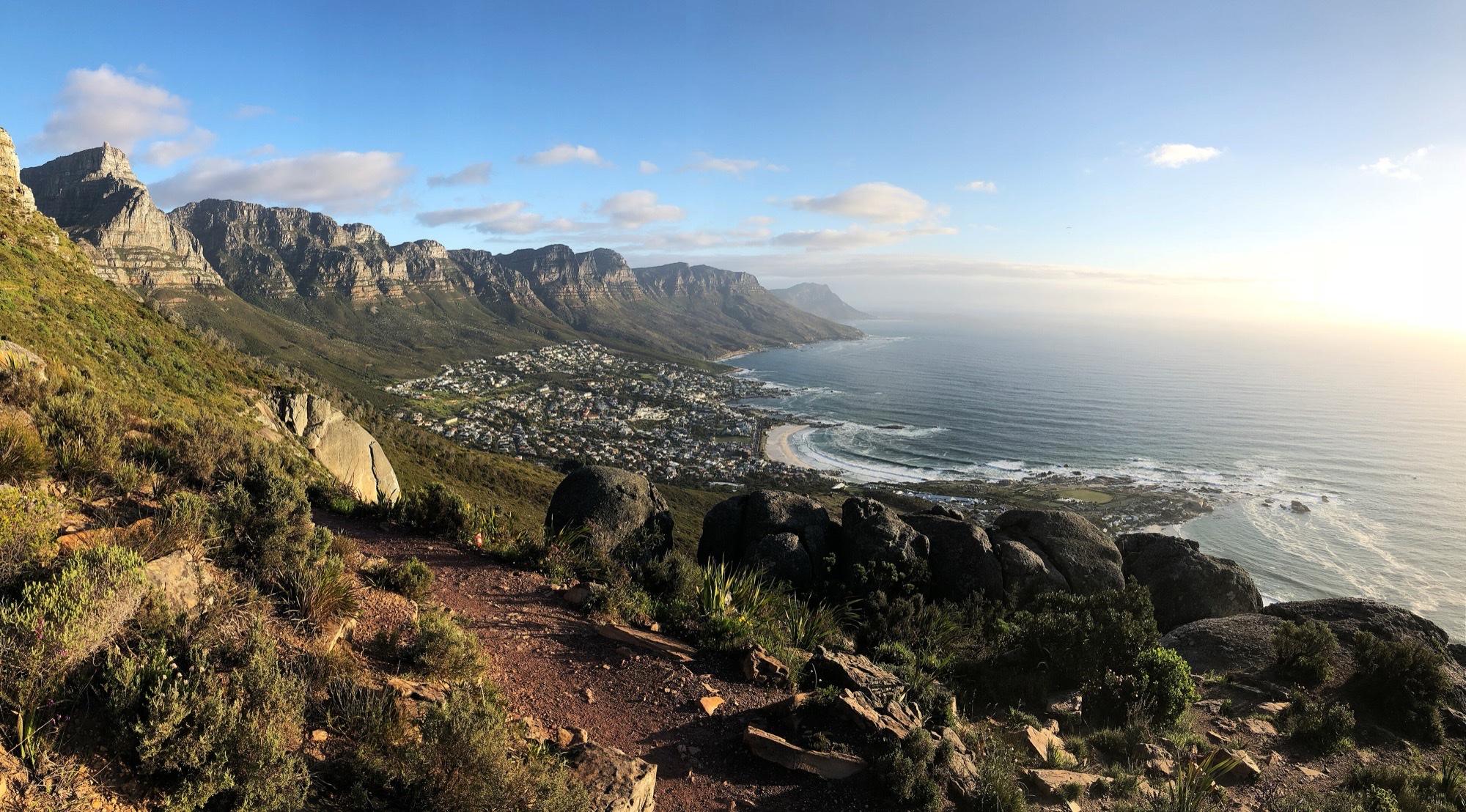
The south-easter blows from roughly September to March and is strongest in high summer. It does four things a visitor notices. It closes the Table Mountain cableway, sometimes for a few hours and sometimes for days, because the cable car does not run in strong wind. It cancels Robben Island sailings when the swell in Table Bay is up. It drags the warm surface water away from the Atlantic beaches and pulls cold water up from below, so Clifton and Camps Bay can drop to 12°C or lower while the sky is cloudless. And it lays the "tablecloth" over Table Mountain: the white cloud that pours over the edge and hides the top even when the city is in full sun.
What it opens is just as useful. Clifton's four beaches sit in the wind shadow of Lion's Head and are the classic south-easter refuge, and Llandudno further south behaves the same way. The Winelands are largely out of it. The east-facing mountain trails are sheltered while the city side is blasted. And the day after a hard blow is often the clearest, stillest morning of the week, which is exactly when to be at the Lower Cable Station for the 08:00 first car.
Beaches by wind direction
| Wind | Go to | Water | Notes |
|---|---|---|---|
| South-easter (most summer days) | Clifton 1st to 4th, Llandudno, Camps Bay if the wind is moderate | Cold Atlantic, 12 to 16°C, sometimes under 10°C after a long blow | Sheltered by Lion's Head; arrive before 10:00 in peak season for parking |
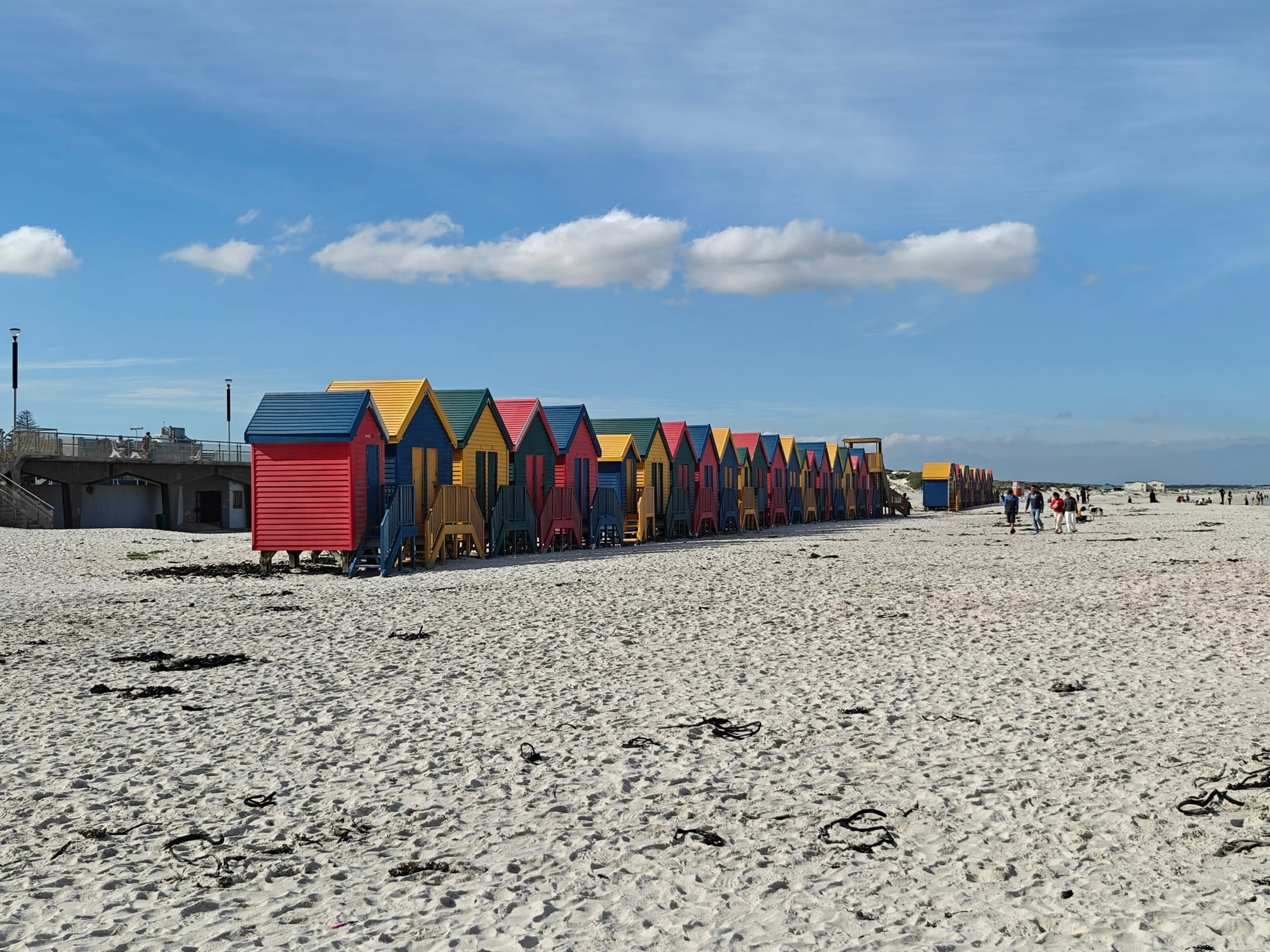
| Light or variable | Camps Bay, Clifton, Muizenberg, Kalk Bay tidal pools | Atlantic still cold; False Bay noticeably warmer | The best all-round days; also the mornings for Table Mountain and Robben Island |
| North-westerly (rare in January) | Muizenberg, St James, Fish Hoek, Boulders | False Bay, warmer than the Atlantic: northern False Bay surface water ranges from 13 to 22°C over the year, with the warm end in summer | Usually means a front is passing; a Winelands day is the alternative |
| Any wind, families | Boulders (penguin beach), St James and Kalk Bay tidal pools | False Bay | Boulders has a SANParks fee (R245 international adult, R120 child at the 2025/26 tariff) and small car parks |
Two habits make this work. Look at the flags and the sand before you commit: if the beach is sandblasting, you have the wrong side of the Peninsula. And do not judge the water by the air temperature. A 30°C afternoon at Clifton with 12°C water is normal; the Atlantic side is for lying on the sand and short swims, False Bay for staying in.
Booking order for a January trip
- Flights and beds first, then Robben Island. Ferries leave the Nelson Mandela Gateway at the V&A Waterfront at 09:00, 11:00, 13:00 and 15:00 in the September to April season (R600 per non-South African adult, R310 under 18, about 3.5 hours). They sail weather and demand permitting, and January departures fill early. Book online the moment the dates are firm, put the sailing early in the stay, and keep a later day free in case of cancellation.
- The Franschhoek Wine Tram. The operator advises booking ahead if you want a specific line and departure time, and January is when that matters. The hop-on hop-off ticket is R350 per adult; pick a line, book it, and reserve any estate lunch at least 24 hours ahead.
- Cape Town Cycle Tour dates, if your trip runs into March. The 2027 ride is on 14 March 2027 and closes Peninsula roads including Chapman's Peak for the day. In January it is not a factor.
- The cableway, last. Buy the online ticket (R475 adult return at the 2026/27 rate, R530 at the ticket office) a day or two ahead once the forecast looks calm. Tickets are valid for seven days from the chosen date, so a closure costs you nothing: use it on the next open day or reschedule or refund through Webtickets within the validity. In December and January the first car is at 08:00 and the last car down at 21:00, which makes an evening ascent after a windy morning a real option.
- Kirstenbosch and the summer concerts. The garden is open 08:00 to 19:00 (R270 international adult, R40 children 6 to 17, online tickets valid seven days and non-refundable). The Summer Sunset Concerts run on selected Sundays through the season and are separate ticketed events; the SANBI listing shows a 23 January 2027 concert.
Crowds, prices and the school-holiday effect
South African public schools break on 9 December 2026 and reopen on 13 January 2027, and 16, 25 and 26 December and 1 January are public holidays. That fortnight either side of New Year is when Boulders' small car parks fill by mid-morning, the cableway queue is longest even with online tickets, Camps Bay parking disappears and the N2 out of the city is slow on Friday afternoons. Cape Town Tourism calls January the peak for flight and accommodation prices, with February calmer but still busy.
The practical consequences for a January itinerary:
- Boulders at gate opening (around 07:00 in December and January, indicative; SANParks does not publish the hours online) or after 16:00.
- Cape Point after lunch rather than mid-morning; the gate is open 06:00 to 18:00 in summer, and the park empties in the last two hours.
- Table Mountain at 08:00 or after 18:00, never at 11:00.
- Book a Winelands bed in or next to the village rather than a guest farm, so evenings do not need a car.
- If your dates are flexible inside the season, take 14 January onwards or February: same weather, shorter queues, lower rates.
What to do on a windy January day
A blowing south-easter is not a lost day. Drive or take a transfer to the Winelands: Stellenbosch is 54 km and about 45 minutes from the city, Franschhoek 75 km and under an hour, and both are usually calm and hot. Walk the Sea Point promenade early, when the wind is lightest. Do Kirstenbosch, which sits on the sheltered eastern slopes and is at its greenest before the summer dries it. Spend the afternoon at Clifton. Or take the Southern Line train along False Bay to Muizenberg and Kalk Bay for the tidal pools and the harbour (the line's last stretch to Simon's Town has been unreliable for years, so the train is for the Muizenberg to Fish Hoek section, not for Boulders). Save the cable car and the ferry for the still morning that follows.
Heat, sun and safety
The UV index in a Cape Town January is high and the south-easter disguises it; sunburn on a windy beach day is the classic first-day mistake. Carry water on every walk. On Table Mountain, the Foreign Office notes recent muggings of hikers, including on Lion's Head and Signal Hill, and advises hiking in groups of four or more on busy marked trails, on popular days, and avoiding the quiet routes early and late. Heat days above 35°C are the days to swap a hike for the sea or the shade of the botanical garden. Load shedding, the scheduled power cuts of recent years, had not happened for 490 consecutive days as of 18 September 2026 according to Eskom; check the utility's status page before you fly, but do not plan around outage schedules.
How January compares with the rest of the season
| Month | Mean max / min | Rain | Planning notes |
|---|---|---|---|
| November | 23.5 / 13.2°C | 14 mm | Summer cableway hours already extended (first car 08:00, last down 20:00); last whales at Hermanus; shoulder prices until early December |
| December | 24.9 / 14.9°C | 17 mm | Schools out from 10 December; peak hours on the cableway (last car down 21:00); penguins moulting on land at Boulders; the busiest fortnight starts around the 16th |
| January | 26.1 / 15.7°C | 15 mm, about 5 rain days | Peak crowds and prices to 12 January, then easing; strongest south-easter; sunset 20:00 |
| February | 26.5 / 15.6°C | 17 mm | Hottest month by a fraction, calmer, schools in; cableway last car down 20:00 from 2 February |
| March | 25.4 / 14.2°C | 20 mm | Shoulder month; Cycle Tour 14 March 2027 closes Peninsula roads; Easter and the Two Oceans Marathon fall in April |
If January is your only option, it is a good one. If you can move, the smallest change with the biggest payoff is shifting to the second half of the month. The route in our 10-day Cape Town and Winelands itinerary is built for either, with a reserve day in the city for the wind; the transport choices for the beach days and the Winelands are in Getting Around Cape Town and the Winelands, and the base decision in Stellenbosch or Franschhoek.
Cape Town in January FAQ
Is January a good time to visit Cape Town?
How windy is Cape Town in January?
Can you swim in the sea in Cape Town in January?
Does Table Mountain close in January?
Are the Boulders penguins there in January?
Is there load shedding in Cape Town in January 2027?
What should I pack for Cape Town in January?
Photo credits
Hero: the tablecloth cloud on Table Mountain, by KodachromeFan, CC BY-SA 3.0, via Wikimedia Commons. Camps Bay from Lion's Head by Chs87, CC BY-SA 4.0, via Wikimedia Commons. Muizenberg bathing huts by Husskeyy, CC BY-SA 4.0, via Wikimedia Commons. All resized.