


On this route
January is the best month of the year for the inland Yucatán and a mixed one for its Caribbean coast, and most trip plans get the balance backwards. Mérida averages 38 mm of rain on about four days in January, with afternoons near 31 C and nights around 17 C, which is as good as the peninsula gets. Cancún's January normal is 136 mm on about eleven days, most of it arriving with the cold fronts that cross the Gulf, and the coast only dries out properly in February. So the answer to how you split a January trip is: put the cities and ruins first and give them the majority of your nights, put the beach last, and keep boat days on buffers that you can swap for a cenote if a front comes through.
This guide gives you the numbers by region, what they mean for daylight and crowds, and three sample splits for 7, 10 and 14 days. The full day-by-day for the recommended route is in the 10-day Yucatán itinerary; this article decides where your time should go before you open it.
January by region, at a glance
| Region | Rain | Rain days | Temperatures | What it means |
|---|---|---|---|---|
| Interior: Mérida, Valladolid, the ruins | 38 mm | about 4 | 17 to 31 C | The dry season proper: full days outside, cool evenings, the best month of the year for Chichén Itzá and Uxmal |
| Caribbean coast: Cancún, Playa del Carmen, Tulum | 136 mm | about 11 | 21 to 28 C | Warm and mostly fine, but nortes bring wind, grey sea and showers for a day or two at a time |
| February, interior | 32 mm | about 3 | 17 to 32 C | Same as January; Carnival crowds in the week before 10 February 2027 |
| February, coast | 46 mm | about 5 | 21 to 29 C | Noticeably drier; the better beach month of the two |
Two things are missing from those tables. Daylight is short: in mid-January the sun rises at about 06:37 and sets at 17:37 in Mérida, and at about 07:26 and 18:25 clock time on the coast, which is in a different time zone. And the normals hide the shape of coastal rain, which comes in bursts on norte days rather than as a daily afternoon shower.
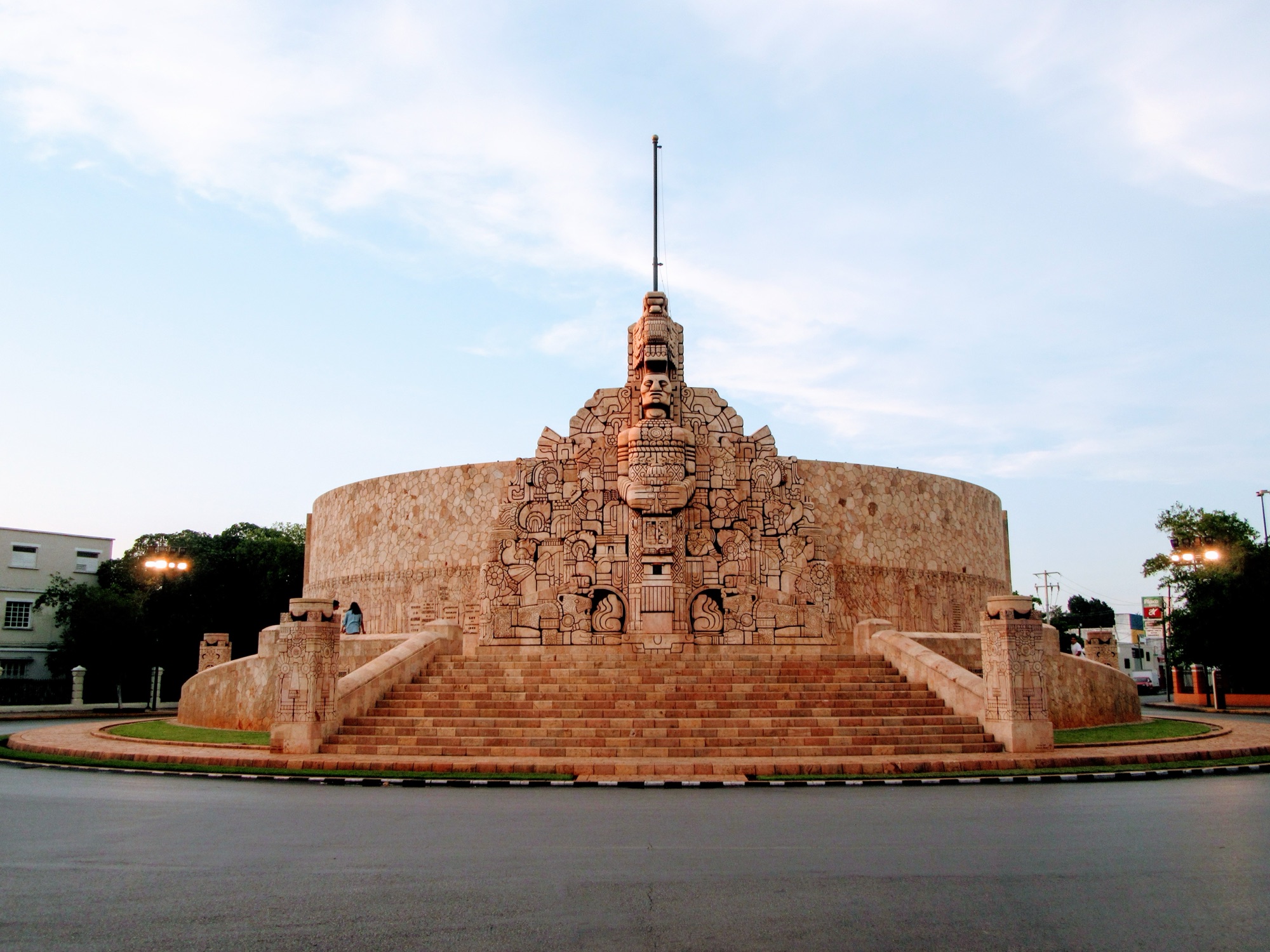
What January feels like in the interior
Mérida and Valladolid are at their most comfortable. Mornings start cool enough for a light layer, the ruins are bearable until early afternoon, and the town cenotes are pleasantly cold rather than welcome relief. The state forecast for the 2026 to 2027 front season expects eight fronts in January and nine in December, and El Niño is expected to keep minimum temperatures above normal, so plan on a few grey, breezy days rather than cold ones. Inland, a norte mostly means a cooler walk.
The constraint that shapes an inland day is not weather but opening hours. Chichén Itzá, Uxmal and Ek Balam all open at 08:00, Chichén Itzá stops admitting visitors at 15:00, and the coach groups from the coast arrive at the big site from about 10:30. With the sun down by 17:40, the useful pattern is one ruin at opening, a swim in the early afternoon, and the town in the evening. Trying to fit two major sites into one January day is how people end up at the second one in the heat with the crowds.
The Caribbean coast in January
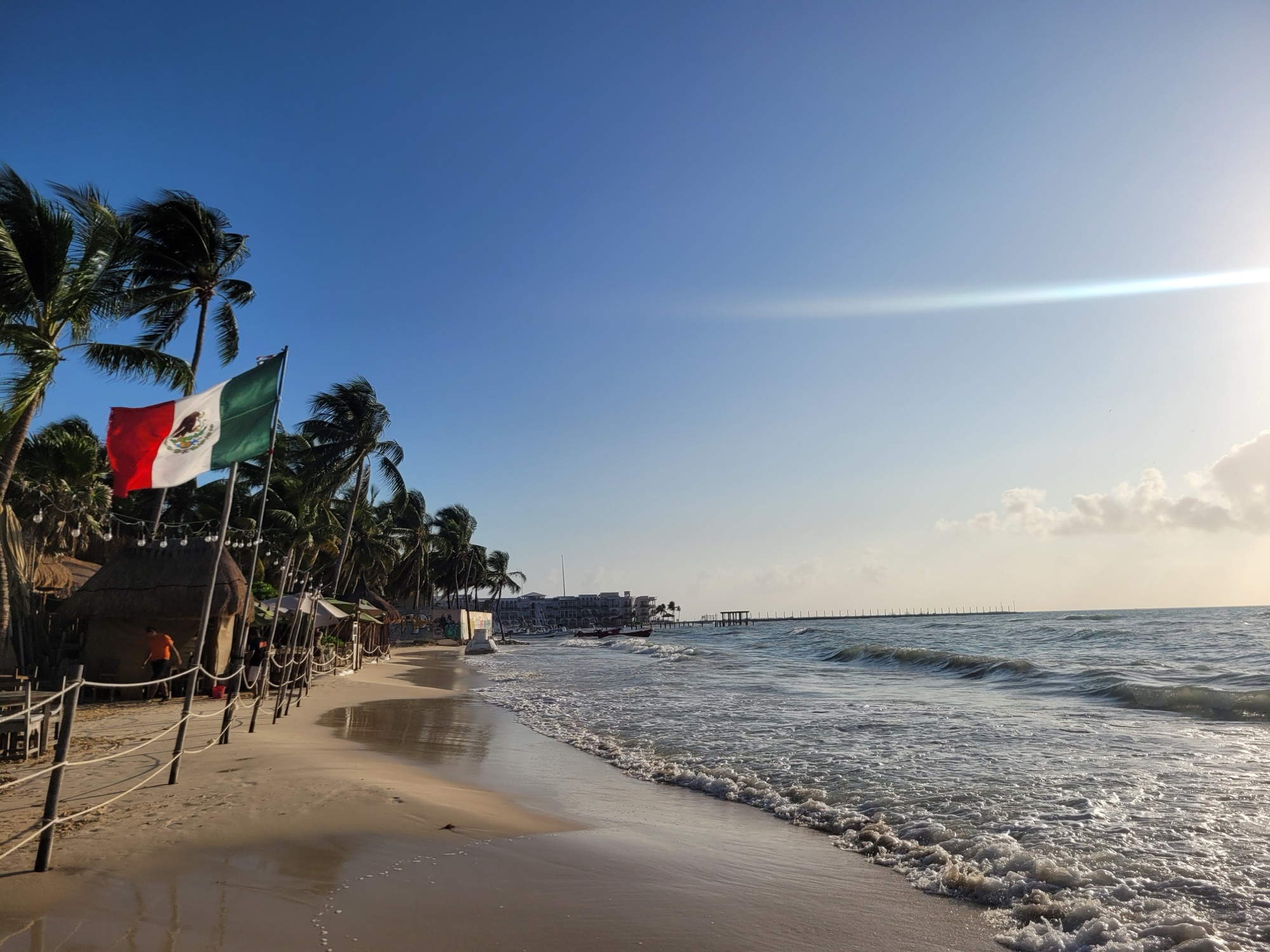
The coast is warm and mostly sunny in January, and it is also where the peninsula's winter weather risk lives. A norte is a cold front that reaches the Gulf and the northern Caribbean, and on the Quintana Roo coast it brings a day or two of strong northerly wind, a choppy grey sea and showers before the sky clears again. Cancún's January normal of about eleven rain days is mostly those fronts. February is different: 46 mm on about five days, which is why a beach-first trip belongs in February and a beach-last trip in January.
Sargassum is the other question, and the honest answer for winter is favourable but not guaranteed. The University of South Florida's monitoring lab describes the seasonal cycle as peaking in June or July with the minimum in the winter months. The catch is that 2026 was a record year, and the lab's January 2026 bulletin already reported some beaching on the Mexican Caribbean coast in January. Check the Quintana Roo monitoring map the week before you travel and again the night before a beach day; if your stretch of coast is affected, the reef trips to Cozumel and Puerto Morelos and the cenotes are unaffected.
Crowds and prices in January
The first week of January is the tail of the Christmas and New Year peak, when Mérida and Valladolid hotels are full and the coast is at its most expensive; New Year's Day itself is a public holiday. From the second week the interior quietens while the coast stays busy with North American winter visitors. Two calendar rules matter more than the month. Mexican residents enter INAH archaeological zones free every Sunday, which makes Sunday the worst day for Chichén Itzá and Tulum. And Carnival falls in the days before Ash Wednesday, which is 10 February in 2027, with Monday 1 February a public holiday; the week is lively in Mérida and busy on the roads.
Fees also change at the turn of the year. In 2026 foreign adults paid the 105-peso INAH ticket plus a Yucatán state fee at each site (548 to 592 pesos at Chichén Itzá on INAH's own pages, 461 at Uxmal and Ek Balam), and Tulum charged 265 pesos including its park fees; expect a new set of prices in January 2027 and budget in cash.
How the month changes the day order
January reorders a Yucatán trip in three ways. First, the coast goes last, so that a norte on Day 2 does not eat your only beach days and so that the final morning is a one-hour bus to Cancún airport rather than a four-hour dash from Mérida. Second, every ruins day starts at 08:00, because the site is quiet and cool for two hours and the daylight budget is short. Third, anything that needs a boat (the Cozumel ferry, Celestún's flamingos, a snorkel trip) lives on a buffer day with a cenote as the fallback. The 10-day itinerary is built exactly this way, with Valladolid, then Mérida, then Playa del Carmen and two buffer days.
If you are flying into Mérida rather than Cancún, the order simply reverses and the logic holds: the interior still comes first and the coast still comes last, because you fly home from Cancún.
Cities, ruins or beach: three sample splits
| Days | Cities and ruins | Beach | Shape |
|---|---|---|---|
| 7 | 6 nights: Valladolid 3, Mérida 3 | none | Fly out of Mérida or bus back to Cancún on Day 7; the best weather week of the year |
| 10 | 6 nights: Valladolid 3, Mérida 3 | 3 nights Playa del Carmen | The recommended route: ruins at opening, coast last, two buffer days |
| 14 | 8 nights: Valladolid 3, Izamal 1, Mérida 4 | 5 nights: Playa del Carmen 3, Holbox or Puerto Morelos 2 | Room for Celestún and a second, quieter beach, with the coast still last |
For a single inland base rather than two, the Mérida or Valladolid comparison makes the call on transfers and evenings; in January both are pleasant, so the deciding factor is which ruins you care about most.
December, February and March compared
December is January with more people and slightly more coastal rain (96 mm on about eleven days in Cancún; 48 mm on about five days in Mérida), and the Christmas fortnight is the most expensive period of the year. February is the sweet spot for a coast-heavy trip: interior rain drops to 32 mm and coastal rain to 46 mm, with Carnival as the one crowd event. March is warmer inland (Mérida's average high reaches 34 C) and busy at Chichén Itzá around the 20 to 21 March equinox; it is the last comfortable month for long ruins days before the heat builds.
Packing and practical notes for January
Pack one warm layer for norte evenings and early buses, a hat for the ruins, water shoes for the cenotes and a dry bag for boat days. Carry pesos in cash for site fees, colectivos and cenotes. Remember that Yucatán state (Mérida, Valladolid, Chichén Itzá) is one hour behind Quintana Roo (Cancún, Playa del Carmen, Tulum) all winter, so a train or bus ticket shows local time at each end; for the practical detail on tickets and transfers, read the bus or rental car guide.
Frequently asked questions
Is January a good month to visit the Yucatán?
Should I do the beach first or last in January?
Is there sargassum in January?
How much daylight is there?
When are the crowds worst?
How does January change a 10-day route?
Photo credits
Hero: Cenote Zací, Valladolid. Photo: Haakon S. Krohn, CC BY 4.0, via Wikimedia Commons (resized for web display). Inline: Monumento a la Patria, Mérida. Photo: amanderson2, CC BY 2.0, via Wikimedia Commons (resized for web display). Playa del Carmen beach. Photo: Erik Cleves Kristensen, CC BY 2.0, via Wikimedia Commons (resized for web display).