


On this route
Ten days is the right length for the northern Yucatán Peninsula if you split them three ways: three nights in Valladolid for Ek Balam, Chichén Itzá and the town cenotes, three in Mérida for Uxmal and the city, and three on the Caribbean coast before an easy run to Cancún airport. This plan is built for December to March, when the interior is dry and the nights are cool, and it uses the Tren Maya and ADO buses instead of a rental car. Every transfer below was checked on the operators' own booking systems, and the two things that trip up most first-timers are handled for you: the hour change between Yucatán and Quintana Roo, and the 08:00 opening times that decide when a ruins day succeeds.
The route flies into Cancún because that is where the flights are. If you are coming from Toronto, Air Canada's seasonal Saturday and Monday nonstop to Mérida (21 November 2026 to 17 April 2027) lets you run the same ten days in reverse and fly home from Cancún. Both versions are described below, together with a seven-day cut and a fourteen-day stretch.
- Duration
- 10 days / 9 nights
- Bases
- 3 (Valladolid, Mérida, Playa del Carmen)
- Transport
- Tren Maya, ADO bus, taxis and colectivos; optional one-day rental
- Pace
- balanced, two buffer days
- Best season
- December to March
Your ten days at a glance
| Day | Plan | Overnight | Transport |
|---|---|---|---|
| 1 | Land in Cancún, train to Valladolid, evening on the square | Valladolid | Tren Maya from the airport station, 1 h 30 |
| 2 | Ek Balam at opening and Cenote X'Canché, afternoon Cenote Zací and the Calzada de los Frailes | Valladolid | Taxi or colectivo, 27 km each way |
| 3 | Chichén Itzá at 08:00, a cenote on the way back | Valladolid | Taxi or colectivo, 42 km each way |
| 4 | Morning bus to Mérida, afternoon in the historic centre, dusk on Paseo de Montejo | Mérida | ADO, about 2 h 15 |
| 5 | Uxmal at opening, Kabah if you have a car | Mérida | Bus, tour or rental car, 80 km each way |
| 6 | Buffer: Gran Museo del Mundo Maya plus Progreso, Celestún or the Homún cenotes | Mérida | Colectivo, taxi or car |
| 7 | Long transfer to the coast, beach afternoon | Playa del Carmen | ADO 06:47 to 12:02, or Tren Maya 301 from Teya |
| 8 | Tulum ruins at opening, cenote on the way back | Playa del Carmen | ADO or colectivo, 62 km each way |
| 9 | Buffer: Cozumel reef, Akumal or a beach day | Playa del Carmen | Ferry or colectivo |
| 10 | Bus to Cancún airport, fly home | none | ADO airport bus, about 1 h 10 |
Base sequence
- Valladolid 3 nights
- Mérida 3 nights
- Playa del Carmen 3 nights
Who this route suits, and who should change it
This is a first-visit route for people who want the big ruins without coach-tour timing, a few cenotes, two real cities and a proper beach finish, all without driving. It suits winter travellers from the United States and Canada especially well, because the coast is one hour from the airport and the interior is at its driest. It also suits anyone who dislikes packing and unpacking: three bases in ten days is the slowest sensible pace for this loop.
Change it if you have seven days (drop the coast and fly out of Mérida), if you want Holbox or Bacalar (each needs two more nights, see the longer version below), or if the beach is the point of the trip (reverse the order and read the month-by-month planning guide first, because a January beach week on this coast has more wind and shower risk than most people expect). If you cannot decide between the two inland cities as a single base, the Mérida or Valladolid comparison settles it on transfers and evenings rather than charm.
Four decisions to make before you book
1. Cancún or Mérida, and whether to fly open jaw
Cancún has nonstop flights from about 125 airports, including roughly 47 in the United States and 24 in Canada. Mérida has 21, with United from Houston, American from Dallas and Miami, VivaAerobus from Miami and Orlando, and the Canadian seasonals from Toronto and Calgary. For most readers the answer is Cancún in and out, which is what the day-by-day assumes. The route ends in Playa del Carmen precisely so that the last morning is a one-hour bus and not a four-hour dash across the peninsula.
If you can fly into one airport and out of the other, do it. In Cancún and out of Mérida removes the long Day 7 transfer entirely: coast first, then Valladolid, then Mérida, then home. In Mérida and out of Cancún is the natural shape for Air Canada's Toronto service, which in January 2027 shows AC1491 leaving Toronto at 09:45 on Saturday and landing in Mérida at 13:10, early enough to be in the centre for a late lunch. Both variants keep the same nine nights.
2. Train, bus or rental car
The Tren Maya is genuinely useful on two legs and a poor choice on one. From the airport station to Valladolid it runs six times a day and takes an hour and a half, which beats any bus combination. From Valladolid to the coast, train 301 goes straight through to Playa del Carmen in the morning. Between Valladolid and Mérida the ADO bus wins, because Mérida's Teya station sits about 14 km outside the city while the bus arrives in the centre. A car is only worth having for the Uxmal day, when the neighbouring Puuc sites have no bus. The bus, train or rental car guide goes through insurance, tolls and what each choice does to the plan.
3. Which coastal base
Playa del Carmen is chosen for logistics: airport buses every 15 to 30 minutes, a Tren Maya station, the Cozumel ferry from the town pier, and Tulum and Akumal as day trips. Tulum town has better cenotes and the ruins on its doorstep, but it is 1 h 36 from the airport and pricier. Puerto Morelos is the quiet option 25 minutes from the terminals, with a reef but a small town. Holbox is lovely and wrong for ten days, because it costs a two-hour road transfer plus a ferry each way.
4. Which weekday for Chichén Itzá
Mexican residents enter INAH sites free on Sundays, so Sunday is the day to avoid at Chichén Itzá. A Saturday arrival in Cancún puts Chichén Itzá on Monday and the Mérida days on Tuesday to Thursday, which also lands you in Mérida for the Thursday evening Serenata in Parque de Santa Lucía. If you arrive on a different day, shuffle the Valladolid days so that the big site falls on a weekday. Avoid the equinox week around 20 March, when the site is at its most crowded.
Day-by-day plan
Day 1: Cancún airport to Valladolid
Clear immigration, get pesos from an ATM in the arrivals hall, and take the free shuttle from your terminal to the Cancún Aeropuerto train station. On a January Saturday the afternoon and evening trains to Valladolid leave at 16:40, 18:30 and 20:10 Cancún time and take about an hour and a half, with a passport-holder fare of 539 pesos in Turista class. The Valladolid station is 6 to 7 km from the centre, and an ADO shuttle meets the trains and drops you at the town bus terminal for about 35 pesos. Set your watch back an hour on the way: Valladolid is in Yucatán state, which is one hour behind Cancún all winter.
If your flight lands after about 18:30 Cancún time, take the 20:10 train and eat late, or sleep near the airport and go on Day 2 morning. Buy the train ticket online before you fly so that a queue at the station cannot cost you a departure. The evening is simply the main square, Parque Francisco Cantón Rosado, and a first look at the cathedral.
Day 2: Ek Balam, Cenote X'Canché and the town
Ek Balam opens at 08:00 and is 27 km north of town, about 35 minutes by taxi or colectivo. Arrive at opening, climb the Acropolis while the stone is still cool, then walk or rent a bike to Cenote X'Canché, under 2 km from the entrance, for the first swim of the trip. Fees in 2026 are 210 pesos for the INAH ticket plus a 461-peso state fee for foreign adults, sold separately at the window. Be back in Valladolid for a late lunch.
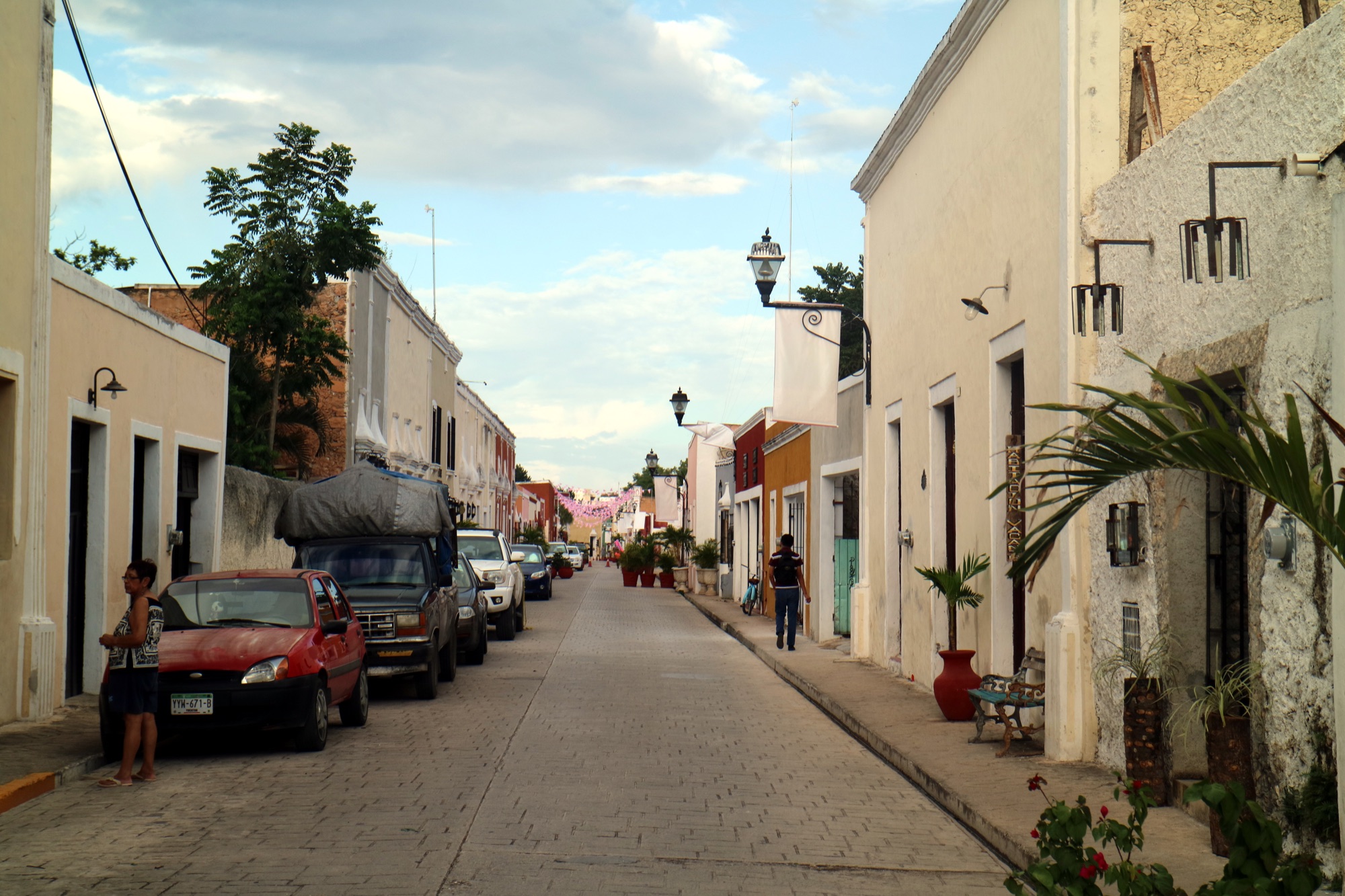
The afternoon needs no transport. Cenote Zací is in the town itself, a big open sinkhole with a walkway around the rim and swimming below. Then walk the Calzada de los Frailes to the Convento de San Bernardino de Siena for the late light. If Day 2 happens to be a Sunday, Ek Balam absorbs the free-entry crowds better than Chichén Itzá would.
Day 3: Chichén Itzá at opening
Book a taxi or a colectivo for 07:00 the evening before. The site is 42 km west, about 45 minutes, and the gates open at 08:00 with all visitors entering through the visitor centre (CATVI). Buy two tickets there: the INAH fee of 105 pesos and the Yucatán state fee, which INAH's own pages list at 548 and 592 pesos for foreign adults in 2026, so budget 650 to 700 pesos and expect a new price from January. Last access is 15:00. The coach groups from the coast arrive from about 10:30, which is why the first two hours are the ones worth having.
The Tren Maya also stops at Chichén Itzá (08:34 from Valladolid, arriving 08:59), but the station is outside the site and the shuttle timing was not something we could verify, so treat it as a fallback rather than the plan. On the way back, stop at Cenote Ik Kil 3 km from the ruins, or save the swim for Cenote Suytun on the Valladolid side, which closes to new entries at 16:00. Note that the site closed for nearly two weeks in May 2026 during a dispute with local vendors; a quick check of the news the week before you go is worth thirty seconds.
Day 4: Bus to Mérida and the historic centre
ADO runs Valladolid to Mérida's Centro Histórico terminal roughly every hour through the day, with a clock time of about 2 h 15 and fares of 255 to 358 pesos depending on the departure. The 08:00 bus arriving 10:10 gives you the whole afternoon. Buy the ticket at the terminal the day before or online; January departures go on sale about a month ahead, so do not be surprised if the January date is not bookable in the autumn.
Mérida's centre works in one afternoon and evening: the Plaza Grande, the cathedral, the murals inside the Palacio de Gobierno, then a walk or a short ride up Paseo de Montejo to the Monumento a la Patria for dusk. The city's free weekly events (the Monday Vaquería, the Thursday Serenata, the Saturday Noche Mexicana, Mérida en Domingo) are listed on the city visitor site and are worth planning an evening around.
Day 5: Uxmal
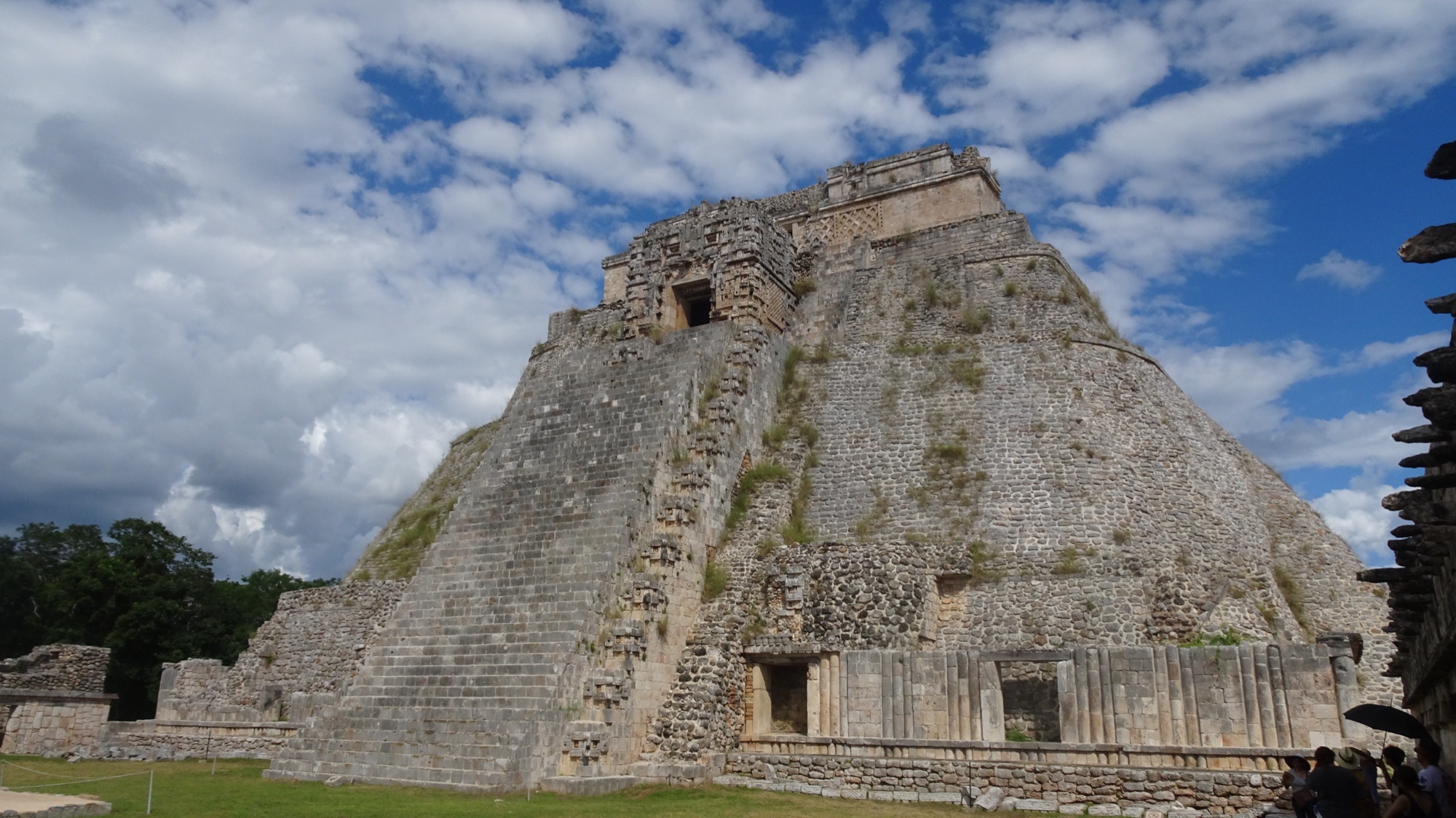
Uxmal opens at 08:00 and closes at 16:00, 80 km south of Mérida on a good road, about 1 h 15 each way. Fees in 2026 are 105 pesos INAH plus a 461-peso state fee for foreign adults. This is the one day when a car earns its keep: Kabah, Sayil and Labná lie on the same road and no bus serves them. Without a car, a small-group tour or the second-class bus from the TAME terminal (check the departure times at the terminal the day before, they are not sold online) both reach Uxmal for the opening if you leave the city by 07:00. The site is exposed and hot by noon even in January, so walk the Governor's Palace and the Nunnery Quadrangle before the sun is high. The evening show, Ecos de Uxmal, is a separate ticket and a separate return trip.
Day 6: Mérida buffer day
This is the day that absorbs whatever slipped. If nothing did, choose one of three: the Gran Museo del Mundo Maya in the north of the city; Progreso beach, 36 km away and 35 minutes by colectivo or bus; or the Homún cenotes, 51 km southeast, for a swim in the dry season. Celestún's flamingo boats are a winter sight, but 89 km each way plus the boat makes it a long day for a single afternoon. On a norte week, when a cold front brings wind and a grey sea, keep this day for the museum and the Paseo de Montejo mansions. Thursday evening is the Serenata in Santa Lucía.
Day 7: The long day to the coast
Mérida to Playa del Carmen is the one transfer that costs most of a day, so take it early. ADO's 06:47 first-class bus from the Centro Histórico terminal reaches Playa del Carmen's Terminal Alterna at 12:02 and the downtown terminal at 12:22; the clock shows five and a quarter hours because you lose an hour crossing into Quintana Roo, so the real journey is about 4 h 15. ADO Platino from the Paseo 60 terminal leaves at 07:37 and arrives at 13:10 with wider seats. The alternative is Tren Maya train 301 from Mérida Teya at 07:00, which reaches Playa del Carmen at 12:35 without a change; it only makes sense if you accept a 06:15 taxi to the station. Either way you are on the beach by mid-afternoon.
Day 8: Tulum ruins
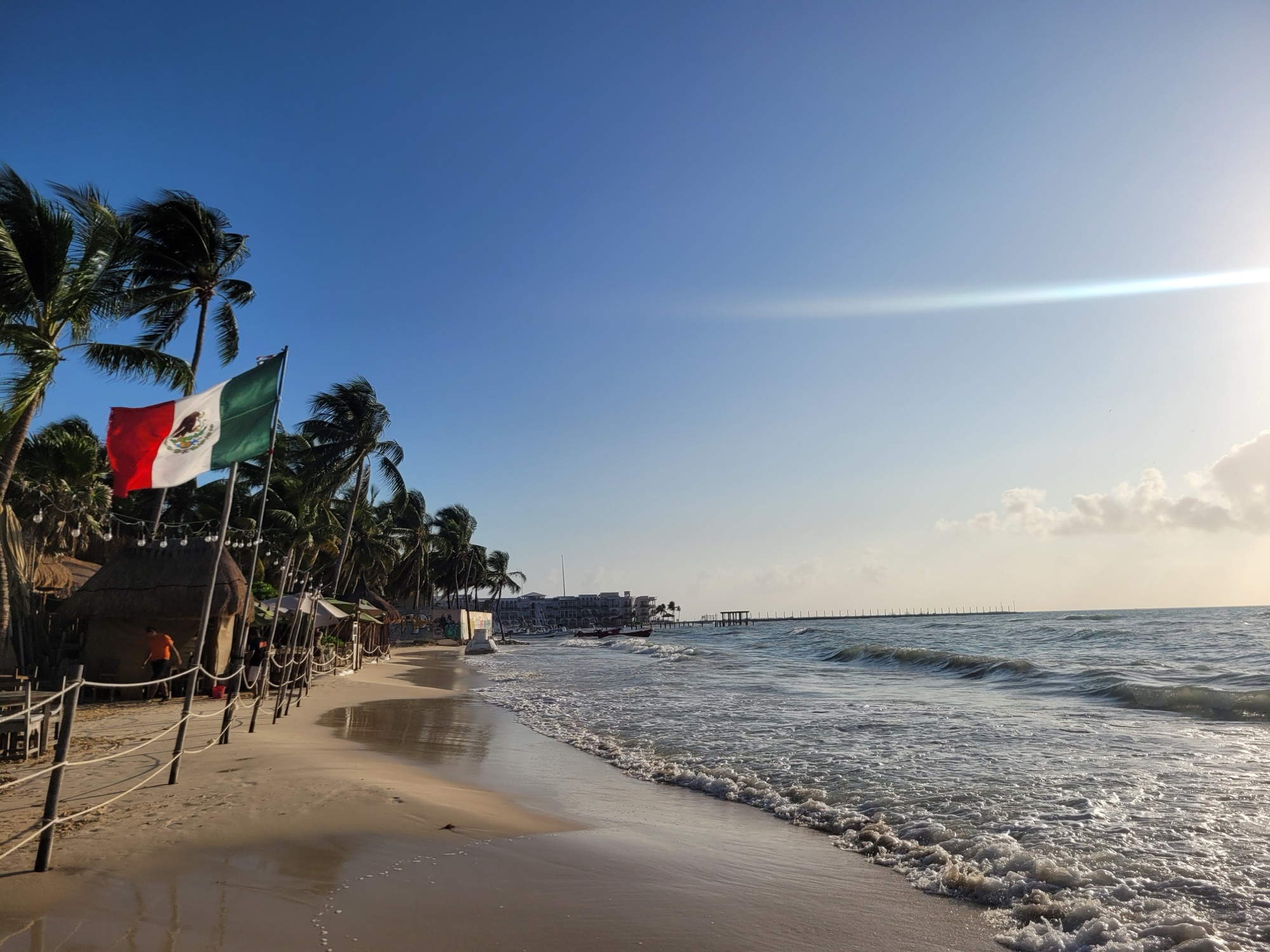
Tulum's archaeological zone opens at 08:00 with last access at 15:30, and the 2026 fee for foreign adults is 265 pesos including the park charges. It is 62 km south of Playa del Carmen, about 50 minutes to an hour by ADO or colectivo, and it is small: two hours covers it. Leave by 07:00 to walk the clifftop before the groups arrive, then spend the afternoon at a cenote on the road back rather than in Tulum town, which adds traffic and little else.
Day 9: Reef, Cozumel or nothing
Second buffer day. The passenger ferry to Cozumel leaves from the pier at the bottom of the Quinta Avenida and takes about 45 minutes, which makes a reef snorkel and lunch on the island a comfortable day. Akumal and Puerto Morelos are the mainland reef options by colectivo. Check the Quintana Roo sargassum map and the wind the night before: on a norte day the sea is rough and the ferry unpleasant, so swap for a cenote or the town. Pack for the airport tonight.
Day 10: Playa del Carmen to Cancún airport
ADO airport buses leave both Playa del Carmen terminals every 15 to 30 minutes from about 03:00 to past 22:00 and serve terminals 2, 3 and 4 in about 1 h to 1 h 20 for 258 pesos. Leave at least three and a half hours before an international departure. Pay the Quintana Roo Visitax online before you go if you have not already, and enjoy the fact that Playa del Carmen and the airport share a time zone, so the last morning holds no clock surprises.
How to book the transport
Tren Maya
Tickets are sold on the operator's booking site (reservas.ventaboletostrenmaya.com.mx) with a passport number, and the site already accepts January 2027 dates. Times are shown in local time at each station, which is why a Cancún departure at 08:00 arrives in Valladolid at 08:32: the train takes an hour and a half, not half an hour. Two classes are sold, Turista and Premier; the passport-holder fare from the airport to Valladolid was 539 and 647 pesos respectively when checked in September 2026. Stations are outside the towns, so add 20 to 40 minutes at each end for the shuttle or a taxi.
ADO buses
ADO is the first-class operator on every road leg here, with ADO Platino as the premium option on the Cancún and Mérida corridors. Buy at ado.com.mx or at the terminal. The booking engine only sells about a month ahead, which means a January trip cannot be ticketed in the autumn; the frequencies are high enough that this does not matter, but it does mean you should book each leg as soon as its date appears, especially the Mérida to Playa del Carmen morning bus. Ticket times are local clock times at each end, so westbound journeys look an hour shorter than they are and eastbound journeys an hour longer.
Taxis, colectivos and the one-day car
Valladolid and Playa del Carmen both run colectivos (shared vans) to the ruins and cenotes, and taxis quote a flat return price with waiting time; agree it before you get in. For Uxmal, a one-day rental in Mérida is the efficient answer, and the transport guide explains the insurance you will actually be asked to buy at the counter.
Best time for this route
December to March is the season this plan is written for, and the numbers are clear for the interior: Mérida averages 38 mm of rain on about four days in January and 32 mm in February, with days near 31 C and nights around 17 C. The coast is different. Cancún's January normal is 136 mm on about eleven days, mostly from the cold fronts (nortes) that cross the Gulf, and the forecast season for 2026 to 2027 has eight fronts in January alone; February drops to 46 mm. That is why the beach sits at the end of this route rather than the start, and why Day 9 is a buffer.
Daylight is short: in mid-January the sun sets at about 17:35 in Mérida and 18:25 clock time on the coast. Every ruins day above starts at 08:00 for that reason. Sargassum is at its yearly minimum in winter, though 2026 was a record year and the January bulletin already reported beaching on the Mexican coast, so check the monitoring map before you choose a beach day. If you can only travel in the last week of December or in Carnival week (the days before 10 February 2027), book the Valladolid and Mérida hotels first; they are the small ones.
Shorter, longer and reversed versions
In Cancún, out Mérida (nine nights). Playa del Carmen 3 (Tulum on Day 2), then the evening Tren Maya (train 302, Playa del Carmen 19:10 to Valladolid 20:42) or a daytime ADO bus to Valladolid 3, ADO to Mérida 3, and fly out of Mérida on Day 10 via Houston, Miami, Dallas or Toronto. The long Day 7 disappears and the last morning is a ten-minute taxi.
In Mérida, out Cancún (Air Canada Saturday arrival). Mérida 3 (city on Sunday, Uxmal on Monday), ADO to Valladolid 3, then Tren Maya 301 or an ADO bus to Playa del Carmen 3 and home from Cancún on the Monday. Same nights, same transfers in reverse.
Seven days. Valladolid 3 and Mérida 3, then fly out of Mérida or take a morning bus back to Cancún on Day 7. No coast, no long transfer.
Fourteen days. Add a night in Izamal between Valladolid and Mérida, a second Mérida buffer for Celestún, and either Holbox (two nights, north of Cancún) or Bacalar (two nights, well to the south near Chetumal) after the coast.
Tulum as the coastal base. Swap Playa del Carmen for Tulum town if cenotes matter more than the reef; the ruins become a bike ride, the airport becomes 1 h 36, and Cozumel drops out.
What to leave for another trip
Holbox and Bacalar each need two nights and a half-day of transfers; squeezed into ten days they turn two bases into one-night stops. Campeche and Calakmul are a day's travel from this loop. Izamal is a lovely half-day but only works with a car or as an overnight, so it belongs in the fourteen-day version. Cobá is worth it only if you are based in Tulum.
Common mistakes
Booking Chichén Itzá for a Sunday. Trusting a ticket time without checking which state it belongs to. Trying to reach Valladolid from the airport by bus when the train is faster and direct. Renting a car for all ten days when it sits parked for six of them. Planning the beach first in January and discovering the nortes. Arriving at a ruin at 11:00 with the coaches. Assuming Mérida's train station is in Mérida.
Entry rules and practical notes
Carry cash in pesos: state fees at the ruins, colectivos, station shuttles and cenotes are often cash-only, and the fees at Chichén Itzá, Uxmal and Ek Balam are paid in two parts, INAH plus the Yucatán state fee. Expect INAH and state fees to rise in January, as they did in 2026. New Year's Day and Monday 1 February 2027 are public holidays with heavier domestic travel, and Carnival runs in the days before Ash Wednesday on 10 February.
Frequently asked questions
Is ten days enough for Valladolid, Mérida and the coast?
Should I fly into Cancún or Mérida?
Is the Tren Maya worth using on this route?
Why is Chichén Itzá on a Monday?
Do I need a rental car?
What is the time-zone catch?
How much are the ruins in 2026?
Is January a good month for the beach part?
Photo credits
Hero: El Castillo, Chichén Itzá. Photo: Daniel Schwen, CC BY-SA 4.0, via Wikimedia Commons (resized for web display). Inline: Calzada de los Frailes, Valladolid. Photo: Erik Cleves Kristensen, CC BY 2.0, via Wikimedia Commons (resized for web display). Pyramid of the Magician, Uxmal. Photo: Erik Cleves Kristensen, CC BY 2.0, via Wikimedia Commons (resized for web display). Playa del Carmen beach. Photo: Erik Cleves Kristensen, CC BY 2.0, via Wikimedia Commons (resized for web display).