


On this route
January is a good month for Tenerife, but not for the reason the brochures give. The island does not have one January climate; it has four or five, stacked by altitude and split by the trade wind, and the numbers for each are public. The south coast is warm and dry by European winter standards. The north coast is milder and cloudier. The La Laguna plateau, where the "80 mm of rain" statistic comes from, is a different place from the seafront 600 m below it. And Teide National Park is a proper winter mountain, with frost on a third of January nights and snow on the road a few times a season. This article puts the official normals for those places side by side and then says what they change about where you stay and what you plan. It does not repeat the day-by-day route; that is in the seven-day itinerary.
Four stations, one island
These are AEMET's 1981-2010 normals for January at its four stations on Tenerife. Note the altitude column before anything else.
| Station | Altitude | Mean max | Mean min | Rain | Days over 1 mm | Sunshine |
|---|---|---|---|---|---|---|
| Tenerife South airport (south coast) | 64 m | 21.7 °C | 15.2 °C | 17 mm | 1.8 | 193 h |
| Santa Cruz de Tenerife (east coast, city) | 36 m | 21.0 °C | 15.4 °C | 32 mm | 4.2 | 178 h |
| Tenerife North airport (La Laguna plateau) | 632 m | 16.0 °C | 10.2 °C | 80 mm | 7.7 | 150 h |
| Izaña (Teide caldera rim) | 2,369 m | 7.5 °C | 1.1 °C | 47 mm | 4.5 | 226 h |
Two things stand out. The south coast and Santa Cruz are within a degree of each other by day and night; the difference is rain, with Santa Cruz seeing twice the total and more than twice the rain days. And the "north" figure that gets quoted island-wide is from an airport 632 m up on a plateau that catches the trade-wind cloud: five degrees cooler than either coast and five times the south's rainfall. There is no AEMET normals station on the north coast itself, at Puerto de la Cruz or Garachico, so anyone giving you a precise January figure for Puerto is guessing. What can be said honestly is that it sits at sea level on the wet side of the island, so expect it warmer than the plateau, cloudier and showerier than the south, and probably sunnier than the plateau's 150 hours.
Izaña deserves its own sentence. It is a mountain observatory at 2,369 m and it has the most sunshine of the four, because it sits above the cloud layer. It also has a mean minimum of 1.1 °C, 12 frost days and 2 snow days in the month. Both are true at once, and that is Teide in January.
What the numbers mean for each part of the island
The south coast: Costa Adeje, Los Cristianos, El Médano
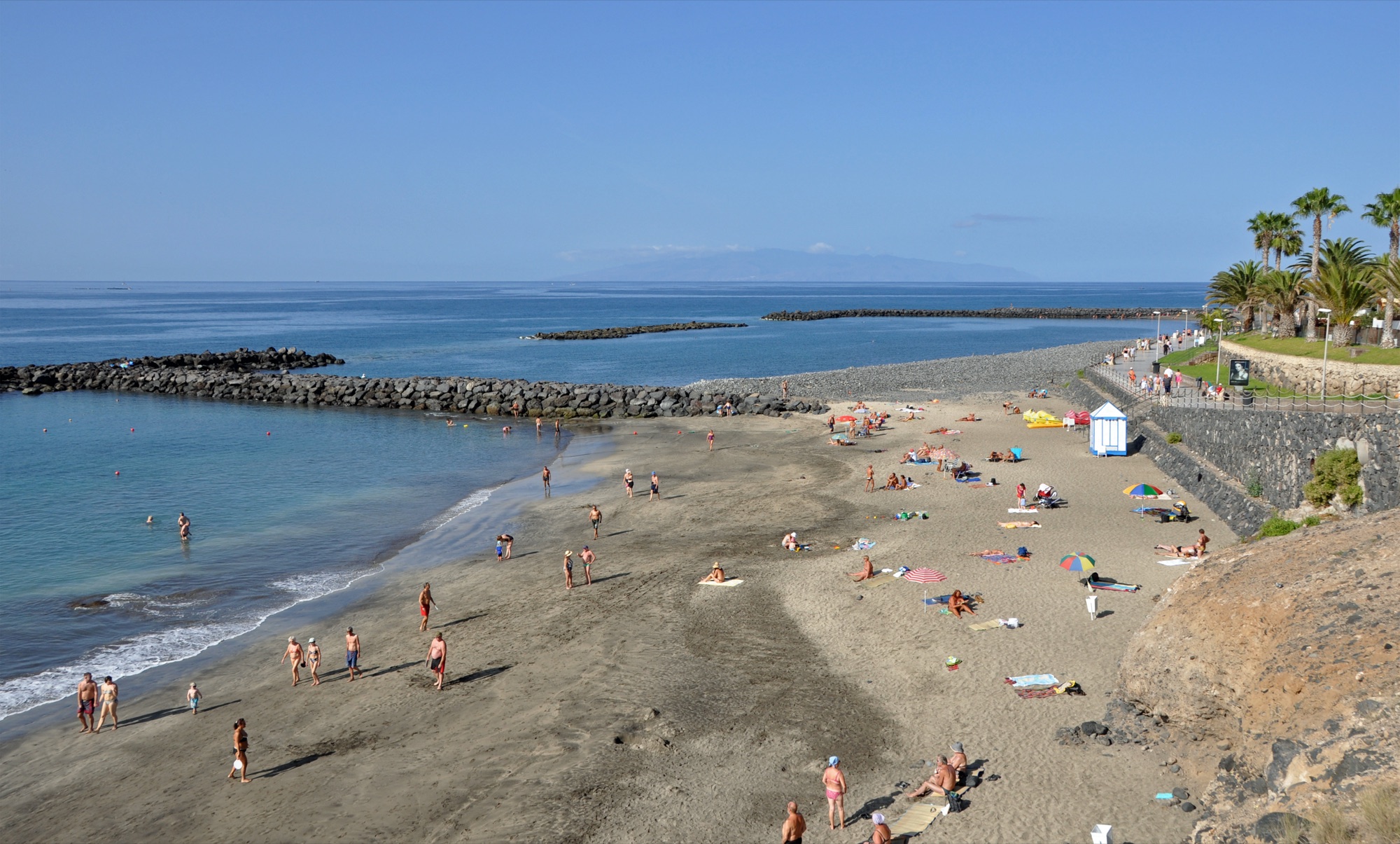
Twenty-one by day, fifteen at night, fewer than two rain days and eight clear days in the month. This is the warmest and driest January on the island and it is why the resorts are where they are. It is not a hot month: afternoons are shirt-sleeve, evenings want a jacket, and the pool is for the brave in the morning. If the single most important thing about your week is sitting outside without a coat, the south is the answer and the north or south article can be short.
Santa Cruz and the east
Same temperatures as the south, a little more rain, a lot more city. Santa Cruz is a working capital rather than a resort, and in January that is a virtue: the Auditorio, the market and the old quarter are open regardless of the sky, and La Laguna's UNESCO centre is up the tram line. It is the best base for anyone who wants the island's culture and does not need a beach outside the door.
The north coast: Puerto de la Cruz, La Orotava, Garachico
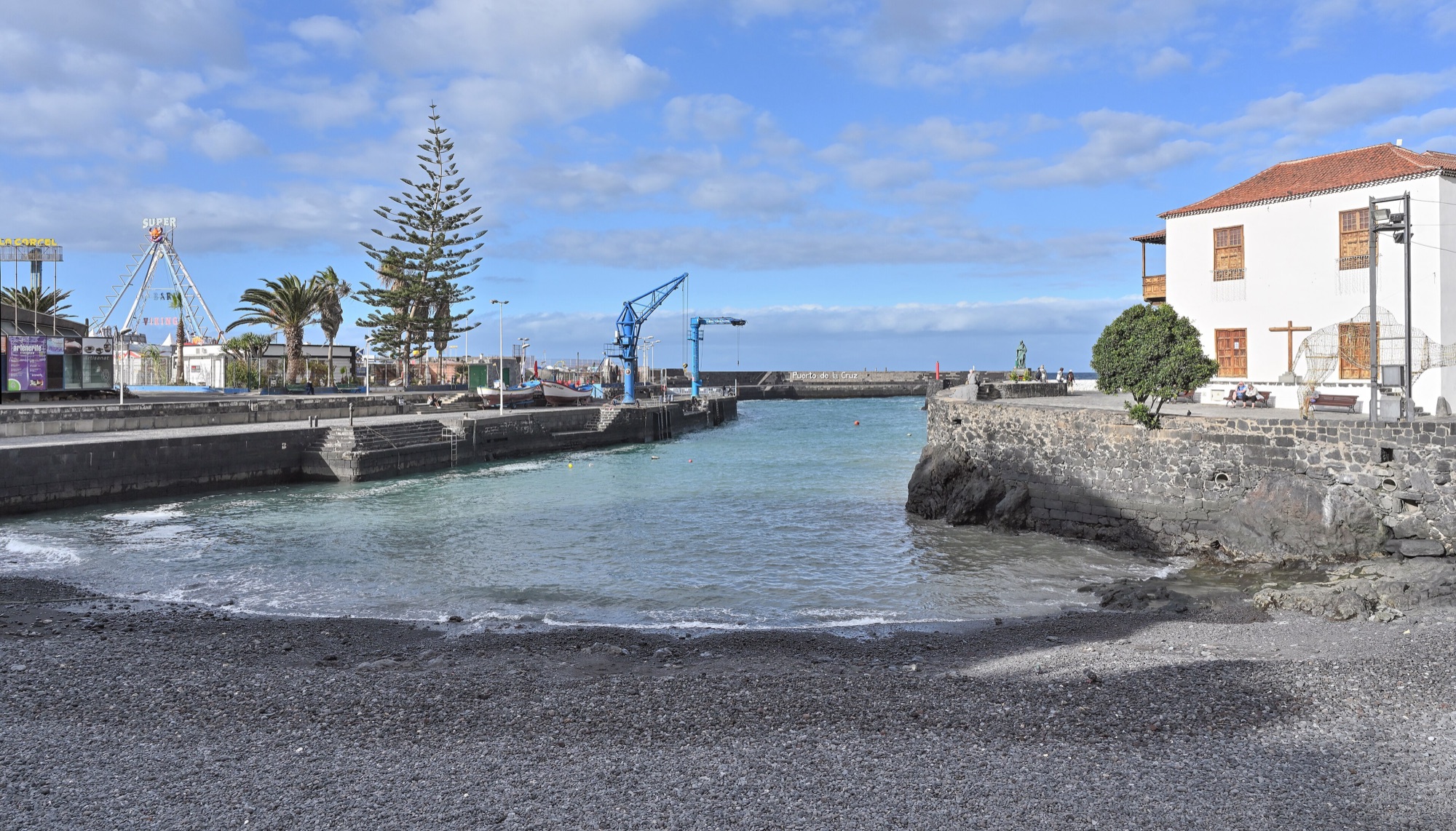
This is the side that gets called rainy, and the honest answer is: cloudier, a few degrees cooler, and with real green because of it. The trade wind piles cloud against the north slopes for much of the day at the level of the plateau and the laurel forest; the coast below often sits under that ceiling with sun coming and going. Puerto de la Cruz in January is a town of black-sand beaches, sea pools and cafés where you may need a light jacket on the terrace. Choose it for Anaga, the old towns and the drive up to Teide from the north, and accept that a week here will have grey mornings. Do not choose it for guaranteed sunbathing.
La Laguna and Anaga
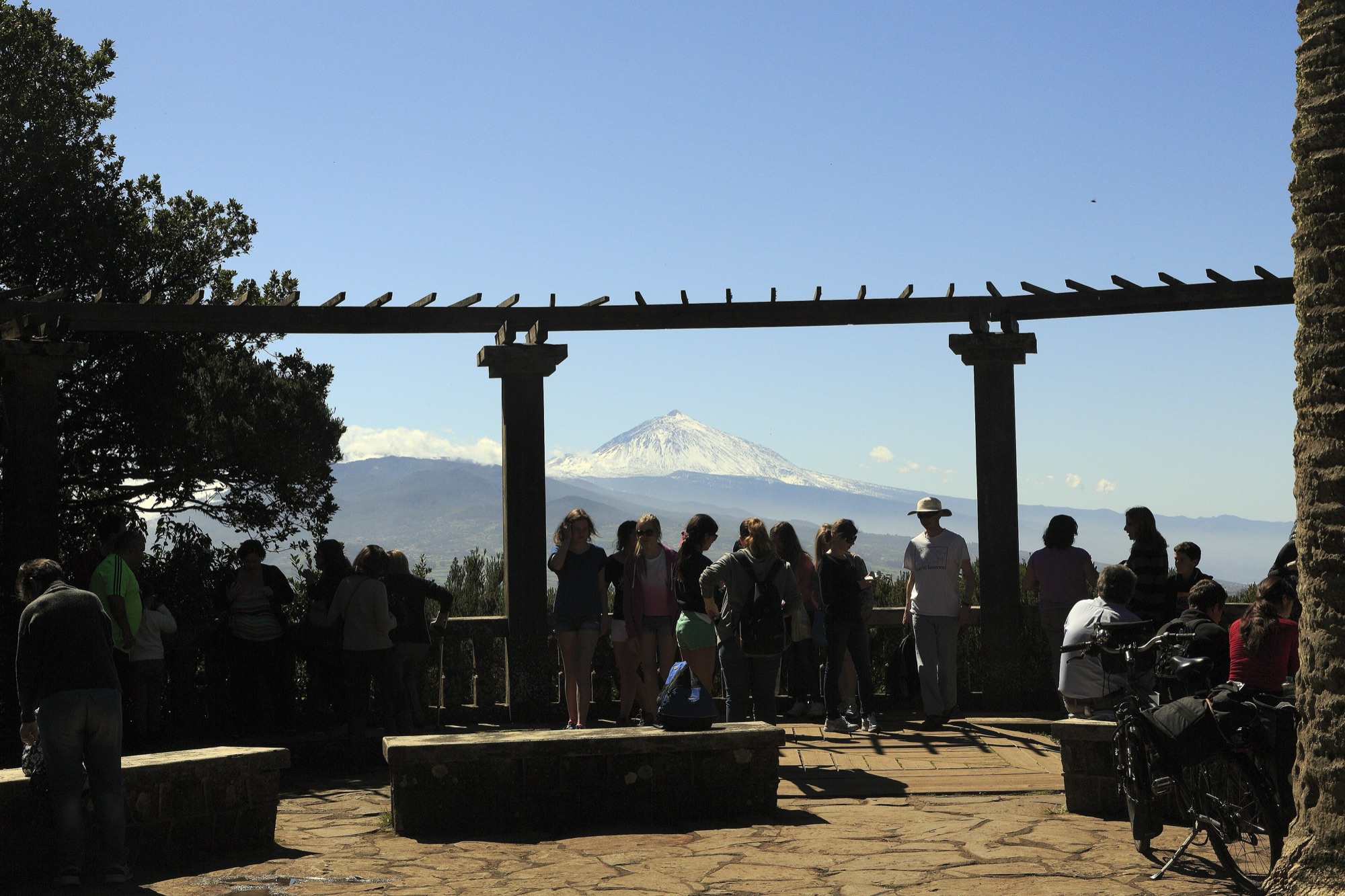
The 632 m station is the one to use here: 16 °C by day, 10 °C at night, eight wet days in the month, and the laurel forest exists precisely because of that cloud. Anaga's ridge road and Cruz del Carmen are frequently in mist in the morning. The practical rule for a January visit is to go anyway and drop down to Taganana and Benijo on the north side, which is usually clearer by midday, rather than waiting on the ridge for a view. A rain jacket and shoes with grip are not optional on the trails.
Teide National Park
Above 2,000 m in January you are in a winter climate with a subtropical sun. Izaña's 7.5 °C daytime mean, 1.1 °C at night and 12 frost days mean the ground can be icy in the morning shade, and 226 hours of sunshine mean the light is fierce at midday. The cable car's top station is at 3,555 m, another 1,200 m higher than the observatory. Layers, a windproof, gloves and sunglasses are the right kit, and the details of hours, permits and closures are in the next section.
Daylight and the sea
The Canaries keep Western European Time, an hour behind Spain's mainland, which is why the days feel long for the latitude. In Santa Cruz the sun rises at about 07:58 and sets at 18:30 in mid-January, ten and a half hours of daylight, stretching to 18:43 by the end of the month. That is enough for any of the itinerary's driving days, provided the mountain days start by 09:00. On the sea we give no number, because there is no official normals figure to give; the sensible expectation for January is a brief swim rather than an afternoon in the water, and the surf on the north-coast beaches is a real hazard in winter.
Teide in January: hours, closures, permits
The cable car runs on its winter table from 1 January to 27 March and from 25 October to the end of the year: 09:00 to 17:00, last ascent 16:00, last descent 16:50, non-resident return EUR 42 for adults and EUR 21 for children aged 3 to 13. The 2027 table had not been published when this was checked; both halves of 2026 used the same winter hours. Book a slot online.
The summit trail from the top station to the crater, the Telesforo Bravo, needs a permit from Tenerife ON. Places are released every Monday at 07:00 Canary time for the following 56 days. Since 19 January 2026 the slots between 09:00 and 17:00 cost EUR 15 for non-residents (EUR 6 for other Canary residents, free for Tenerife residents and under-14s), the fee is non-refundable unless the trail closes, and in snow or ice conditions the park requires crampons, an ice axe and a signed declaration of mountaineering experience. For most January visitors that last rule is the honest reason to stop at the top station.
The other winter months
January is the coolest month at every station, but not the wettest on the plateau, and December and February differ less from it than most people assume. AEMET's monthly normals for the window:
| Month | Tenerife South (64 m) | Santa Cruz (36 m) | Tenerife North (632 m) | Izaña (2,369 m) |
|---|---|---|---|---|
| October | 26.8 °C, 12 mm | 26.3 °C, 19 mm | 22.5 °C, 47 mm | 14.3 °C, 37 mm |
| November | 24.8 °C, 26 mm | 24.1 °C, 34 mm | 19.6 °C, 81 mm | 11.1 °C, 54 mm |
| December | 22.8 °C, 30 mm | 22.1 °C, 43 mm | 17.1 °C, 82 mm | 8.8 °C, 60 mm |
| January | 21.7 °C, 17 mm | 21.0 °C, 32 mm | 16.0 °C, 80 mm | 7.5 °C, 47 mm |
| February | 22.0 °C, 20 mm | 21.2 °C, 35 mm | 16.7 °C, 70 mm | 8.0 °C, 67 mm |
| March | 23.1 °C, 15 mm | 22.1 °C, 38 mm | 18.2 °C, 61 mm | 10.2 °C, 58 mm |
Read across and the pattern is simple. October is the warm end of the window everywhere and the best month for the north coast. December is the wettest month on the plateau and in Santa Cruz, with November close behind on the plateau. January and February are the coolest months, and on the south coast still dry ones at 17 and 20 mm. March starts the warming and is the sunniest month at Izaña. If your dates are flexible and you want the north as well as the south, aim for October or March; if you only care about the south, any month works and January is fine.
How January changes the route
Three things, in order of importance. First, put a buffer day after Teide, because a frozen road can cost you the day and a plan without slack turns it into a lost volcano. The seven-day itinerary does this by crossing the park on its base-change day with a free day after it. Second, decide the north base on scenery, not weather: three nights in Puerto de la Cruz are worth it for Anaga and the old towns, and the trade-off is grey mornings, not washed-out days. If a week of certain sun is the point, skip the north base and take the day trips from the south. Third, start the mountain days early; with sunset at 18:30 the driving days are comfortable only if the car leaves by 09:00, and the Anaga ridge is more often clear in the afternoon than the morning, which argues for doing Taganana and Benijo first when you can.
Getting there in January
Almost all northern European leisure flights use Tenerife South, which handled 14 million passengers in 2025, most of them international and more than half from the United Kingdom and Germany; Tenerife North handles mainly domestic and inter-island traffic. For Canadians, Air Canada's non-stop A321XLR flights are new for winter 2026-27: in the January 2027 timetable the Toronto flight leaves at 21:40 and lands at Tenerife South at 10:05 the next morning, with the return at 11:20; the Montreal flight leaves at 20:30, lands 08:20 and returns at 11:15. A morning landing at TFS and a morning departure are what make the itinerary's north-first order work. On paperwork: Canadians and other visa-exempt visitors get 90 days in any 180 and are registered in the EU's Entry/Exit System at the border; ETIAS, the EUR 20 authorisation, was not yet running when this was checked in September 2026, and the EU will announce its start date months ahead, so check the official site before you fly.
What to pack, by altitude
For the coasts: summer clothes for the day, a jacket for the evening, one warm layer for the north coast terraces. For Anaga and the plateau: a rain shell and shoes with grip. For Teide: a fleece and a windproof over whatever you wore at the beach, gloves for the top station, sunglasses and sunscreen, and water, because 226 hours of sunshine at 2,400 m is dry air. None of this needs to be bought specially; it needs to be in the car on the right day.
Questions people ask about Tenerife in January
Is Tenerife warm in January?
Is the north of Tenerife rainy in January?
Can you go up Teide in January?
Which side of Tenerife should I stay on in January?
What time does it get dark in Tenerife in January?
Is January a good month to visit Tenerife?
How this was checked
All climate figures are AEMET's published 1981-2010 normals for the four Tenerife stations, read on 19 September 2026; AEMET has no normals station on the north coast, which is stated rather than filled in. Sunrise and sunset are calculated for Santa Cruz on Western European Time. Cable car hours and prices are the operator's 2026 tables, permit rules and fees are from Tenerife ON and the Cabildo, road closures are from the Cabildo's notices and local press reports on the dates given, bus times are from TITSA's published timetable feed for January 2027, flight times are Air Canada's January 2027 timetable and airport figures are Aena's 2025 data. Entry rules are from the EU's official ETIAS and EES pages. Nothing here is a first-hand account.
Photo credits
- Cover: Teide and Pico Viejo under snow, December 2025, JasminaMichaela, CC BY-SA 4.0, via Wikimedia Commons, resized.
- Playa del Duque, Costa Adeje, Marc Ryckaert (MJJR), CC BY 3.0, via Wikimedia Commons, resized.
- Harbour of Puerto de la Cruz, Cayambe, CC BY-SA 4.0, via Wikimedia Commons, resized.
- Mirador Cruz del Carmen, Falk2, CC BY-SA 4.0, via Wikimedia Commons, resized.