


On this route
The campervan question in New Zealand has changed since most of the advice on it was written. From 7 June 2026 a vehicle counts as self-contained only if it holds the new green warrant, which requires a fixed toilet; the budget vans with a bed and a portable loo can no longer freedom camp anywhere that requires self-containment, and the fine is $400. The Queenstown Lakes district, which covers Queenstown, Wanaka, Glenorchy and Arrowtown, has banned freedom camping in all its urban areas since December 2025. And the big rental fleet bans its motorhomes from the Crown Range. None of that makes a campervan the wrong choice, but it changes the sums and the freedom, so this comparison prices both options on one concrete route, the 14-day Christchurch loop, for two people on 9 to 22 January 2027, using live quotes we pulled in September 2026.
The short answer: for two people, a rental car with motels and holiday-park cabins is cheaper than a self-contained campervan on this route by roughly NZD 1,200 to 3,600, depending on what you pay for rooms and whether you take the liability cover, and the car keeps the Crown Range, the Rob Roy road and the freedom to change plans at 4 pm. The campervan wins on the nights that matter most (White Horse Hill under Aoraki, the Milford Road campsites, a still morning at Lake Matheson before the coaches), on cooking, and for a family of four, where two motel rooms a night bring the two options close to level. Choose by what you want your evenings to be, then check the sums for your own dates.
- Duration
- 14 days / 13 nights
- Bases
- Christchurch loop, about 2,100 km (car) or 2,200 km (campervan via SH6)
- Transport
- Self-drive; quotes for 9 to 22 January 2027
- Pace
- Two adults; family of four variant
- Best season
- January peak pricing
The rules that changed the decision
Self-containment. Under the Self-contained Motor Vehicles Legislation Act, only vehicles certified under the new green warrant scheme count as self-contained from 7 June 2026. The warrant needs a fixed toilet plus compliant fresh-water, waste-water, ventilation, sink and rubbish systems; portable toilets no longer qualify. DOC says the warrant card must be displayed wherever camping is restricted to self-contained vehicles, and camping on public land without one where self-containment is required carries a $400 infringement fee. Every rental van with a built-in toilet will carry the warrant; the cheaper vans without one (Britz's HiLITE and the Highball, for example) cannot freedom camp at all and must use campgrounds every night.
Where you may actually stop. On public conservation land, DOC allows freedom camping except where it is prohibited or restricted, and it runs more than 320 campsites, many of which now require online bookings (White Horse Hill at Mount Cook, $20 per adult, and Cascade Creek on the Milford Road, $18, both keep no spaces for walk-ups). In the Queenstown Lakes District the Freedom Camping Bylaw 2025 prohibits freedom camping in urban areas, allows certified self-contained vehicles in 15 designated car parks (141 spaces in total) only between 6 pm and 8 am for at most two nights in any 30 days, and permits rural laybys under conditions; fines start at $400. So the four nights this route spends in Wanaka and Queenstown are holiday-park nights whatever your warrant says.
Where you may drive. thl, whose brands are Britz, maui, Apollo and Mighty, states in its 2026/27 rental conditions that no RV may be driven on the Crown Range Road or Cardrona Valley Road, Skippers Road, the Mt Aspiring Road beyond the Treble Cone turn-off, or Ball Hut Road at Mount Cook. On this route that means SH6 through Cromwell between Wanaka and Queenstown (1 h 25 instead of 1 h 09) and no Rob Roy Glacier walk. Other companies' conditions differ; read the prohibited-roads clause before you book, not after.
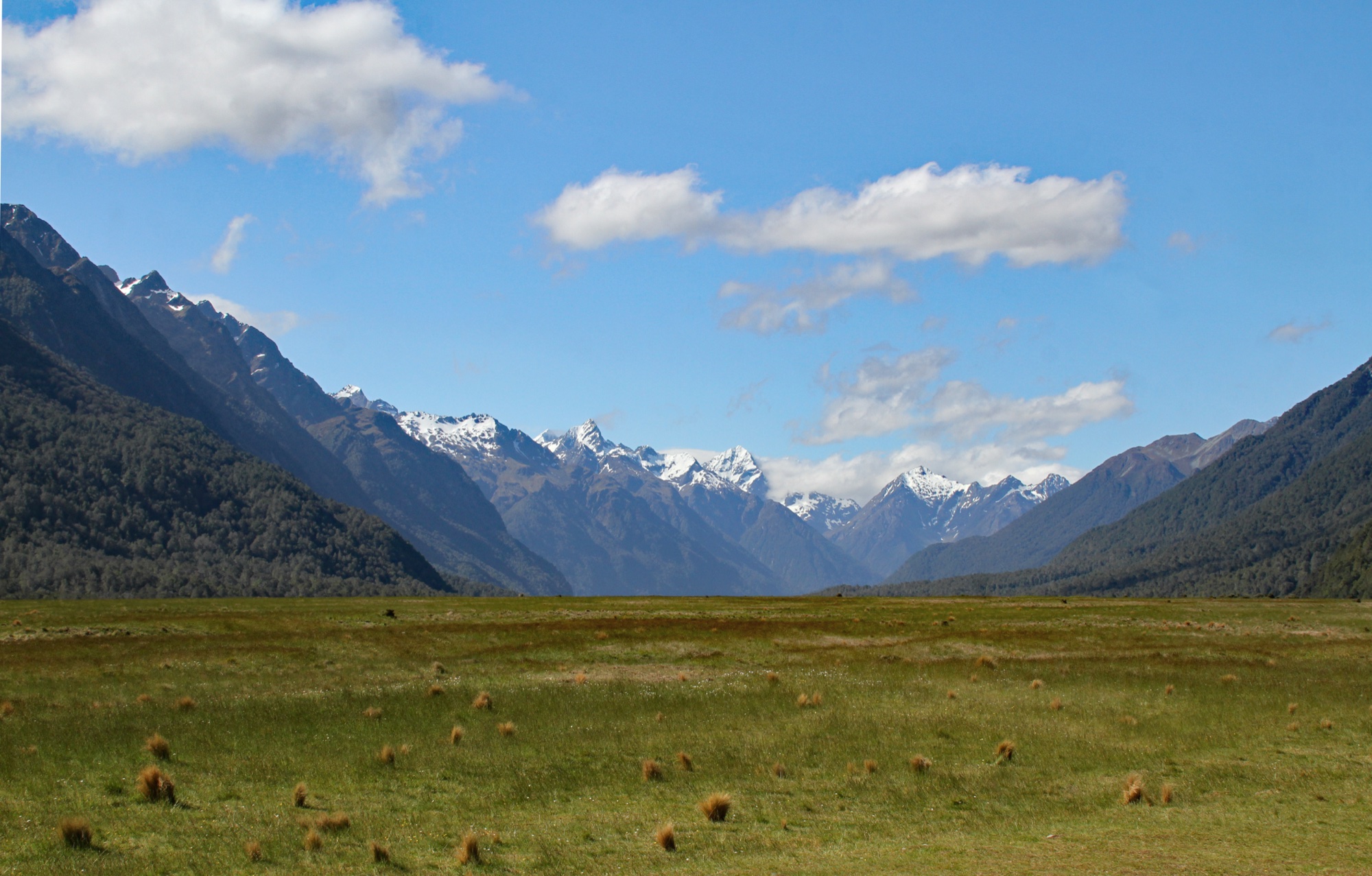
The cost comparison for two people, 9 to 22 January 2027
Both quotes are Christchurch Airport return for 13 days, read on the operators' own booking sites on 19 September 2026. They will have moved by the time you read this; the point is the structure, and the method is one you can repeat with your own dates in half an hour.
| Item | Campervan: Britz HiTop 2-berth (toilet, no shower) | Car: Hyundai i30 automatic (Apex) plus rooms |
|---|---|---|
| Vehicle hire, 13 days | 5,621 (401.50 per day, rental charge only) | 1,559 with zero excess, or 1,199 with a $4,000 excess |
| Liability reduction | 845 (High Road, $65 per day, brings the $7,500 liability to nil) or accept the liability | Included in the 1,559 figure |
| Road user charges (diesel) | About 177 (8.04 per 100 km, 2,200 km, collected on return) | None (petrol) |
| Fuel | About 650 (assumes 10 L per 100 km at the 19 September diesel average of 2.96) | About 480 (assumes 7 L per 100 km, 2,100 km, at 3.25 for 91) |
| Nights | About 700: eight holiday-park powered sites at 60 to 70 for two, three DOC campsite nights at 18 to 20 per adult, two designated or rural nights at nil | 2,340 to 3,900: 13 nights at an assumed 180 to 300 per night for a motel unit or mid-range double (price your own dates) |
| Extras to watch | Campsite booking fees, linen if not included, the drop-and-go cleaning pack, a $200 one-way fee if you exit at Queenstown | Car parking in Queenstown, a one-way fee if you exit at Queenstown, cabin or unit surcharges over Christmas |
| Total | About 7,150 without the liability reduction, about 8,000 with it | About 4,400 to 5,900 |
The crossover is easy to state. Take the campervan's total, subtract the car's hire and fuel, and divide by 13: on these quotes you would need to be spending about NZD 400 to 460 a night on rooms before the campervan became the cheaper way for two people to sleep. Pick the campervan for two because you want it, not to save money. The picture changes with a four-berth and four people: a Britz Voyager was 5,733 on the same dates, a Nissan X-Trail 1,954 with zero excess, and a family needing a two-bedroom unit or two rooms every night adds 4,500 to 6,500 to the car column. With the same method (12 L per 100 km of diesel for the four-berth, 9 L of petrol for the SUV, campsite nights for four at about 940) that is roughly 8,500 for the campervan with cover against 7,100 to 9,100 for the car and rooms, which puts the two options in the same range and hands the tie to whichever you would enjoy more.
The freedom comparison on this route
Freedom is the reason people rent campervans, so it is worth being precise about where on this loop the campervan is freer and where it is not.
| Leg or night | Campervan | Car |
|---|---|---|
| Day 2, Arthur's Pass | Fine on SH73; Klondyke Corner DOC site is an option if you run late | Fine; Hokitika motel |
| Days 3 and 4, Franz Josef | Holiday park in town; Lake Matheson at dawn from a nearby site is the campervan's best morning | Motel or lodge; same dawn, a 30-minute drive |
| Day 5, Haast Pass | DOC sites at Lake Paringa, Pleasant Flat and Cameron Flat let you split the 3 h 52 leg | Few beds between Fox and Wanaka (Haast and Makarora have a handful); most people drive it in one day |
| Day 6, Wanaka | Holiday park (urban freedom camping banned); Rob Roy road prohibited | Any bed; Rob Roy available |
| Day 7, to Te Anau | SH6 via Cromwell only (Crown Range banned), about 15 minutes longer | Crown Range and the Cardrona Hotel |
| Day 8, Milford Road | Cascade Creek or another Eglinton Valley DOC site puts you 50 km from the fiord for a first-cruise start; no fuel after Te Anau either way | Te Anau motel, 2 h to the terminal |
| Days 9 to 11, Queenstown | Holiday park; parking a motorhome in town is the daily problem | Any bed; parking is still a problem |
| Day 12, Mount Cook | White Horse Hill, $20 per adult, 2.5 km from the village, book it first: the best night of the trip | Village beds are few; Twizel is the fallback an hour away |
| Day 13, Tekapo | Holiday park; empty the tanks at the Twizel public dump station on the way, or at one in Christchurch before the depot | Motel; nothing to empty |
| Day 14, return | Allow 45 to 60 minutes for the return check with tanks emptied | Ten minutes at the airport |
Read down the campervan column and the pattern is clear: it is freer on the DOC nights and on the long transfer days where a campsite splits the drive, and it is no freer at all, sometimes less so, in the two lake towns and on the roads the rental conditions exclude. If your image of the trip is the Eglinton Valley at 7 am and Aoraki from the campsite at 9 pm, that column is worth the money. If it is Queenstown restaurants and a hot shower every night, it is not.
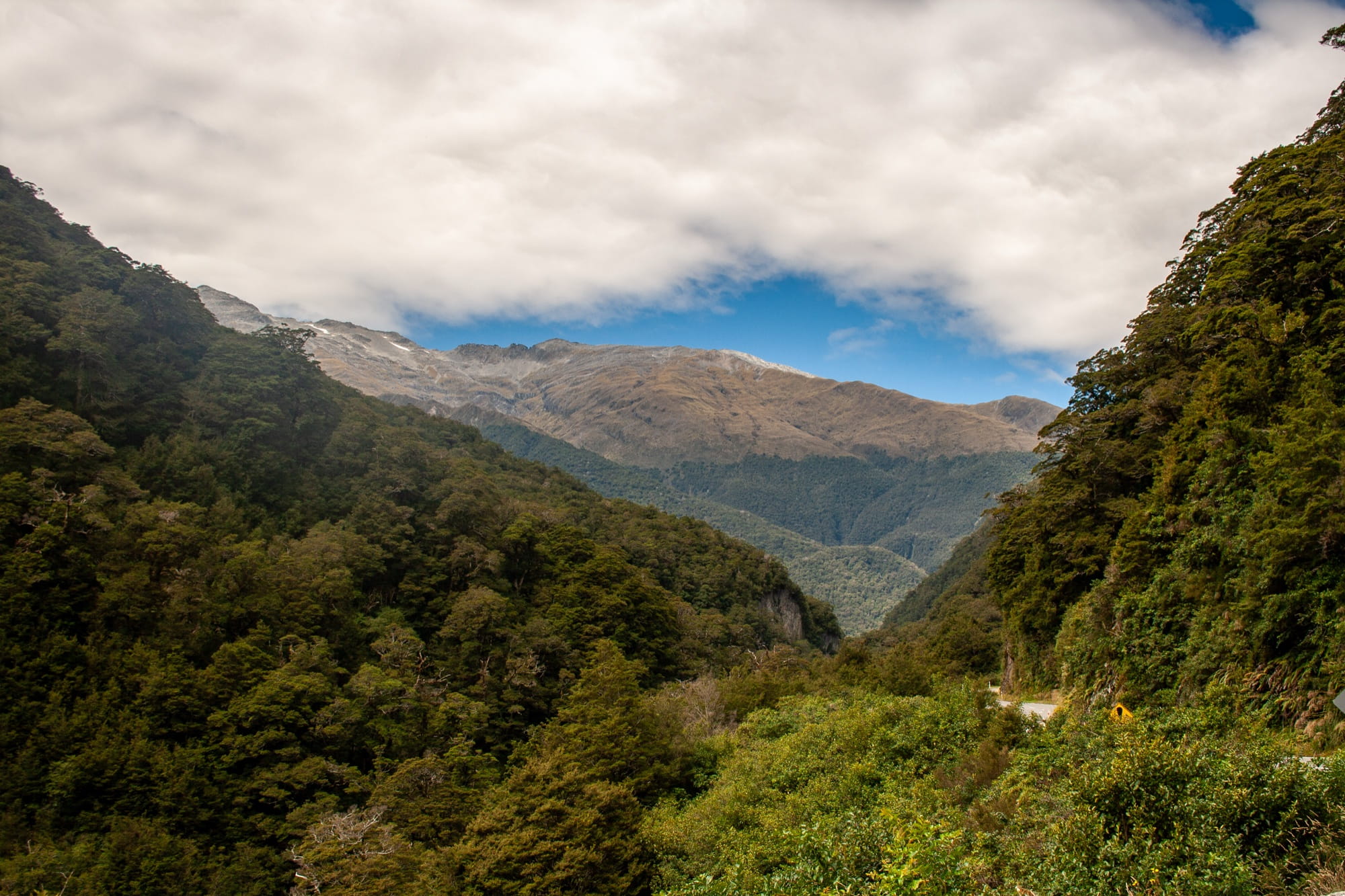
Which campervan, if you choose one
Take a vehicle with a fixed toilet, which is the whole difference between a van that can use DOC and designated sites and one that cannot. Shower or no shower is a comfort call (the HiTop's 5,621 against the Venturer's 7,056 on our dates bought a shower and a bigger fridge); most holiday parks and the Mount Cook public shelter have hot showers. Two-berth vans are markedly easier to park in Queenstown and Wanaka. A diesel van pays the road user charge; a petrol one pays more per litre. Whatever you choose, book the White Horse Hill and Milford Road campsites when you book the van, take the drop-and-go option if your flight is early, and read the prohibited-roads clause.
Which car, if you choose one
A mid-size automatic is enough for every road on this route, all of which are sealed except the last stretch to the Routeburn Shelter and the Omarama Clay Cliffs detour. All-wheel drive buys nothing in summer. Take the zero-excess or low-excess option: the difference on our quote was NZD 360 over 13 days against a $4,000 excess, and stone chips from gravel shoulders are the usual reason to need it. Apex, the company we priced, charges no airport, booking or extra-driver fees; others do, so compare totals, not daily rates. For the rooms, book Mount Cook Village, Franz Josef and Te Anau months ahead and leave Christchurch, Hokitika, Wanaka and Queenstown to a week out.
The decision in one paragraph
Two adults who want the lake towns, restaurants and no tank-emptying: rent the car, take the zero-excess cover, and put the savings into the Mount Cook night and a heli-hike. Two adults who want the DOC campsites, the dawn starts and the Haast road broken in two: rent the two-berth with the toilet, accept the SH6 detour, book the parks for the Wanaka and Queenstown nights, and skip the shower model unless you cannot live without it. Family of four: price both with your own dates, because on ours they came out within a few hundred dollars, and the campervan then wins on kitchen and evenings while the car wins on the Crown Range and the rest of the road network. Whichever you pick, the day order in the itinerary does not change, and the January guide covers what the month does to bookings.
Frequently asked questions
Campervan or car on the South Island: quick answers
Can I freedom camp in a rental campervan in 2027?
Is a campervan cheaper than a car and motels for two people?
What are road user charges?
Can I drive a rental motorhome over the Crown Range?
Do I need to book DOC campsites?
Is a one-way rental from Christchurch to Queenstown worth it?
What licence do I need?
Photo credits
Hero: a campervan on a West Coast flat, by Marek Ślusarczyk (Tupungato), CC BY 3.0. The Eglinton Valley on the Milford Road by Tony Hisgett, CC BY 2.0. SH6 near the Haast Pass by Szilas, CC BY-SA 4.0. All via Wikimedia Commons, resized.