


On this route
January is the South Island's warmest month, its longest-lit month and its most crowded month, and all three of those facts should shape the plan more than the weather forecast. This guide does not repeat the day-by-day route (that is the 14-day South Island itinerary). It answers the planning questions that January raises: which regions are reliable and which are a gamble, what is already sold out, when the school holidays end, how long the days really are, and what to book in which order so that a January road trip is a pleasure rather than a queue.
The short answer: January works very well for a South Island road trip if you book the scarce nights (Mount Cook, Franz Josef, Te Anau, any Christmas-week bed) months ahead, put the Mackenzie basin and Central Otago where your fixed dates are, treat the West Coast and Fiordland as weather-dependent with a spare half day each, and accept that the Great Walk huts are gone. If you can shift to the first half of February, you keep the weather and lose most of the crowds.
- Duration
- Best for 10 to 16 days
- Bases
- Mackenzie and Central Otago reliable; West Coast and Fiordland wet
- Transport
- Self-drive
- Pace
- Book first, drive second
- Best season
- January (peak); early February is the quiet alternative
What January is actually like, region by region
New Zealand's national climate service, NIWA, publishes 1991 to 2020 normals for its stations, and the January numbers explain why a South Island plan should not be built around a single forecast. The island's weather comes from the west; the Southern Alps wring it out on the West Coast and Fiordland, and the basins east of the divide sit in a rain shadow.
| Station | Mean temperature | Rainfall | Sunshine hours | What it means for your plan |
|---|---|---|---|---|
| Christchurch | 17.1 C | 42 mm | 228 | Dry arrival and departure; hot nor'westers possible |
| Lake Tekapo | 15.4 C | 38 mm | 267 | The most reliable sky on the island; keep the stargazing here |
| Mount Cook village | 14.6 C | 419 mm | 184 | Alpine: clear spells between big fronts; do Hooker Valley early |
| Queenstown | 15.9 C | 72 mm | 237 | Reliable; afternoon wind on the lake |
| Hokitika (West Coast) | 15.8 C | 257 mm | 214 | Expect at least one wet day in two nights |
| Milford Sound | 15.1 C | 667 mm | not published | Rain most days; the waterfalls are the point |
Two things follow. First, the difference between Tekapo and Milford is not a matter of luck, it is seventeen times the rainfall, so put your one non-negotiable clear-sky moment (a summit walk, a scenic flight, the night sky) in the Mackenzie or Central Otago and let Fiordland be what it is. Second, the mean temperatures are pleasant everywhere, but the range is large: Mount Cook village and Roys Peak can be cold and windy at 7 am and the road through Central Otago hot by mid-afternoon. Pack for both in the same day.
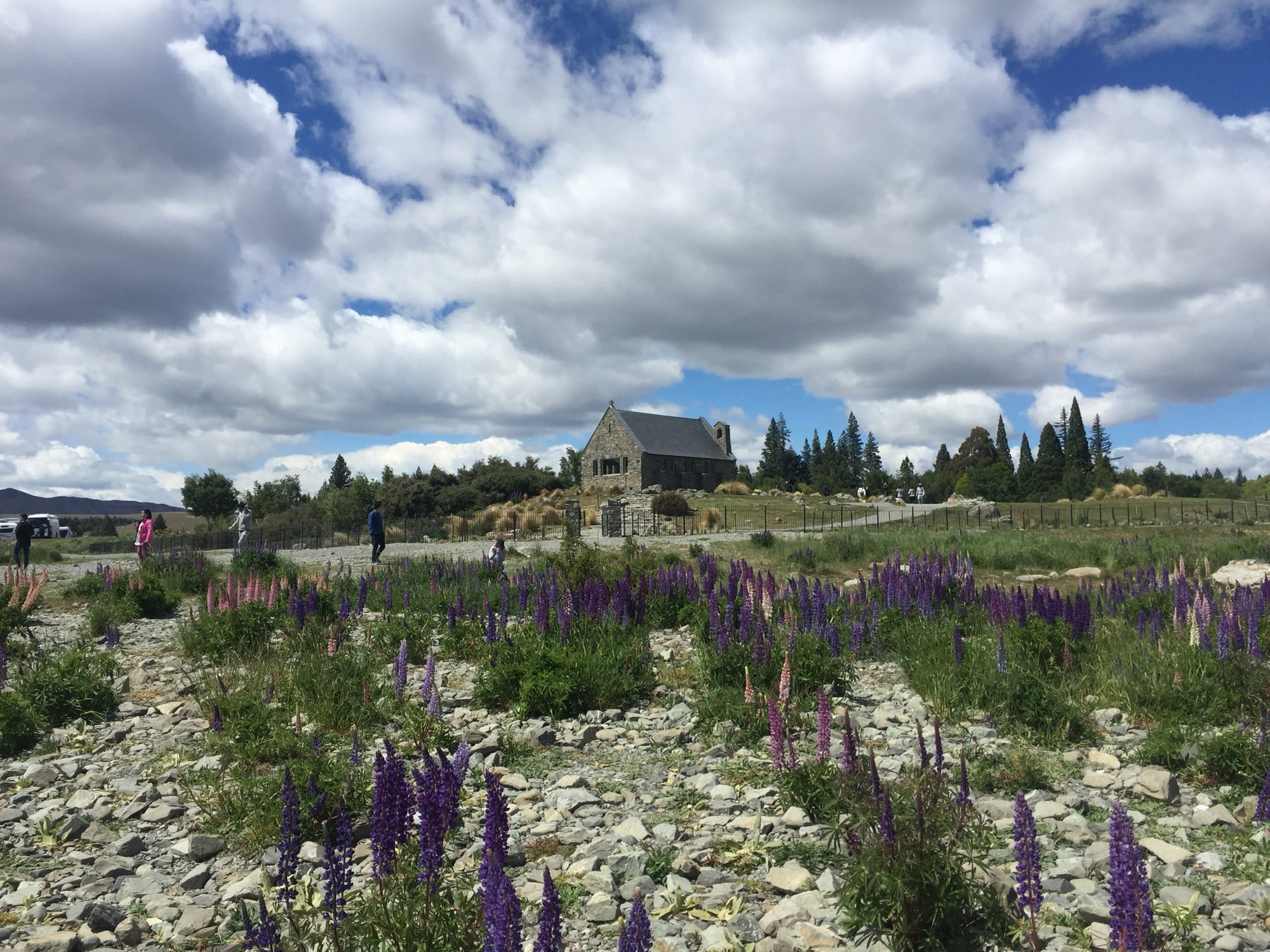
Daylight: the reason January drives feel short
In Queenstown the sun rises at about 6 am and sets at about 9.35 pm on 1 January, and still at 6.40 am and 9.15 pm on the 31st. That is more than 15 hours of daylight at the start of the month and nearly 14 h 40 at the end, with usable light past 10 pm. It changes three things. A 4 pm arrival at a base leaves an evening walk. A Milford Sound day that goes wrong in the morning can still be rescued in the afternoon. And stargazing in the Aoraki Mackenzie dark sky reserve starts late, so plan a nap, not an early night, at Tekapo. The trade-off is that summit walks like Roys Peak are best started at first light to avoid the heat, and that means an alarm at 5.30.
Crowds: the school holidays, not the tourists
The peak is domestic. New Zealand schools break up by 18 December and go back between 28 January and 3 February, and DOC describes Christmas to mid-February as the busiest period at Aoraki/Mount Cook. Milford Sound had its busiest summer on record in 2025/26, with December cruise passengers up 13 percent on the year before, and DOC now advises booking cruises in advance and allowing 45 minutes just for parking and the walk to the terminal. The practical consequences:
- Beds in the small places (Mount Cook Village, Franz Josef, Te Anau, Tekapo) sell out first. Book them before flights if you can.
- White Horse Hill, the DOC campsite at Mount Cook, keeps no spaces for walk-ups, costs $20 per adult and is often full; bookings are open for stays to 30 June 2027.
- Popular DOC car parks (Roys Peak, Blue Pools, Lake Matheson, the Franz Josef glacier valley) fill by mid-morning. Early or late is the rule.
- Some holiday parks around Wanaka book the Christmas fortnight almost a year ahead; one Lake Hawea park charges $70 a night for a powered site for two in its 20 December to early February peak against $60 the rest of summer.
- Rental vehicles, both cars and campervans, price by demand. On the dates we checked (9 to 22 January 2027) a Christchurch-return two-berth campervan with a toilet was about NZD 5,600 and a mid-size automatic car about NZD 1,200 to 1,560 depending on the excess you accept.
From the first week of February the domestic crowd evaporates, the weather is statistically as good (Hokitika 192 mm, Queenstown 51 mm, Christchurch 40 mm) and the days are still long. If your dates are flexible, that is the month.
What is already booked out, and what is not
The Great Walks. The 2026/27 season on the Milford, Routeburn and Kepler tracks runs from 1 November 2026 to 30 April 2027, and hut bookings opened on 13, 15 and 19 May 2026 respectively. International adults pay $132 a night in a Routeburn hut. The good January dates went quickly. Day walks on the same tracks need no booking at all: Routeburn Flats from the Glenorchy end (7.5 km one way), Key Summit from The Divide on the Milford Road, and the first hours of the Kepler from the Te Anau control gates. That is how a January road trip gets its Great Walk scenery.
Milford Sound cruises are not booked out, but the midday sailings on fine days fill. RealNZ's Signature Cruise runs at 10.30 am, 1 pm and 3.25 pm (NZD 175 per adult when we checked) and Southern Discoveries' Nature Cruise from NZD 179; RealNZ reschedules or refunds with 24 hours notice, which matters because the Milford Road is closed on average about eight days a year, mostly in winter, and summer slips do happen.
Heli-hikes and scenic flights at Franz Josef and Fox are weather-cancelled far more often than they are sold out. Book them for a day when you have the next morning free.
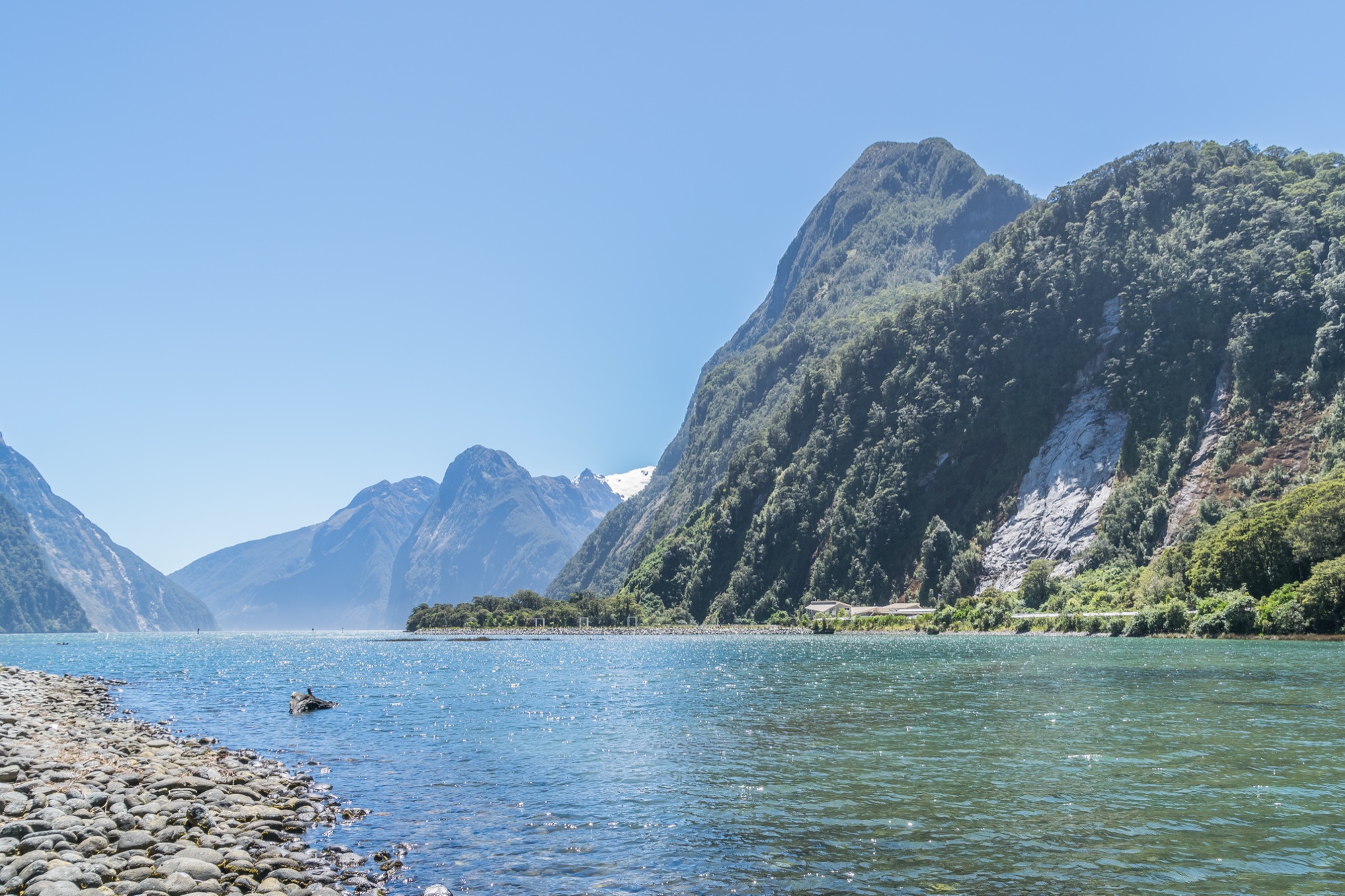
Roads and closures in January
January is the easy season on South Island roads: no chains, no avalanche closures on the Milford Road (its avalanche season is winter, roughly May to November) and the Crown Range open. The things that close roads in summer are heavy rain on the West Coast and in Fiordland, which brings slips, and the Homer Tunnel's summer traffic lights, which can hold you up to 20 minutes each way. Check the NZTA journey planner or ring 0800 44 44 49 on the morning of any West Coast or Milford drive. Rental motorhomes have their own restrictions all year: thl's 2026/27 conditions ban its RVs from the Crown Range Road, Skippers Road, the Mt Aspiring Road beyond Treble Cone and Ball Hut Road at Mount Cook. Two other January realities: the glacier valley walk at Franz Josef is now a 1.7 km, 30-minute walk to a viewpoint because the river has cut off the old route, and the Hooker Valley Track has a new 189 m swing bridge, opened in July 2026, so the full walk to Hooker Lake is open again.
Where to base, and for how long, in January
Because the Mackenzie and Central Otago are reliable and the coast is not, a January plan should give the coast and Fiordland enough nights to absorb a wet day and give the dry basins the fixed-date events. For a 14-day loop from Christchurch that means two nights at Franz Josef, two at Te Anau with the Milford day on the first of them, two at Wanaka, three at Queenstown and one each at Mount Cook and Tekapo, in that order, so the last two nights sit in the driest weather. For 10 days, drop the West Coast entirely and run Christchurch, Tekapo, Mount Cook, Wanaka, Queenstown, Te Anau, Queenstown; for 16 or more, add Kaikoura at the start or Dunedin at the end. If you are choosing between the two lake towns as your main base, the Queenstown or Wanaka comparison shows how the answer depends on your route and your vehicle.
Booking order for a January trip
- Decide loop or open-jaw and book flights. Christchurch return avoids the one-way vehicle fee; from 4 December 2026 to 26 March 2027 United plans a seasonal nonstop from San Francisco, otherwise you connect through Auckland.
- Request the NZeTA (from NZD 17 in the app) and pay the NZD 100 visitor levy at the same time; allow 72 hours.
- Book the scarce nights: Mount Cook Village or White Horse Hill, then Franz Josef and Te Anau, then anything over Christmas and New Year.
- Book the vehicle. Campervans need the green warrant to freedom camp (all rental vans with a fixed toilet will have it; the budget vans without a toilet cannot freedom camp where self-containment is required, which is almost everywhere that matters on this route) and a holiday park or designated car park for the Queenstown and Wanaka nights.
- Book the Milford cruise for the first Te Anau day, keeping the second morning free.
- Leave the rest unbooked. Christchurch, Hokitika, Wanaka and Queenstown have enough beds to decide a week out, and flexibility is what a January forecast rewards.
Is January the right month for you?
Choose January if your holidays are fixed, you want warm swimming lakes and 15-hour days, and you will book early. Choose early February for the same weather with the schools back. Choose December if the Tekapo lupins and the longest days matter more than crowds, and avoid the Christmas fortnight itself. Choose March if you want cool mornings for the big walks and quieter roads, and you accept shorter days (about 12 h 30 by mid-March). In every case the route order in the 14-day itinerary holds; only the buffers and the booking urgency change.
Frequently asked questions
South Island in January: quick answers
How hot is the South Island in January?
Does it rain a lot in January?
When do New Zealand school holidays end?
Can I still book a Great Walk for January?
How long are the days?
Is February better than January?
Are any roads closed in January?
What should I book first for a January road trip?
Photo credits
Hero: Aoraki/Mount Cook across Lake Pukaki, and Milford Sound, by Krzysztof Golik, CC BY-SA 4.0. Church of the Good Shepherd at Lake Tekapo by Vincent60030, CC BY-SA 4.0. All via Wikimedia Commons, resized.