


On this route
The extra night goes to Seville unless your flight home or your Alhambra ticket says otherwise. That is the short answer to the question most people ask after they have settled on Seville, Cordoba and Granada for a week by train. Seville is the larger city with more to see on a fourth day and more to do indoors when it rains; Granada's third night earns its place only when it saves you an early train to the airport or lets you take the only Nasrid Palaces slot you could get. Cordoba gets the night in exactly one case: Medina Azahara.
This article is the decision behind that answer, with the train times and the winter numbers that produce it. The base plan it modifies is the 7-Day Andalusia Itinerary by Train: Seville three nights, Cordoba one, Granada two, in that order.
The rule in one table
| Your situation | Extra night | Why |
|---|---|---|
| Loop ticket: fly in and out of Seville | Seville (4 nights, at the end) | The direct Granada to Seville Avant leaves at 06:22 or 13:12; sleeping in Seville the last night turns a 06:22 train and a nervous morning into a normal one |
| Open jaw out of Malaga, flight before 13:00 | Granada (3 nights) | The 07:36 Avant reaches Malaga at 09:05 and the airport by about 09:30; anything earlier means a coach in the dark. A third night gives you a full last day and a calm exit |
| Open jaw out of Malaga, flight after 15:00 | Seville (4 nights, at the start) | The 13:25 Avant from Granada reaches Malaga at 14:59 and the airport by about 15:10, so Granada's two nights already give you a full second day; spend the spare one in Seville |
| Open jaw out of Granada airport | Granada (3 nights) | The airport bus takes about 45 minutes and Granada has only ten destinations in Aena's list, so the flight sets the day; the third night keeps the departure separate from the sightseeing |
| Only Nasrid Palaces slot is on your arrival afternoon or departure morning | Granada (3 nights) | The slot cannot be changed once bought; the extra night makes the awkward time workable |
| Medina Azahara is a must | Cordoba (2 nights) | The site is closed on Mondays and needs half a day plus the shuttle; a single Cordoba night cannot hold it and the Mosque-Cathedral |
| You want museums, tapas streets and a late city | Seville (4 nights) | Cathedral, Alcazar, Casa de Pilatos, Bellas Artes, Triana and the river; Granada's centre is a day, its hill is a day, and then you are done |
What each city does with the night
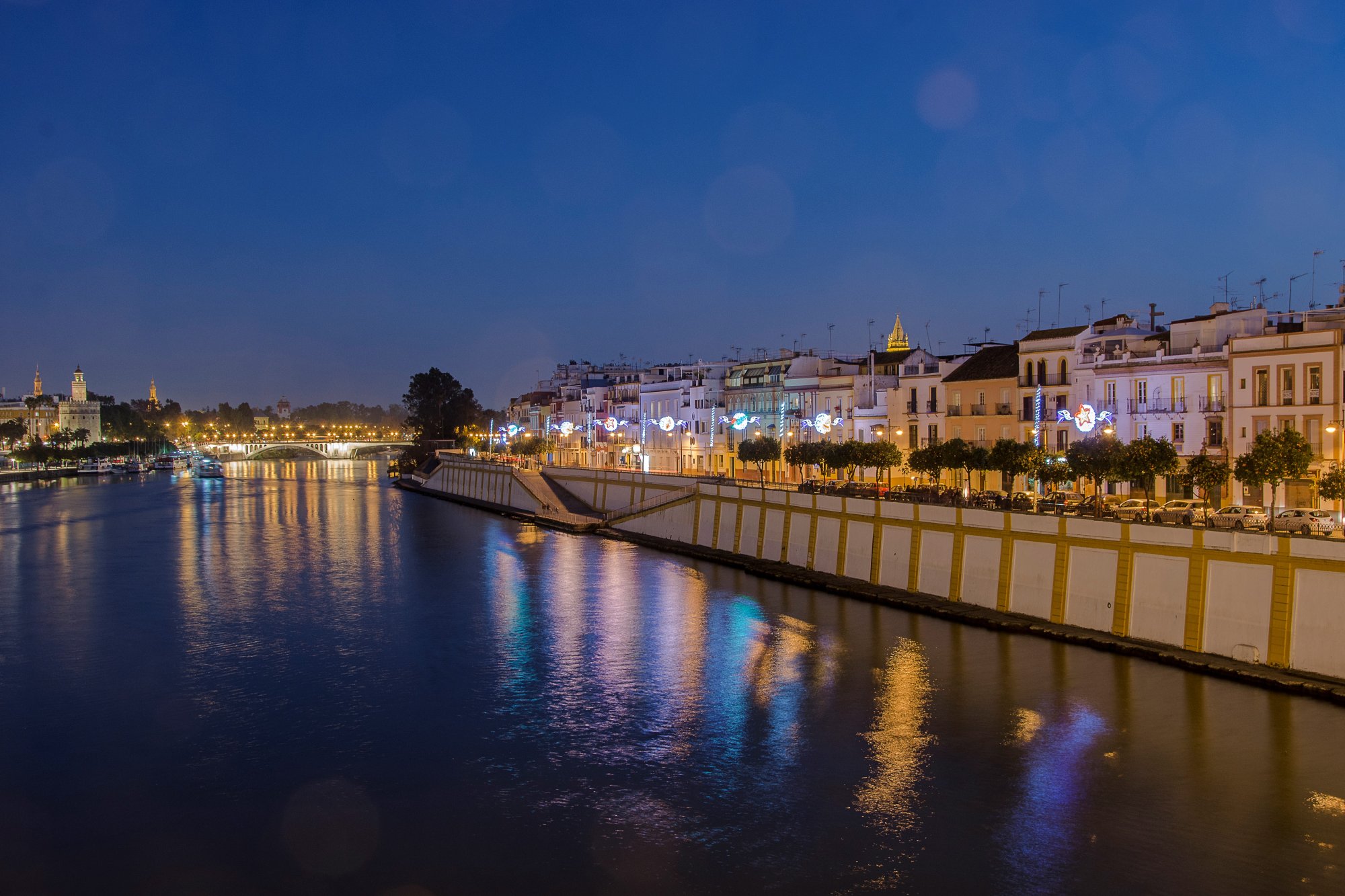
Seville with four nights
Three nights in Seville is the Alcazar, the Cathedral and Giralda, Santa Cruz, Triana and the Plaza de Espana, with one buffer day for rain. A fourth night adds the parts that first-timers skip: the Casa de Pilatos and its painted courtyards, the Museo de Bellas Artes, a proper morning in Triana's market and ceramics quarter, the Setas at sunset rather than at a run, and an evening that does not start with packing. In winter it also adds insurance. Seville has the mildest afternoons of the three cities (a January mean high of 16 degrees) and the most roofed things to do, so a wet day costs you least here. If the seventh night is at the end of the trip, it also means the last day's train from Granada is the 13:12 Avant rather than the 06:22.
Granada with three nights
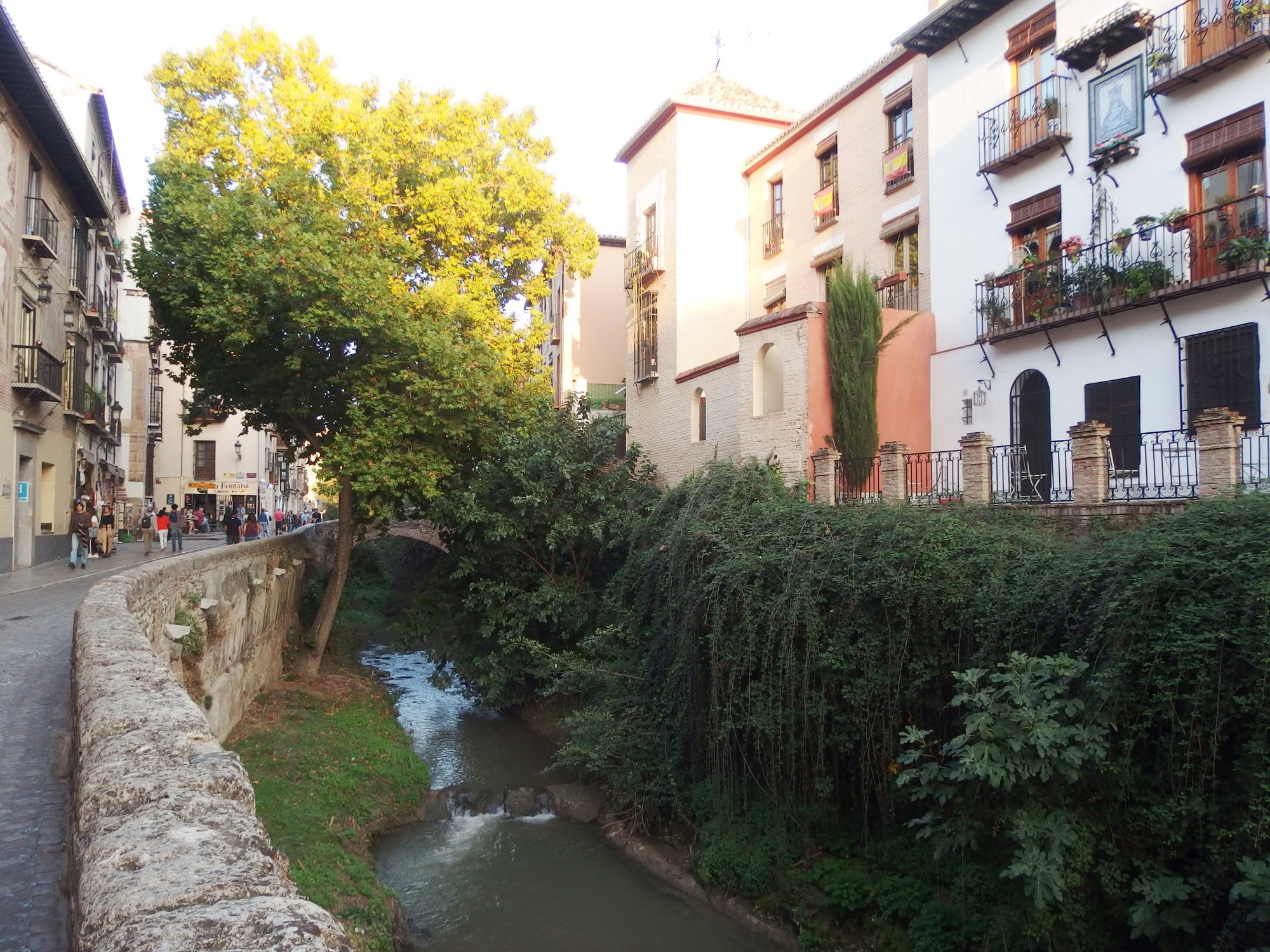
Two nights in Granada is one evening on the Albaicin, one full Alhambra day and a morning. A third night adds the Cathedral and the Royal Chapel done properly, the Carrera del Darro and the Paseo de los Tristes in daylight, the Sacromonte caves museum, a hammam, and a second sunset from San Nicolas, which in winter is the best hour of the day. It also adds slack around the one thing on the whole route that cannot be moved: the Nasrid Palaces entry time printed on your Alhambra ticket. If that time is early on the morning after you arrive from Cordoba, or in the afternoon of the day you leave, a third night stops it from wrecking a train.
What a third night does not do is make Granada a bigger city. The centre is compact and the hill is the hill; three nights is comfortable, four is too many for most people in winter, when the Generalife's gardens are bare and the days are short.
Cordoba with two nights
One night in Cordoba covers the Mosque-Cathedral, the Juderia, the Alcazar gardens and the Roman bridge at dusk, plus the free 08:30 to 09:30 slot in the Mosque-Cathedral the next morning. The only reason to add a second is Medina Azahara, the tenth-century caliphal city 8 km west, which in winter is open Tuesday to Saturday 09:00 to 18:00 and Sundays 09:00 to 15:00, closed on Mondays, and reached by a shuttle bus from its museum. It is free for EU citizens and 1.50 euros for everyone else. It is a half-day with the bus, and it is closed on 24, 25 and 31 December and 1 and 6 January, so a Christmas trip needs the dates checked first.
The train and flight arithmetic
These are the November 2026 departures as Renfe showed them on 22 September 2026, with fares as offered that day. Renfe had not yet loaded timetables beyond 12 December when we checked, so treat January times as likely rather than fixed; the pattern rarely changes at the December timetable change, the minutes sometimes do.
| To | Departures | Duration | Fare | Works with a flight at |
|---|---|---|---|---|
| Seville Santa Justa (Avant, direct) | 06:22, 13:12, 16:22, 18:17 | 2 h 45 to 2 h 52 | 47.20 euros fixed (fare checked in the Seville to Granada direction) | 13:00 or later with the 06:22 (plus the 35-minute EA bus); 19:00 or later with the 13:12 |
| Malaga Maria Zambrano (Avant, direct) | 07:36, 13:25, 18:29 | 1 h 29 to 1 h 34 | 23.10 euros fixed | 12:00 or later with the 07:36, 17:30 or later with the 13:25 (Cercanias C1 to the airport is 8 minutes) |
| Malaga airport (ALSA coach, direct) | Several a day; check the ALSA search for your date | About two hours | See ALSA | Early flights; ALSA asks you to be at the bus station an hour before |
| Granada airport (city bus) | See the Granada transport consortium timetable | About 45 minutes | See the Granada transport consortium | Any Granada departure |
The other constraint sits earlier in the week. The Cordoba to Granada leg had nine trains on the November and December 2026 dates we checked and none between 10:44 and 13:06 or between 15:21 and 18:35. With two Granada nights you want the 13:06 Avant (arriving 14:55) so the first evening includes the Albaicin at sunset; with three you can afford the 15:21 AVE and a dark arrival, because the sunset walk moves to another day. Fares and fare classes for every leg are compared in Seville, Cordoba and Granada by Train.
Winter tilts the answer
Two winter facts push in opposite directions. Daylight ends by 18:00 to 18:30 across the route and Granada's mornings are cold (a January mean minimum of zero at the airport station, nearly seventeen frost days), which makes a third Granada night less useful than it would be in May: the extra hours arrive in the dark, and the Generalife is bare. Seville's afternoons stay at 16 degrees and its indoor list is longer, which is the case for the fourth Seville night.
Against that, booking guides for Granada advise shorter lead times for the Alhambra in low season, so the slot problem that forces a Granada night is rarer between November and February than in spring. And since the earthquakes of August 2026 the Alcazaba has been closed and the Nasrid Palaces put on a modified route, which makes the Alhambra a somewhat smaller visit than it was; that too argues for Seville. The full winter picture, city by city, is in Andalusia in Winter.
Five travellers, five answers
First trip, loop through Seville. Seville, at the end. Your last day is the 13:12 Avant, an evening in Triana and a flight the next day.
Open jaw into Seville, out of Malaga. Depends on the flight. Before 13:00, Granada; after 15:00, Seville. The 07:36 and 13:25 Avants are the hinge.
The Alhambra is the point of the trip. Granada, and buy the ticket before the trains. Use the third night for the Albaicin's Andalusi monuments (those that have reopened) and the Cathedral, and keep the Alhambra day free of anything else.
Family with children. Seville. A fourth day with no tickets, the park and the river, is worth more than another hill. Children aged 4 to 13 pay 60 percent of the base fare on all Renfe trains, which makes the train days cheap either way.
Food and evenings. Seville. Four nights of tapas streets beats three of Granada's, and the last-night logistics are simpler.
How the nights change
| Pattern | Nights | You gain | You lose |
|---|---|---|---|
| Seville extra (default) | 4-1-2 with Seville at the start, or 3-1-2 plus a final Seville night | A no-ticket day in the mildest city; the 13:12 rather than the 06:22 train; more rain cover | Nothing on the Granada side if your Alhambra slot is on the full day |
| Granada extra | 3-1-3 | A calm exit from Granada or Malaga; slack around the Nasrid slot; Cathedral, Royal Chapel and a second sunset | A cold, short third day; one Seville evening |
| Cordoba extra | 3-2-2 | Medina Azahara and a second Roman bridge evening | The Seville buffer and the Granada slack; only worth it for the site |
Our verdict
Seville by default, Granada when the flight or the ticket demands it, Cordoba only for Medina Azahara. If you are still undecided, decide by the flight home: a loop or an afternoon flight from Malaga means Seville; a morning flight from Malaga or any flight from Granada means Granada. Then book the Alhambra for the full Granada day and let the trains fall into place.
Frequently asked questions
Is Seville or Granada better for an extra night?
How many nights do you need in Granada?
Can I do Granada as a day trip from Seville?
Is Cordoba worth two nights?
Which airport should I fly home from?
Does the Alhambra ticket change where I stay?
Photo credits
Hero: Seville from Triana at dusk in January by Anual, CC BY-SA 4.0. Calle Betis by Anual, CC BY-SA 4.0. Carrera del Darro by Palickap, CC BY-SA 4.0. All via Wikimedia Commons, resized.