


On this route
Seville, Cordoba and Granada sit on one railway line, and that is the whole reason a week in Andalusia works without a car. The trains are short: Seville to Cordoba takes 40 to 44 minutes on AVE, Avant or Avlo, and Cordoba to Granada 1 hour 37 to 1 hour 56. The order that works for most European flights is Seville first (three nights), Cordoba in the middle (one night) and Granada last (two nights), because Seville has the airport with the most direct routes and Granada has the monument you must book to a time slot. This plan gives you seven days and six nights on that spine, with the actual November and December 2026 departures we checked, the fare classes that matter, and the winter opening hours that decide the order of each day.
Winter changes three things. The Alhambra and the Real Alcazar close at 18:00 and 17:00 between mid-October and the end of March, so the big monuments are morning and early-afternoon work. Daylight is short: mid-December sunrise in Seville is 08:31 and sunset 18:07, which turns the Cordoba to Granada train into a timing decision rather than a whim. And Granada is cold in a way Seville is not, with a January mean minimum of 0 degrees at the airport station against 5.7 degrees in Seville. None of this is a reason to wait for spring. It is a reason to book the two timed tickets first and let the trains follow.
The route below is deliberately 3-1-2. If you have a seventh night, the question of whether it goes to Seville or Granada has its own article, and the answer depends on which airport you fly home from. The train legs, fare classes and booking timing are explained in detail in Seville, Cordoba and Granada by Train; this page uses the numbers without repeating the reasoning.
- Duration
- 7 days / 6 nights
- Bases
- 3 (Seville, Cordoba, Granada)
- Transport
- Renfe AVE, Avant or Avlo between the cities; airport bus, Metro and walking inside them
- Pace
- Two timed monuments, one buffer day, two short train days
- Best season
- October to February; trains verified for November and December 2026
Your 7-day route at a glance
Three bases, two train legs, no backtracking. Day 3 is the buffer that absorbs rain or a late arrival; Day 6 is the Alhambra day and the one you build everything else around.
| Day | Plan | Overnight | Train or transfer |
|---|---|---|---|
| 1 | Land in Seville, EA bus or taxi to the centre, evening walk through Santa Cruz | Seville | EA airport bus, 6 euros, until 00:05 |
| 2 | Real Alcazar at 09:30, Cathedral and Giralda after lunch, Triana at dusk | Seville | On foot |
| 3 | Plaza de Espana and the park, river walk, Setas viewpoint at sunset; buffer for rain or a slow start | Seville | On foot |
| 4 | Morning train to Cordoba, Mosque-Cathedral in the afternoon, Roman bridge at sunset | Cordoba | AVE 09:34 to 10:15 (or Avant 09:55 to 10:39) |
| 5 | Free Mosque-Cathedral slot at 08:30, Juderia, early-afternoon train to Granada, Mirador de San Nicolas at sunset | Granada | Avant 13:06 to 14:55 (fallback AVE 15:21 to 16:58) |
| 6 | Alhambra: Nasrid Palaces at your ticketed time, Generalife and Partal with the same ticket, Albaicin or Sacromonte in the evening | Granada | On foot or minibus up the hill |
| 7 | Cathedral and Royal Chapel if the flight allows, then out via Granada, Malaga or back to Seville | Home | Airport bus 45 min (GRX), Avant 1 h 30 to Malaga, or Avant 2 h 45 to Seville |
Where you sleep
- Seville 3 nights
- Cordoba 1 night
- Granada 2 nights
Who this route suits, and who should change it
This is a first-visit route for people who want the three great Moorish and Christian monuments of Andalusia in one week without driving, and who are travelling between October and February when the cities are quieter, the monuments book more easily and the weather is mild by day and cold by night. It works for couples, for families with children old enough to walk a city for five hours, and for anyone arriving on a European low-cost flight into Seville.
Change it if you are flying into Malaga or Granada, in which case reverse the order and finish in Seville; the legs run just as well in that direction. Change it if the Alhambra is the point of the trip and you would rather have a full second day in Granada than a third in Seville: then read the seventh-night comparison before you book. And do not use it as a beach week: this route never touches the sea.
If you are visiting in December or January and want the honest picture of what a wet week looks like, Andalusia in Winter has the station-by-station numbers and the holiday closures.
Five decisions to make before you book
1. Which airports, and therefore which order
Seville (SVQ) has 88 destinations served by 34 airlines in Aena's list, Malaga (AGP) has 159, and Granada (GRX) has 10, of which only Amsterdam and Nantes are outside Spain on the list we read in September 2026. So the practical choices are an open jaw into Seville and out of Malaga, an open jaw out of Granada if you live near one of its few routes, or a loop through Seville. The open jaw via Malaga adds one Avant of about 1 hour 30 from Granada plus an 8-minute Cercanias hop from Maria Zambrano to the airport, and it is the version most European readers will end up with. The loop through Seville adds a 2 hour 45 Avant back from Granada on the last morning (06:22 or 13:12 in November 2026), which only works with an afternoon or evening flight.
2. Where the seventh night goes, if you have one
The base plan is six nights. A seventh night is not automatically Granada's. If you loop back through Seville, put it in Seville at the end so the last day is not a 06:22 train. If you fly out of Granada or Malaga before 13:00, put it in Granada so the departure is not the same morning as the Cathedral. If Medina Azahara is on your list, and only then, it goes to Cordoba. The full comparison with the train times behind it is in Seville or Granada: Where Should You Spend the Extra Night?
3. AVE, Avant or Avlo, and which fare
Between Seville and Cordoba there were 39 departures on a November 2026 weekday. The AVE is the fastest at 40 to 42 minutes and was selling at 10.40 to 12.45 euros on most trains eight weeks ahead; the Avlo low-cost trains were 7 to 9 euros with a strict one-cabin-bag rule; the Avant regional high-speed trains cost a fixed 22.30 euros on every departure but let you change once for free. Between Cordoba and Granada the Avant is a fixed 32.10 euros and the AVE 33 to 49.50 euros. The rule of thumb for a fixed itinerary: buy the cheap AVE Basico early and accept that it is non-refundable, or pay the Avant fare if you want the freedom to move to another train on the day.
4. The Alhambra slot decides Day 6
The Alhambra General ticket (22.27 euros) includes a half-hour entry window to the Nasrid Palaces that is printed on the ticket, and if you are not at the palace entrance at that time you do not get in. Tickets are nominative, need your passport or ID card at the gate, and cannot be changed once bought. Buy for Day 6 as soon as your dates are fixed. If only Day 5 afternoon or Day 7 morning is left, the plan still works; the versions section below explains the swap.
5. November or January
November is the easier month: Seville's mean is 15.1 degrees with highs around 20, and Granada's airport station averages 10.6 degrees with 4.8 frost days. January is the coldest month in Granada (mean 6.5 degrees, mean minimum 0.0, 16.8 frost days) and, with February, one of the two driest and the wettest stretch in Cordoba is December (111 mm on average, eight rain days). Both months work for this route; January simply needs a warm layer for Granada's mornings and the Alhambra's shaded courtyards, and the Christmas and Three Kings closures on 25 December, 1 January and 6 January need to be avoided for the Alcazar and the Alhambra.
Day-by-day plan
Day 1: arrive in Seville and walk
The EA airport bus runs to the city from 04:30 until 00:05, costs 6 euros one way or 8 euros for a same-day return, takes bank cards on board, and stops at Santa Justa station on the way in, which is useful if your hotel is on that side of town. A taxi is the sensible alternative after a late flight. Check in, then walk: the lanes of Santa Cruz behind the Cathedral, the orange-tree courtyard seen through its gate, and a first round of tapas. Nothing on Day 1 needs a ticket, which is exactly why it is the arrival day.
Two things to do before you fly, not on Day 1: book the Real Alcazar for the 09:30 opening on Day 2, and book the Alhambra for Day 6. Both sell timed entries and the Alhambra's is nominative.
Day 2: Real Alcazar, Cathedral and Giralda, Triana
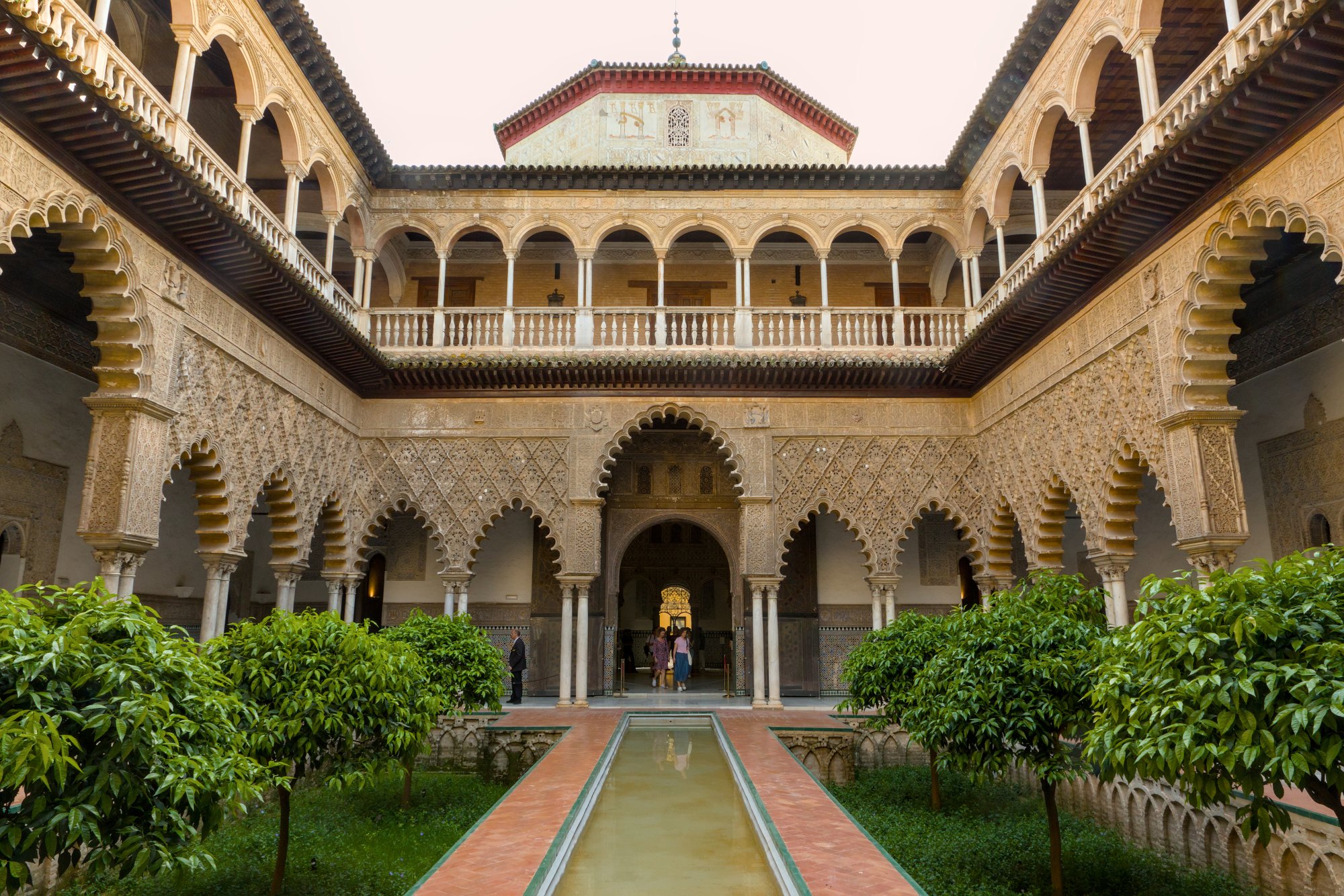
The Real Alcazar opens at 09:30 and, from 1 October to 31 March, closes at 17:00 with the clearing of the grounds from 17:45. The general ticket is 15.50 euros, the Cuarto Real Alto (the upper royal apartments, a separate ticket) 5.50 euros more, and it is closed on 1 and 6 January, Good Friday and 25 December. Take the first slot: the Patio de las Doncellas and the gardens are at their best before the day fills, and two and a half hours is enough.
The Cathedral and the Giralda are open Monday to Saturday 10:45 to 19:00 and Sunday 14:30 to 19:00, with the ticket office closing at 18:00; the general ticket is 13 euros online and 14 at the door, and the visit starts with the Giralda ramp, which has its own access control. If your Day 2 is a Sunday, swap the order and do the Cathedral after 14:30. Between the two, lunch in Santa Cruz. At dusk cross the Isabel II bridge into Triana and walk Calle Betis along the river; the Centro Ceramica Triana is included in the Alcazar's general ticket if you still have the energy.
Day 3: Plaza de Espana, the river and a buffer
No tickets today, on purpose. Start at the Plaza de Espana in the Parque de Maria Luisa while the morning light is on the tiled benches, walk back along the river past the Torre del Oro, and climb the Setas de Sevilla for sunset, which in mid-December is at 18:07. If it rains, the Casa de Pilatos and the Museo de Bellas Artes are the indoor alternatives with courtyards you can still enjoy under an umbrella. This is also the day you cut first if you only have six, and the day that becomes a Cordoba day trip if you insist on sleeping only in Seville and Granada. We would not do that: Cordoba at dusk and at 08:30 the next morning is worth the night.
Day 4: train to Cordoba, Mosque-Cathedral, Roman bridge
Take the 09:34 AVE (arrives 10:15, from 10.40 euros in Basico on the November 2026 date we checked) or the 09:55 Avant (arrives 10:39, 22.30 euros, one free change). Santa Justa is a 25-minute walk or a short taxi from Santa Cruz; be there 20 minutes before departure for the platform access checks. Cordoba's station, renamed Cordoba-Julio Anguita in 2025, is a 20 to 25 minute walk from the Juderia, and Adif lists no left-luggage service there, so drop bags at your hotel even if the room is not ready.
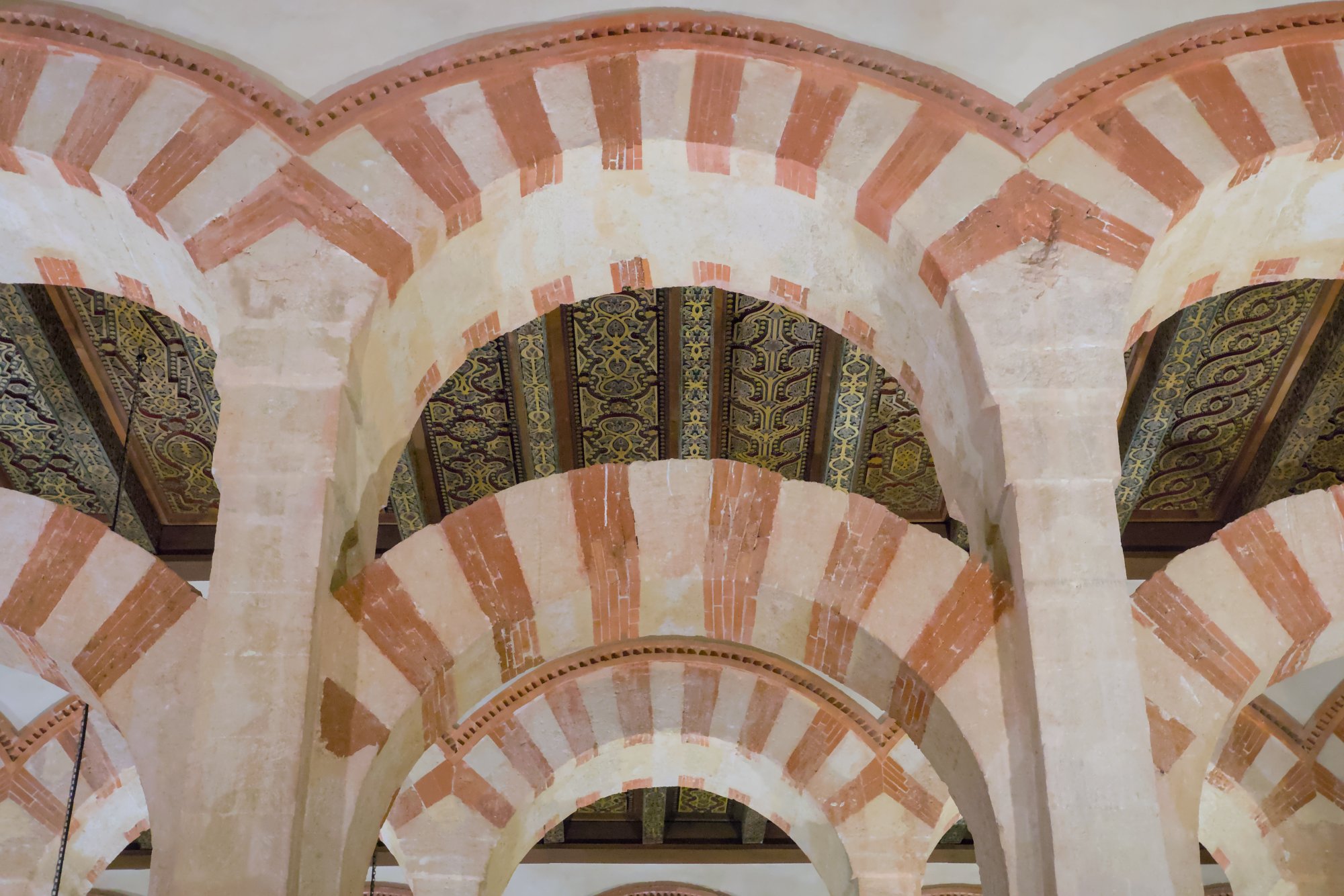
The Mosque-Cathedral costs 15 euros and last entry is half an hour before closing. Through October the official hours tool showed 10:00 to 19:00; the November to February hours had not been published when we checked in late September, so look them up on the Cathedral chapter's hours tool the week before and plan the visit for early afternoon. Allow ninety minutes inside, then the Juderia, the Calleja de las Flores and, if there is time, the gardens of the Alcazar de los Reyes Cristianos. End on the Roman bridge: the view back to the Mosque-Cathedral at sunset (18:01 in mid-December) is the reason to sleep in Cordoba rather than day-trip it.
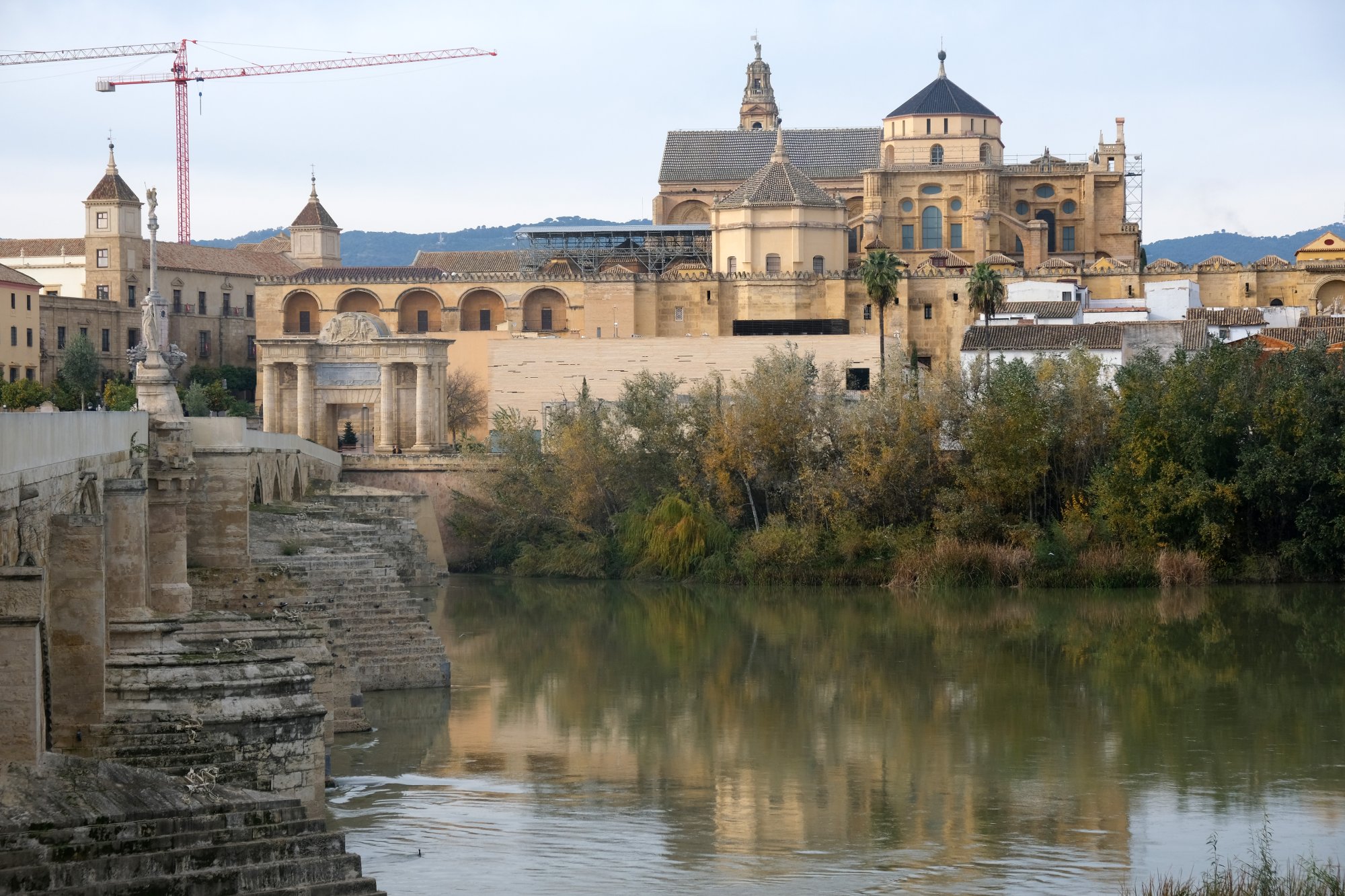
Day 5: the free 08:30 slot, then the train to Granada
Monday to Saturday the Mosque-Cathedral opens free of charge from 08:30 to 09:30 for individual visitors; access stops at 09:20 and groups are not admitted. It is the quietest hour the building has, and if you paid on Day 4 it is a second look in different light. Walk the bridge once more in the morning, then collect your bags.
The Cordoba to Granada leg is the one with gaps. On the November and December 2026 dates we checked there were nine trains: Avant at 08:29, 10:44, 13:06 and 20:04 (1 hour 48 to 1 hour 56, 32.10 euros), AVE at 09:07, 15:21, 21:25 and 21:36 (1 hour 37 to 1 hour 48, 33 to 49.50 euros) and an Alvia at 18:35. Nothing leaves between 10:44 and 13:06 or between 15:21 and 18:35. The 13:06 Avant is the plan: it keeps the free morning slot and arrives at 14:55, in time to drop bags and be at the Mirador de San Nicolas for sunset, which is 17:58 in mid-December and 18:21 in mid-January. The 15:21 AVE is the fallback; it arrives at 16:58, fine for a November sunset, too late for a December one.
Granada's station has a Metro stop (Estacion de Ferrocarril) and city buses 4 and 9 outside; the centre is 15 to 25 minutes away. From Plaza Nueva the Albaicin is a climb on foot. Granada's first evening will be the coldest of the week, so the walk up to San Nicolas is the moment for the jacket you did not need in Seville.
Day 6: the Alhambra
Winter hours run 08:30 to 18:00 daily from 15 October to 31 March, ticket office from 08:00, and the complex is closed on 25 December and 1 January. Your General ticket (22.27 euros) covers the Nasrid Palaces at the printed time, the Partal, the Generalife gardens and palace, and the Alcazaba; each area can be entered once, but you can leave the complex for lunch and come back. Plan three hours, arrive an hour before your Nasrid time, bring the passport you booked with, and leave any bag larger than 40 by 40 cm at the hotel because it will not be allowed in (there are free lockers, but only while they last). A morning palace slot means gardens after lunch; an afternoon slot means gardens first and the palaces as the light goes.
One thing is different this winter. After the earthquakes of 15 and 18 August 2026 near Granada, the Alcazaba was closed for inspection and had not reopened when we checked the official ticket site on 22 September; the Nasrid Palaces are being visited on a modified special route, the Paseo de las Torres in the Partal is shut, and two of the Albaicin's Andalusi monuments (Casa Horno de Oro and Dar al-Horra) remain closed. The Generalife runs as usual. Check the ticket-site notices the week before you go; the Patronato updates them as inspections progress.
Evening: the Carrera del Darro along the stream below the Alhambra, then Sacromonte for a flamenco cave show, or simply tapas around Plaza Nueva.
Day 7: Granada's centre, then out
With an afternoon flight there is time for the Cathedral and the Royal Chapel before the airport. From Granada airport bus stop on Gran Via the airport is about 45 minutes. For Malaga, the direct Avant trains left Granada at 07:36, 13:25 and 18:29 in November 2026 (1 hour 29 to 1 hour 34, 23.10 euros) and from Malaga Maria Zambrano the Cercanias C1 reaches the airport in 8 minutes; ALSA also runs direct coaches from Granada bus station to Malaga airport, which take roughly two hours according to resellers (ALSA does not publish a duration) and are the better choice for an early flight. For a loop through Seville, the direct Avant left at 06:22 (arriving 09:07) and 13:12 (arriving 15:59), 2 hours 45 to 2 hours 52. If any of these leaves you at the airport with a 09:00 departure and a 06:22 train, that is the case for the seventh night.
The two train legs, with the trains we checked
These are the departures on Tuesday 17 November and Thursday 19 November 2026 as shown by Renfe on 22 September 2026, with the lowest fare offered that day. Renfe had timetables loaded only through 12 December when we checked, so the same trains on a January date are likely but not guaranteed; the mid-December timetable change usually shifts minutes, not the pattern. Prices are dynamic on AVE and Avlo and fixed on Avant and Media Distancia.
| Leg | Train | Times | Lowest fare | Why this one |
|---|---|---|---|---|
| Seville to Cordoba (Day 4) | AVE 02091 | 09:34 to 10:15 | 10.40 euros Basico | Fastest, cheapest morning departure; non-refundable |
| Seville to Cordoba (Day 4) | Avant 08295 | 09:55 to 10:39 | 22.30 euros fixed | First change free; runs on to Granada if you ever skip Cordoba |
| Seville to Cordoba (Day 4) | Avlo 02137 | 13:15 to 13:57 | 9.00 euros | Cheapest early-afternoon option; one cabin bag only |
| Cordoba to Granada (Day 5) | Avant 08335 | 13:06 to 14:55 | 32.10 euros fixed | Keeps the free Mosque-Cathedral morning and beats sunset |
| Cordoba to Granada (Day 5) | AVE 02136 | 15:21 to 16:58 | 44.00 euros | Fallback; last daylight arrival in November |
| Cordoba to Granada (Day 5) | Avant 08275 | 08:29 to 10:25 | 32.10 euros fixed | If your Alhambra slot is Day 5 afternoon |
| Granada to Malaga (Day 7) | Avant 08915 or 08935 | 07:36 to 09:05, 13:25 to 14:59 | 23.10 euros fixed | Open jaw via AGP; Cercanias to the airport |
| Granada to Seville (Day 7) | Avant 08475 or 08525 | 06:22 to 09:07, 13:12 to 15:59 | 47.20 euros fixed (checked in the Seville to Granada direction) | Loop via SVQ; only with an afternoon flight |
Fare classes on the AVE that morning were Basico 10.40 euros (one change up to 24 hours before for 10 euros plus the difference, no refund), Elige 11.60 (one free change, 70 percent refund), Elige Confort 19.85 and Premium 38.85 (unlimited changes, full refund up to seven days before). The Avant has one fare with the first change free and a 15 percent cancellation charge. Avlo's 9 euro fare allows one hand bag and one cabin case and charges 8 euros for a seat choice or a change. Children aged 4 to 13 pay 60 percent on all Renfe trains; under-4s travel free without a seat. Buying at the station adds 5.5 percent on AVE and long-distance tickets.
Tickets and hours you must plan around
| Monument | Winter hours | Price | Closed or restricted |
|---|---|---|---|
| Real Alcazar, Seville | 09:30 to 17:00 (1 Oct to 31 Mar) | 15.50 euros; Cuarto Real Alto 5.50 | 1 and 6 Jan, Good Friday, 25 Dec |
| Cathedral and Giralda, Seville | Mon to Sat 10:45 to 19:00, Sun 14:30 to 19:00; ticket office to 18:00 | 13 euros online, 14 at the door | Giralda only 4 to 7 Dec; no visit 8 Dec |
| Mosque-Cathedral, Cordoba | 10:00 to 19:00 to 31 Oct; Nov to Feb hours published later on the official tool | 15 euros; free Mon to Sat 08:30 to 09:30 | Sunday Mass 12:00 and 13:30 limits visits |
| Medina Azahara (optional) | Tue to Sat 09:00 to 18:00, Sun 09:00 to 15:00 | Free for EU citizens, 1.50 euros others | Mondays; 1 and 6 Jan, 24, 25, 31 Dec |
| Alhambra, Granada | 08:30 to 18:00 (15 Oct to 31 Mar); night visits Fri and Sat 20:00 to 21:30 | 22.27 euros General | 25 Dec and 1 Jan; Alcazaba closed after the August 2026 earthquakes at the time of writing |
What winter changes, in numbers
AEMET's station normals put the three cities in order. Seville's airport station averages 11.9 degrees in December and 10.9 in January, with mean highs of 16 and about seven rain days a month; Cordoba is a degree and a half cooler with the wettest December of the three (111 mm) and 6.6 frost mornings in January; Granada's airport station, at 560 metres on the Vega, averages 6.5 degrees in January with a mean minimum of 0.0 and nearly seventeen frost days, but it is also the driest of the three at 42 mm. In practice: Seville and Cordoba are mild afternoons and cool evenings, Granada is bright cold mornings and sun on the Alhambra by eleven. Daylight is about 9.6 hours in mid-December and 10.8 by mid-February.
Versions: six days, a seventh night, or the reverse order
Six days. Drop Day 3, the Seville buffer. Keep the Cordoba night: turning Cordoba into a day trip loses the Roman bridge at dusk and the 08:30 free slot, which are the two things the day trip crowd never sees.
Seven nights, Granada. Day 7 becomes a full Granada day (Cathedral, Royal Chapel, Carrera del Darro, a hammam) and Day 8 is the departure. This is the version for an early flight out of Granada or Malaga.
Seven nights, Seville. Four nights in Seville at the end, returning by the 13:12 Avant from Granada, with a late flight from Seville the next day. This is the version for a loop ticket and for anyone who wants museums and evenings more than a second Alhambra-hill day.
Reverse order. Fly into Malaga or Granada and finish in Seville: Granada 2, Cordoba 1, Seville 3. Cordoba to Seville has about forty Renfe departures a day plus OUIGO and iryo trains, which also sell that segment; neither of those operators serves Granada.
Alhambra slot on the wrong day. If the only Nasrid time left is Day 5 afternoon, take the 08:29 Avant from Cordoba (arriving 10:25) and skip the free morning slot. If it is Day 7 morning, add the Granada night.
Common mistakes
- Booking the Alhambra in a different name from the passport you travel on. The ticket is checked against your ID and cannot be changed.
- Arriving at the Nasrid Palaces entrance ten minutes after the printed time. The half-hour window is the entry window, not a suggestion.
- Planning the Cordoba to Granada train for "sometime after lunch". There is nothing between 10:44 and 13:06, or between 15:21 and 18:35.
- Assuming the Mosque-Cathedral keeps summer hours in December. Check the official hours tool; winter hours were not published when we checked and Sunday mornings are for Mass.
- Expecting station lockers. Adif lists no left-luggage service at Santa Justa, Cordoba or Granada; use the hotel or a private storage shop.
- Buying an Avlo fare with a large suitcase. Avlo allows one hand bag and one cabin case; the AVE allows three pieces up to 25 kg.
- Booking a 09:00 flight out of Malaga or Seville for Day 7 and trusting a 06:22 train. Add the night.
Practical notes for winter 2026-27
Stations: Santa Justa is open from 04:30 on weekdays, Cordoba-Julio Anguita from 05:30 and Granada from 05:35; allow 20 minutes before departure for the platform access checks. Granada's station is on the Metro line and Cordoba's adjoins the bus station. Seville's EA airport bus and the Granada airport bus both stop in the centre; Malaga airport is 8 minutes from Maria Zambrano station on Cercanias line C1.
Holidays: the Three Kings parades fill the streets of all three cities on the evening of 5 January and 6 January is a public holiday with the Alcazar and Medina Azahara closed. Christmas Day and New Year's Day close the Alhambra and the Alcazar. We could not verify Renfe's 24 and 31 December timetables (nothing beyond 12 December was loaded when we checked), so book the earlier train on those dates and confirm it once the December timetable appears.
Money and IDs: carry your passport on monument days (the Alhambra requires the original document), and remember that Spanish museum discounts for over-65s and students are checked against a card at the gate. Renfe notes that delays caused by Adif's temporary speed restrictions are not compensated on tickets bought after 31 January 2026, which is one more reason not to chain a train straight to a flight.
Frequently asked questions
Is seven days enough for Seville, Cordoba and Granada by train?
Which city should come first?
How far ahead do I need to book the Alhambra?
Is the Alhambra fully open after the August 2026 earthquakes?
AVE or Avant between Seville and Cordoba?
How many trains run from Cordoba to Granada?
Can I leave luggage at the stations?
Which airport should I fly home from?
Photo credits
Hero: the Alhambra from the Albaicin by Tirithel, CC BY-SA 4.0. Patio de las Doncellas by Benjamin Smith, CC BY-SA 4.0. Mosque-Cathedral interior by Benjamin Smith, CC BY-SA 4.0. Roman bridge and Mosque-Cathedral in December by kallerna, CC BY-SA 4.0. All via Wikimedia Commons, resized.