


On this route
If your Vietnam trip ends in Ho Chi Minh City between December and February and you have three spare nights, end on Phu Quoc. It is one flight of about an hour from the city, it is in its dry season, and it asks nothing of you after two weeks of moving. End in the Mekong Delta instead if the floating market at Cai Rang is the picture you came for, if you would rather be on a river at dawn than on a beach at noon, or if you are on a budget that a resort island would break. With five or more spare nights, do both: the delta first, then a bus and a ferry to the island.
That is the verdict. The rest of this article shows what each ending costs in nights and transfers, what it does to the route before it, and how the two connect if you refuse to choose. The full two-week plan that this decision plugs into is the 14-day December itinerary, which ends on Phu Quoc and carries the Mekong as a day trip.
What each ending actually is
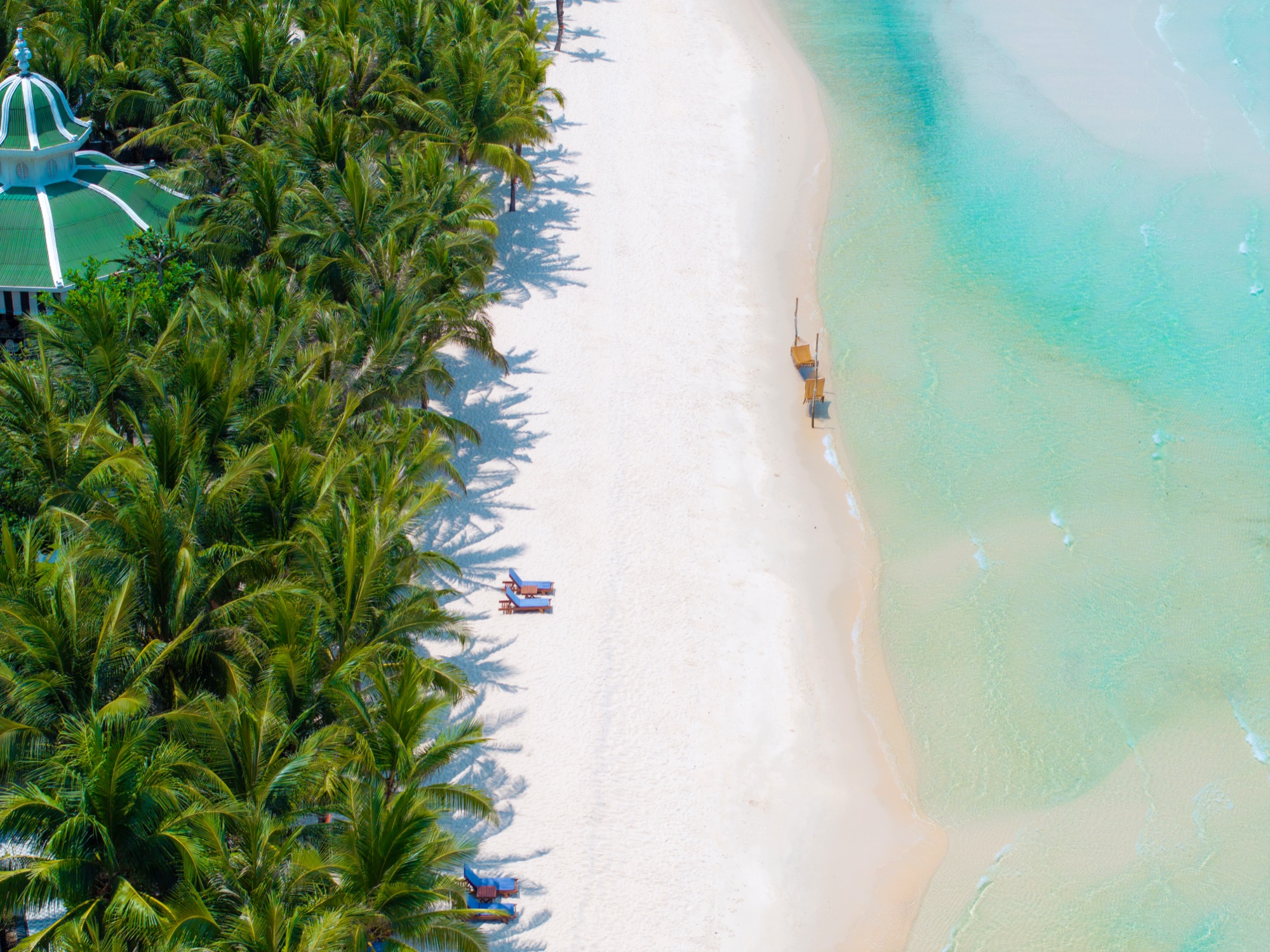
Phu Quoc is an island of about 50 km north to south in the Gulf of Thailand, closer to Cambodia than to Ho Chi Minh City. Its west coast (Long Beach, Ong Lang) has the sunsets and most of the hotels; the south-east has the white-sand beaches at Sao and Kem; the south tip has boat trips to the An Thoi islands. Winter is its dry season: secondary climate summaries put December at around 60 mm of rain on six days, with January and February drier still and the sea around 27 to 28 C. Three nights is the right length. Two is a taster; four starts to feel like a resort holiday inside a touring trip.
The Mekong Delta is the flat, wet, intensely farmed south-west of the country. From Ho Chi Minh City, day tours reach My Tho and Ben Tre in one and a half to two hours each way for a boat on the main river and sampans in the coconut canals. The floating market at Cai Rang is further, near Can Tho, about 191 km and roughly four hours by bus, and it runs from first light, which is why it needs a night in Can Tho. December to February is the dry season here too: Ho Chi Minh City's normals are 41 mm in December and 12 mm in January, and the delta's water is low and calm after the autumn floods. One night in Can Tho is the standard ending; two lets you add a homestay or a second market.
The criteria that decide it
| Criterion | Phu Quoc | Mekong Delta (Can Tho) |
|---|---|---|
| Winter weather | Dry season from December; warm sea | Dry season; hot, low water, calm rivers |
| Transfer from the city | Flight about 1 hour; airlines list 4 to 7 (Vietnam Airlines) and 4 (Vietjet) a day | Bus about 3.9 hours, Phuong Trang about 195,000 VND, departures through the day |
| Nights that make it worthwhile | 3 (minimum 2) | 1 (2 with a homestay) |
| Departure logistics | Vietjet lists flights to Bangkok, Singapore, Seoul and Taipei; several daily hops to Ho Chi Minh City | Bus back to the city, about 4 hours, then fly out; or Can Tho airport for domestic connections |
| Cost scale | Highest of the trip: resort island, Christmas demand | Lowest of the trip: guesthouses, cheap buses and boats |
| Pace | Rest; one activity a day | Early starts; the market is a dawn event |
| Best for | Families, couples, anyone tired after two weeks on the move | Photographers, river and food travellers, budget trips, third visits |
The Phu Quoc ending, day by day
Day A. Morning flight from Tan Son Nhat, about one hour. Phu Quoc airport is roughly 10 km from Duong Dong; a taxi takes 20 to 30 minutes and the airline's own estimate for the fare is about 150,000 VND. Check in on the west coast and be on the beach for sunset.
Day B. Sao and Kem beaches on the south-east coast, 30 to 40 minutes away, or a snorkelling boat to the An Thoi islands. Night market in Duong Dong.
Day C. Nothing planned. This is the buffer for the whole trip, and if you have not needed it, it is a second beach day.
Day D. Fly out: direct to a hub if your long-haul routing allows, otherwise the hour's flight to Ho Chi Minh City with at least three hours before the international departure.
The Mekong ending, day by day
Day A. Bus from Ho Chi Minh City to Can Tho. The aggregator listings give about 3.9 hours on average; Phuong Trang runs limousine and sleeper buses through the day from around 195,000 VND. Arrive by early afternoon, walk the riverfront, eat well; Can Tho is the delta's capital and its food city.
Day B. Boat to Cai Rang floating market at first light, back by mid-morning. Then either a canal and orchard tour, or the bus back to the city (four hours) for an evening flight out. With a second night, add a homestay in the orchards or the smaller market at Phong Dien.

Doing both: the bus and ferry chain
The delta and the island connect without going back to the city. From Can Tho, Phuong Trang lists buses to Rach Gia at 06:00, 08:00, 12:00, 13:30, 17:00 and 19:00, about two and a half hours over 108 km for around 185,000 VND, arriving at the Rach Soi bus station outside town. Superdong's schedule then lists fast ferries from Rach Gia to Phu Quoc at 07:00, 07:55, 10:30 and 13:10, taking about two and a half hours and costing 330,000 VND for an adult. The 08:00 bus and the 13:10 ferry connect with time for the transfer between the bus station and the pier; the 06:00 bus and the 10:30 ferry are tighter.
The alternative pier is Ha Tien, on the Cambodian border, with a shorter crossing: Superdong lists 06:10, 08:20, 09:50 and 13:00 departures, about one hour and a quarter, for 230,000 VND. Ha Tien is further from Can Tho by road, so it suits travellers coming from Chau Doc or from Cambodia rather than from the market. Both routes land at Bai Vong port on Phu Quoc's east coast, where the operator's shuttle to Duong Dong costs 40,000 VND. The chain costs a full day: dawn market, bus, ferry, arrival on the island in the late afternoon. It is worth it with five or more spare nights (two in Can Tho, three on the island), not with four.
What each ending does to the rest of your route
On a 14-day north-to-south route, the ending is three nights. Phu Quoc takes them cleanly: Ho Chi Minh City keeps its three nights, including a Mekong day trip to My Tho, and the island absorbs the buffer. The Mekong ending takes one or two of those nights and gives one back to the city or to Hoi An, which in December is the region most likely to need it. In practice: Mekong ending, 14 days, looks like Hanoi 3, Ha Long 1, Hoi An 4, Ho Chi Minh City 3, Can Tho 2. The winter-by-region guide explains why an extra Hoi An night is a better use of a spare night than an extra Hanoi night in December.
On a 10-day trip, the ending is two nights, and the answer changes: Phu Quoc for two nights is a long way to go for one full day; a single Can Tho night with the dawn market is a better use of the time, and the bus is cheaper than the flight. On three weeks, do both.
Verdict by traveller
Families with children. Phu Quoc. Pools, beaches, one activity a day, no dawn starts.
Couples on a first visit. Phu Quoc in December and January, when it is the only reliably dry beach in the country. In late February the central coast is dry too, and the decision loosens.
Photographers and river people. The Mekong, with two nights and a homestay. The market at first light is the shot; the beach is not.
Budget travellers. The Mekong. A Can Tho night and the bus both ways cost less than the flight to the island alone.
Second and third visits. The Mekong, or the chain to the island, with time for Chau Doc and the Cambodian border if you have it. See the getting around Vietnam guide for how buses, ferries and flights compare across the whole route.
Frequently asked questions
Is Phu Quoc worth it for two nights?
Can I see the floating market on a day trip from Ho Chi Minh City?
How do I get from the Mekong Delta to Phu Quoc?
Is the Mekong Delta dry in winter?
Which is cheaper, Phu Quoc or the Mekong?
Can I fly from Can Tho to Phu Quoc?
Photo credits
- Cai Rang floating market, Can Tho (cover and inline). Photo: Vyacheslav Argenberg, CC BY 4.0, via Wikimedia Commons (resized for web display).
- Kem Beach, Phu Quoc. Photo: Vivu Vietnam, CC BY-SA 4.0, via Wikimedia Commons (resized for web display).
Sources checked 17 September 2026: WMO World Weather Information Service normals for Ho Chi Minh City; Climates to Travel (Phu Quoc, secondary); Vietnam Airlines and Vietjet route pages; Superdong ferry schedule and fares; Vexere listings for Phuong Trang buses Ho Chi Minh City to Can Tho and Can Tho to Rach Gia (aggregator; operator site unreachable); UK Foreign Office Vietnam travel advice.