


On this route
Vietnam in December is three climates in one country, and a two-week route only works if you accept that. The north is cool and mostly dry, the central coast is still in its wettest stretch, and the south has just entered its dry season. So this itinerary runs north to south: three nights in Hanoi, one night on a Ha Long Bay cruise, three in Hoi An with a rain buffer, three in Ho Chi Minh City, and three on Phu Quoc, where the beach weather is reliable. Two domestic flights and one island flight link the regions, the overnight train is the stated alternative for the first long leg, and two named buffer days absorb a foggy bay or a washed-out coast.
Every transfer below was checked against the operator for a December 2026 date: the Vietnam Railways timetable for 8 December, the airlines' route pages, the Superdong ferry schedule and the Ha Long Bay management board's winter rules. Climate figures are 1991 to 2020 normals from the WMO service, not impressions.
- Duration
- 14 days / 13 nights
- Bases
- 5
- Transport
- Three domestic flights, one cruise shuttle, taxis and Grab
- Pace
- Balanced, with two buffer days
- Best season
- December to February
Your two-week route at a glance
Base sequence
- Hanoi 3 nights
- Ha Long Bay (cruise) 1 night
- Hoi An 3 nights
- Ho Chi Minh City 3 nights
- Phu Quoc 3 nights
| Day | Where you sleep | What happens | Transfer |
|---|---|---|---|
| 1 | Hanoi | Arrive, Old Quarter walk, dinner | Taxi or Grab from Noi Bai, about 30 km, 45 to 60 min |
| 2 | Hanoi | Mausoleum complex, Temple of Literature, street food | On foot and short rides |
| 3 | Hanoi | Flexible day: Ninh Binh day trip or Hanoi museums | Train 08:00 to 10:13 out, car back (optional) |
| 4 | Ha Long Bay (boat) | Shuttle to the cruise port, overnight on the bay | Operator shuttle, about 2.5 to 3 h |
| 5 | Hoi An | Morning on the bay, shuttle to the airport, evening flight | Shuttle 3 h, flight 1 h 20, car 45 min |
| 6 | Hoi An | Ancient Town sites, cooking class or tailor | On foot and by bicycle |
| 7 | Hoi An | Buffer: My Son, Marble Mountains, or a rain plan | Car or tour, 1 h each way |
| 8 | Ho Chi Minh City | Fly south, District 1 in the afternoon | Car 45 min, flight 1 h 20, taxi 30 to 45 min |
| 9 | Ho Chi Minh City | War Remnants Museum, palace, optional Cu Chi | Grab |
| 10 | Ho Chi Minh City | Mekong day trip (My Tho and Ben Tre) or Cholon | Tour bus, 1.5 to 2 h each way |
| 11 | Phu Quoc | Morning flight, beach afternoon | Flight about 1 h, taxi 20 to 30 min |
| 12 | Phu Quoc | Sao and Kem beaches or an island boat trip | Scooter, taxi or boat |
| 13 | Phu Quoc | Buffer day | None |
| 14 | Departure | Fly out via Bangkok, Singapore, Seoul, Taipei or Ho Chi Minh City | Flight |

Why north to south in December
The decision is made by the rain tables. Hanoi's December normal is 24 mm on 7 rain days with highs around 22 C and lows around 15 C. Da Nang, the airport for Hoi An, averages 272 mm on 21 rain days in December, down from 486 mm in November but still a wet month. Ho Chi Minh City drops to 41 mm on 5 days, and Phu Quoc's dry season starts in December. Put the three regions in that order and the trip gets drier as it goes, ending on the one coast where a beach day is close to guaranteed.
Reversing the route does not fix the centre. It just means you finish in Hanoi in January, when the north has more rain days than December (11 against 7) even though the millimetres are low. That is the drizzle season, and it is a grey way to end a holiday. The south-to-north version only makes sense if your long-haul ticket forces you into Ho Chi Minh City; that case is covered in the shorter versions below.
The central coast also carries the year's residual storm risk. The UK Foreign Office puts the tropical cyclone season at May to November and the central rainy season at October to December, with seasonal flooding in October and November. By December the worst is usually past, but this plan still gives Hoi An the shortest stay, an indoor-friendly base and its own buffer day. Do not plan a beach day in Da Nang in December; if one appears, take it as a gift.
Who this route suits, and who should change it
This plan is for a first visit with two weeks and a normal appetite for movement: five bases, one night on a boat, three short flights. It assumes you will not drive yourself and that you want the classic north, the old town on the central coast and a beach at the end, in that order. It works in December and January as written and in early February up to the week before Tet.
Change it if you have ten days (use the shorter version below), if you would rather see the Mekong Delta than a beach (the Mekong ending replaces Phu Quoc; the Phu Quoc or Mekong Delta comparison weighs both), or if the idea of a 16-hour train ride appeals more than an evening flight (the sleeper version replaces Day 5's flight). If you are travelling between mid-January and Tet on 6 February 2027, book the domestic flights and the cruise early and expect higher prices.
Five decisions to make before you book
1. Open-jaw tickets: in Hanoi, out Phu Quoc
Fly into Hanoi and out of Phu Quoc. Vietjet lists flights between Phu Quoc and Bangkok, Singapore, Seoul and Taipei, which connect to most long-haul networks, and both Vietnam Airlines and Vietjet fly Phu Quoc to Ho Chi Minh City several times a day for a connection there. If the fare rules force a round trip from Hanoi, fly Phu Quoc to Hanoi (about 2 hours 5 minutes) on the evening of Day 13 and sleep near the airport.
2. Ha Long Bay or Ninh Binh
Ha Long is the famous one and the overnight cruise is worth the night in December, but fog is a real possibility and the management board's winter rules mean boats leave from 05:30 and must be back by 19:00. Ninh Binh's inland karst at Trang An and Tam Coc works in drizzle and needs no boat schedule beyond a rowing boat. The route keeps Ha Long as the overnight and offers Ninh Binh two ways: as a Day 3 day trip by train, or as a full swap when the bay forecast is poor. Decide a week out, not at booking.
3. Flight or overnight train from Hanoi to the centre
For 8 December 2026 the Vietnam Railways timetable lists six trains from Hanoi to Da Nang, between 15 hours 8 minutes and 16 hours 48 minutes. The practical one is SE3, leaving Hanoi at 19:20 and arriving in Da Nang at 10:28 the next morning, with a soft sleeper berth in a four-bed cabin listed at 1.34 to 1.44 million VND for that date. The flight is about 1 hour 20 minutes and Vietnam Airlines lists around 20 departures a day, Vietjet 13. This route uses the flight because the cruise ends around noon on Day 5, which gives you an easy evening departure; the train version costs a Hoi An hotel night and a morning. Details, including the Da Nang to Saigon trains, are in the getting around Vietnam guide.
4. Phu Quoc or the Mekong Delta at the end
In December the answer for most people is Phu Quoc: it is the dry-season coast and it is one flight from Ho Chi Minh City. The Mekong day trip on Day 10 gives you canals and a river lunch without a night. If the floating market at Cai Rang is the thing you came for, it needs a night in Can Tho and that is a different ending, covered in the comparison article.
5. Which days are buffers
Day 7 in Hoi An and Day 13 on Phu Quoc are the buffers. If Ha Long fog delays the cruise, or a coastal storm closes My Son, you lose nothing that cannot be dropped. Arrival and departure days carry no fixed sightseeing either. Do not spend the buffers at booking time.
Day-by-day plan
Day 1: Arrive in Hanoi
Most long-haul flights land in the afternoon or evening. Noi Bai is about 30 km from the Old Quarter; a taxi or Grab takes 45 to 60 minutes depending on traffic. Check in, walk around Hoan Kiem Lake and eat in the Old Quarter. Bring a light jacket: December evenings sit around 15 C.
Day 2: Hanoi's set pieces
Start at the Ho Chi Minh Mausoleum complex if the day is not a Monday or Friday, when it is closed; the complex also shuts for maintenance each autumn, so check the board's notice for the reopening date before you plan it. The One Pillar Pagoda and the Presidential Palace grounds are next door, and the Imperial Citadel of Thang Long is a short walk. After lunch, the Temple of Literature, then the Old Quarter for an evening of street food. If Day 2 is a mausoleum closure day, swap it with Day 3.
Day 3: Flexible day, Ninh Binh optional
The simplest use of this day is a train to Ninh Binh: SE5 leaves Hanoi at 08:00 and arrives at 10:13 on the December timetable. Take a taxi to Trang An (boat 300,000 VND per adult, about three hours on the water) and hire a car back to Hanoi in the late afternoon, roughly two to two and a half hours. If you would rather stay in the city, the Museum of Ethnology, the Fine Arts Museum and West Lake fill the day comfortably. Keep the evening free; the cruise pick-up is early tomorrow.
Day 4: Ha Long Bay overnight cruise
Cruise operators collect you in the Old Quarter around 08:00 to 09:00 and drive about two and a half to three hours to Tuan Chau or the Ha Long international port. Most boats board around noon, then follow route 2 in the afternoon: Sung Sot cave, Ti Top island, kayaking, dinner on board. The management board's winter fee for route 2 with one night on the bay is 550,000 VND per person on top of the cruise price; day-only routes are 200,000 to 250,000 VND. Expect haze and a cool breeze rather than blue sky. Pack for 15 C nights.
Day 5: Bay morning, then fly to the centre
Boats usually offer tai chi and a cave visit before breakfast and return to port late morning. Ask the operator for a drop at Noi Bai instead of the Old Quarter; the drive is about three hours, so a flight after 18:00 leaves a comfortable margin. Da Nang's airport is only 3 km from the city, and Hoi An is about 30 km further, 45 to 60 minutes by taxi or Grab. Arriving around 21:00 is normal for this day. The sleeper alternative is to be dropped at Hanoi station for SE3 at 19:20, arriving in Da Nang at 10:28 on Day 6.
Day 6: Hoi An Ancient Town
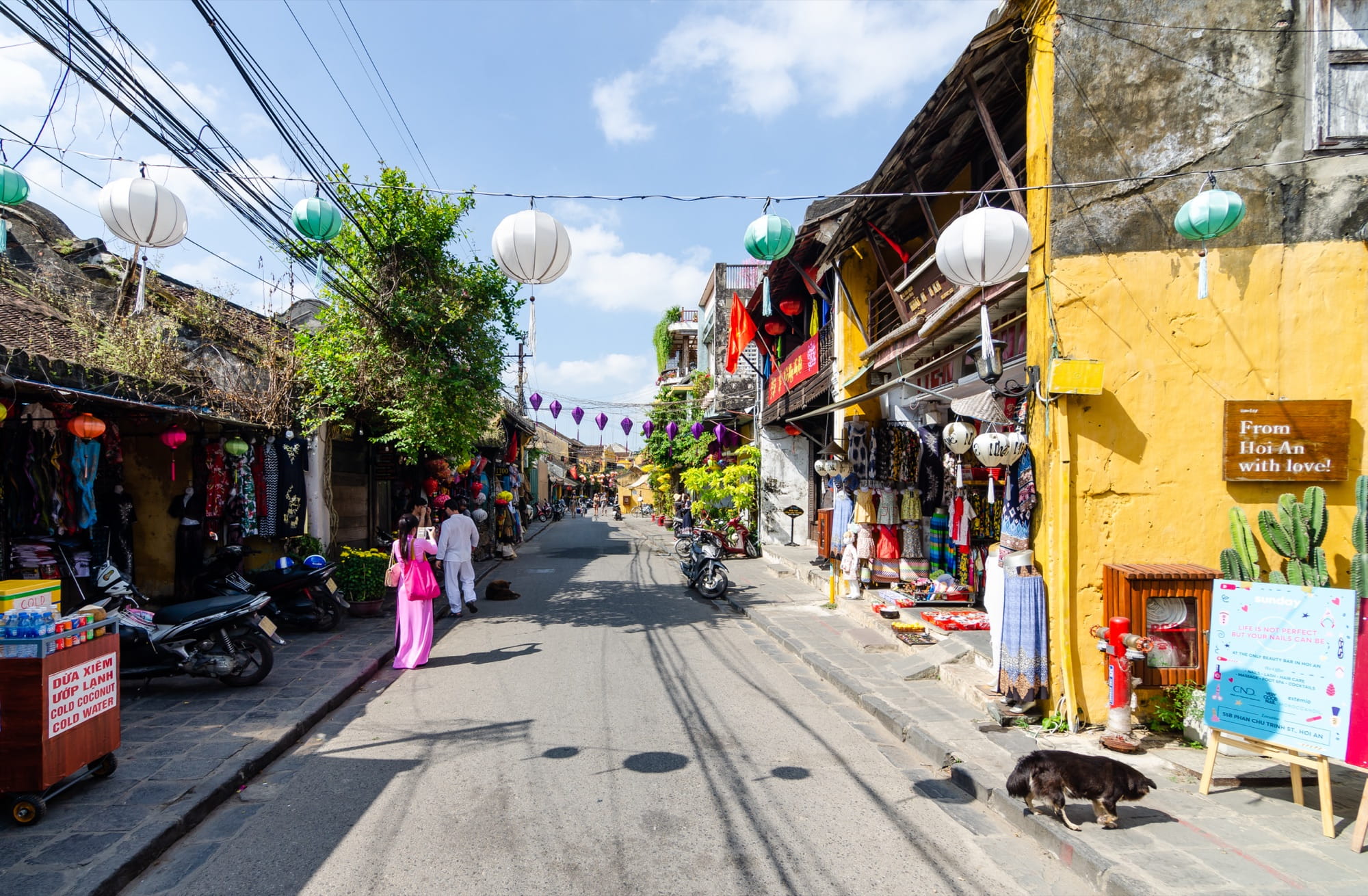
Buy the 120,000 VND heritage ticket, which covers the museums plus the Japanese Covered Bridge or Quan Cong Temple and three further sites, and stays valid through a stay of up to three days. That matters in December: if the morning is wet, do two sites, have a long lunch and finish when it eases. A cooking class or a tailor visit fills the afternoon. The lantern-lit riverfront after dark is the reason people come, and it looks better in a light rain than in most photographs.
Day 7: Buffer day around Hoi An
If it is dry, take a car to the My Son sanctuary (about 40 km, an hour each way) in the morning and the Marble Mountains on the way back, or go into Da Nang for the Museum of Cham Sculpture. If it is wet, this is a museum, cafe and tailor-fitting day, and that is fine. Do not schedule An Bang beach as a fixture; December averages 21 rain days on this coast.
Day 8: Fly to Ho Chi Minh City
Leave Hoi An about two and a half hours before a mid-morning flight. Da Nang to Ho Chi Minh City is about 1 hour 20 minutes in the air; Vietjet lists 10 flights a day between the two cities and Vietnam Airlines also flies the route. The train takes 17 to 21 hours, which is a day you do not have. Tan Son Nhat is about 8 km from District 1, 30 to 45 minutes in traffic. Spend the afternoon on foot around the Opera House, the cathedral square, the Central Post Office and Ben Thanh market. December in the city is hot and dry: highs around 32 C, 41 mm of rain in the month.
Day 9: The city's history
The War Remnants Museum opens at 07:30 and runs to 17:30 daily; go at opening, before the heat and the tour groups. The Independence Palace is a short ride away. In the afternoon either the Fine Arts Museum and a rooftop bar, or a half-day tour to the Cu Chi tunnels, which most operators run from central hotels. If you choose Cu Chi, drop the palace.
Day 10: Mekong day trip
Organised day tours reach My Tho and Ben Tre, about 70 km south-west, in one and a half to two hours each way: a boat on the main river, sampans in the coconut canals, a lunch stop, back by early evening. It is the near delta, not the floating-market delta, and that is the honest trade: the Cai Rang market at Can Tho starts at first light and needs a night there. If you would rather have that than beach days, use the Mekong ending below. The alternative city day is Cholon: Binh Tay market and the Thien Hau temple.
Day 11: Fly to Phu Quoc
Take a morning flight, about one hour. Vietnam Airlines lists four to seven departures a day on this route and Vietjet four. The airport is roughly 10 km from Duong Dong, the main town; a taxi is around 20 to 30 minutes, and the airline's own estimate for the fare is about 150,000 VND. Stay on the west coast (Long Beach or Ong Lang) for sunsets. The ferry via Ha Tien or Rach Gia is real but only makes sense from the delta; from the city it is a four-hour bus plus a crossing.
Day 12: Beaches and islands
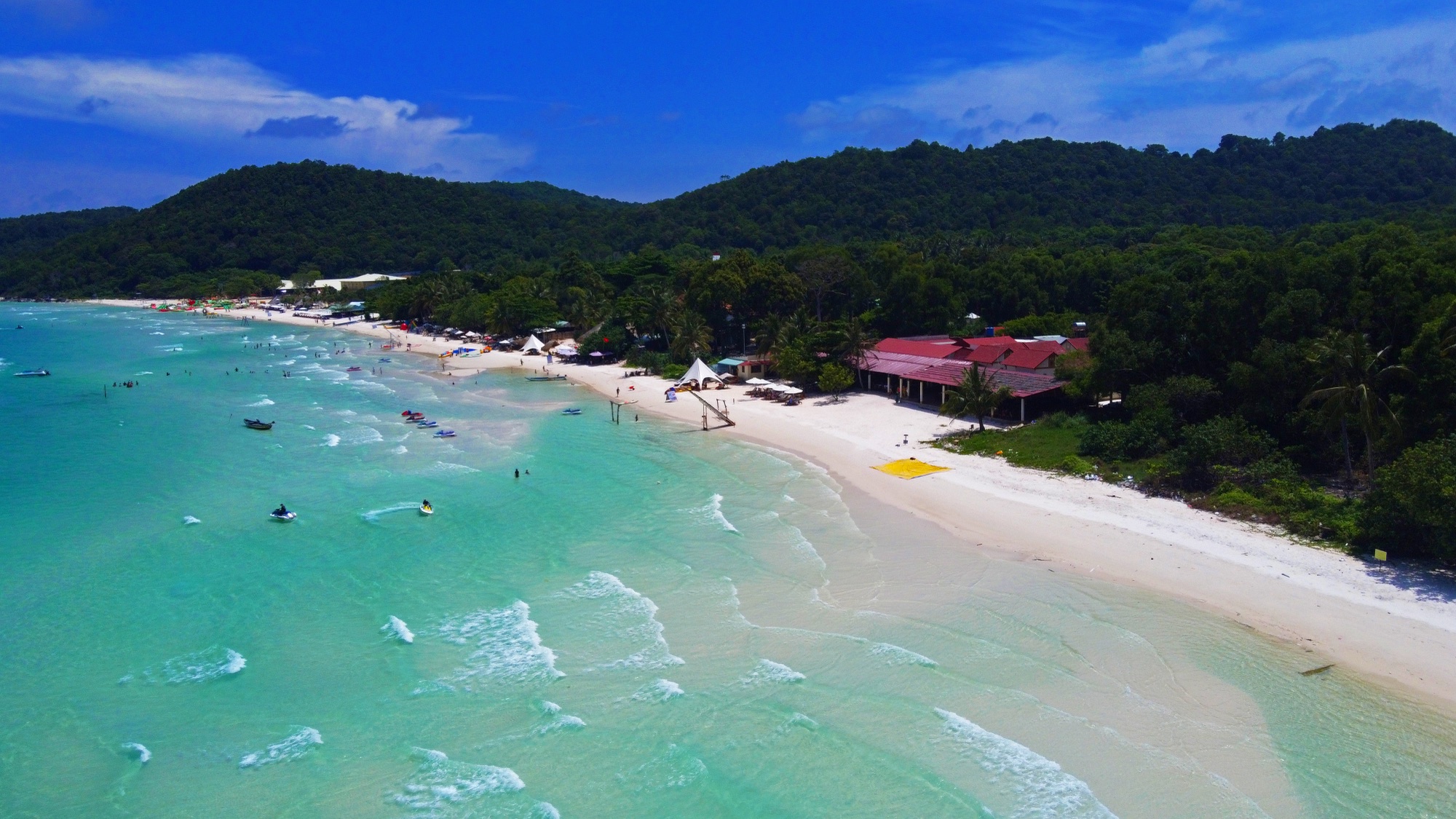
Pick one thing. Sao Beach and Kem Beach on the south-east coast are the white-sand ones, 30 to 40 minutes from Duong Dong by taxi or scooter. A snorkelling boat to the An Thoi islands off the south tip is the other classic. The island is about 50 km long, so do not try to see both coasts in a day. Finish at the Duong Dong night market.
Day 13: Buffer day
The second buffer. If nothing went wrong earlier, this is a beach, spa or do-nothing day. If the bay fog or the coast cost you a day, you already spent it, and this day has no plan to cancel.
Day 14: Fly out
Fly direct from Phu Quoc to a hub, or take the one-hour hop to Ho Chi Minh City and allow at least three hours there between the domestic arrival and an international departure.
How to book the transport
Trains. The official booking site is dsvn.vn, which also hosts a timetable and fare tool. For 8 December 2026 the Hanoi to Da Nang trains were SE7 (06:00 to 22:15), SE5 (08:00 to 00:21), SE9 (13:00 to 05:48), SE3 (19:20 to 10:28), SE19 (19:45 to 11:35) and SE1 (21:45 to 13:14). SE3's listed fares Hanoi to Da Nang were 980,000 to 1,262,000 VND in a six-berth cabin, 1,342,000 to 1,435,000 VND in a four-berth soft sleeper, and 637,000 VND for a soft seat, with the site noting that prices move with booking time and berth position. Hanoi to Ninh Binh is about 2 hours 13 minutes on every train.
Flights. Vietnam Airlines and Vietjet are the two largest domestic operators and both publish route frequencies on their websites and both were advertising December 2026 departures on the legs this plan uses when checked in September 2026. Book the three flights six to ten weeks out for December and earlier for the Tet run-up in late January. Check bag rules on the low-cost fares.
Ha Long cruise. Book an operator that includes the Hanoi pick-up and offers an airport drop on the return; confirm the disembarkation time (usually 11:00 to 12:00) before you buy the Day 5 flight. The bay fee is charged per route and per night as set out above.
Ferries. Not needed on the main route. For the Mekong ending, Superdong's schedule lists Ha Tien to Phu Quoc at 06:10, 08:20, 09:50 and 13:00 (about 1 hour 15 minutes, 230,000 VND) and Rach Gia to Phu Quoc at 07:00, 07:55, 10:30 and 13:10 (about two and a half hours, 330,000 VND), all arriving at Bai Vong port with a 40,000 VND shuttle to Duong Dong. Winter seas can cancel sailings; keep the last night on the island flexible if you come this way.
Weather month by month on this route
December. Hanoi 22/15 C, 24 mm on 7 days. Da Nang 25/21 C, 272 mm on 21 days. Ho Chi Minh City 32/24 C, 41 mm on 5 days. Phu Quoc dry season beginning, warm sea. This is the month the route is built for.
January. Hanoi 20/15 C, 28 mm but 11 rain days: drizzle and grey. Da Nang improves to 83 mm on 14 days. Ho Chi Minh City 32/23 C, 12 mm. Phu Quoc at its driest. The route still works; pack for damp cool in the north.
February. Hanoi 21/16 C, 19 mm on 12 days. Da Nang 26/20 C, 22 mm on 7 days, the centre's first genuinely dry month. The south stays dry. Tet falls on 6 February 2027 and the public holiday runs for several days around it; transport sells out and many businesses close for the core days, so travel before or well after it. The winter-by-region guide goes month by month across the whole country.
Shorter, slower and reversed versions
Ten days. Hanoi 3, Hoi An 2, Ho Chi Minh City 2, Phu Quoc 2. Drop the Ha Long night and do Ninh Binh as the Day 3 day trip; drop the Mekong day; keep one buffer by making the last Phu Quoc day free.
Sleeper version. Same bases, but Day 5 ends at Hanoi station instead of the airport: SE3 at 19:20 to Da Nang at 10:28. Hoi An becomes two hotel nights plus the train night, and Day 6 starts at noon. Choose this if the train is part of why you are coming, not to save money: a four-berth soft sleeper for two was listed at about 2.7 to 2.9 million VND for the December date, which is in the range of two flight tickets, and it saves one hotel night.
Ninh Binh instead of Ha Long. Day 4 by train to Ninh Binh (SE5 08:00 to 10:13), Trang An boat, overnight in Tam Coc; Day 5 Hang Mua viewpoint at dawn (150,000 VND), then a car to Noi Bai, about two and a half hours, for the same evening flight. Use it when the bay forecast is fog or a cold front.
Mekong ending. Days 11 to 13 become: bus from Ho Chi Minh City to Can Tho (about 191 km, around 3.9 hours on the aggregator listings, Phuong Trang about 195,000 VND), a night in Can Tho, Cai Rang floating market at dawn, then either back to the city or on by bus to Rach Gia (about 108 km, two and a half hours) and the ferry to Phu Quoc for a single night. The comparison article sets both endings side by side.
Reversed. Only if your ticket forces a southern start. Same nights and legs, but you finish in Hanoi's drizzle. In January the centre is drying out, which helps a little; in December it does not.
What to leave for another trip
Sapa and the northern mountains: cold and often fogged in December, and the transfer is six hours each way. Hue: on the SE3 line and tempting, but it shares the central coast's December rain and costs Hoi An a night. Nha Trang and Mui Ne: Nha Trang's December normal is 224 mm on 15 rain days; the dry coast in December is Phu Quoc. A second Mekong night: fine on a three-week trip, not on this one.
Common mistakes
Booking a beach resort in Da Nang for December because it looked sunny in July photographs. Flying south to north to "save the best for last" and ending in Hanoi's drizzle. Leaving the Day 5 flight at 15:00 and missing it because the cruise was late into port. Booking the mausoleum for a Friday. Arriving during Tet week without accommodation and transport booked. Assuming the e-visa is instant: the tourism authority quotes three to five working days, and December is busy.
Entry rules and practical notes for winter 2026-27
Vietnam's e-visa, issued by the Immigration Department at evisa.gov.vn, is valid for up to 90 days, single entry for 25 USD or multiple entry for 50 USD, and must be used at the border gate you declare on the application. US and Canadian citizens need it for tourism. British citizens can enter without a visa for up to 45 days; so can citizens of Germany, France, Italy, Spain, Denmark, Sweden, Norway and Finland (to 14 March 2028) and of Belgium, Bulgaria, Croatia, the Czech Republic, Hungary, Luxembourg, the Netherlands, Poland, Romania, Slovakia, Slovenia and Switzerland (to 14 August 2028, tourism only). Other EU nationals, including Austrians, Irish, Portuguese and Greeks, are not on the current lists and need the e-visa. Passports need at least six months of validity: the UK advisory counts it from your arrival date, the Canadian one from the date you expect to leave. The immigration department also recommends completing its pre-arrival form online before you fly.
Money: dong is the currency and prices in this article are in dong at the operators' September 2026 listings; treat them as a scale, not a quote. Phones: an eSIM or a local SIM at the airport is cheap and worth it for Grab and for checking the bay forecast. Clothes: a jacket for Hanoi and the bay, a rain shell for Hoi An, and summer clothes from Day 8.
Frequently asked questions
Is December a good month for a two-week Vietnam trip?
Should I go north to south or south to north?
Is Da Nang good for a beach in December?
Flight or overnight train from Hanoi to Hoi An?
Ha Long Bay or Ninh Binh in December?
Phu Quoc or the Mekong Delta at the end?
Do I need a visa?
How much should I book in advance?
Photo credits
- Ha Long Bay. Photo: Vyacheslav Argenberg, CC BY 4.0, via Wikimedia Commons (resized for web display).
- Hoi An, Tran Phu Street. Photo: Steffen Schmitz, CC BY-SA 4.0, via Wikimedia Commons (resized for web display).
- Sao Beach, Phu Quoc. Photo: Trantuonglam, CC BY-SA 4.0, via Wikimedia Commons (resized for web display).
Sources checked 17 September 2026: WMO World Weather Information Service climate normals for Hanoi, Da Nang and Ho Chi Minh City; Vietnam Railways timetable tool for 8 and 12 December 2026; Vietnam Airlines and Vietjet route pages; Superdong ferry schedule; Ha Long Bay Management Board fee and winter-hours notices; Trang An management board price list; Da Nang city tourism portal (Hoi An tickets); Vietnam Immigration Department e-visa portal; UK, US and Canadian government travel advice; Viet Nam National Authority of Tourism visa-exemption notice.