


On this route
Yes, Georgia and Armenia fit into 14 days, but only if you resist turning the trip into a checklist. The most practical first-time route starts in Tbilisi, gives Georgia's mountains two nights rather than a rushed day trip, crosses the land border once, and finishes in Yerevan. With open-jaw flights, three real bases and a buffer after Kazbegi, two weeks are enough for both countries without spending every morning packing.
This plan is designed for independent travelers who want culture, food, wine and mountain scenery, but not a multi-day trek. It assumes 14 calendar days and 13 nights, arriving in Tbilisi and departing from Yerevan. If your flights force a return to Georgia, remove one Armenian day rather than attempting an overnight dash before departure.
- Duration
- 14 days
- Bases
- 3
- Transport
- Drivers and cross-border transfer
- Pace
- Moderate
- Best season
- Late May–June and September–early October
The route at a glance
| Days | Base | Main focus | Transport logic |
|---|---|---|---|
| 1-4 | Tbilisi | Old Tbilisi, Mtskheta and Kakheti | Walk locally; use a driver or tour for regional days |
| 5-6 | Stepantsminda | Georgian Military Highway and Gergeti | Driver, rental car or shared transfer |
| 7 | Tbilisi | Mountain-weather buffer and reset | Return on the same highway |
| 8-13 | Yerevan | Capital, Garni, Geghard, Sevan, Dilijan and Vayots Dzor | Road transfer across the border; day trips from one base |
| 14 | Departure | Easy final morning | Airport transfer only |
Base sequence
- Tbilisi 4 nights
- Stepantsminda 2 nights
- Tbilisi 1 night
- Yerevan 6 nights
The route is deliberately asymmetric. Georgia gets a separate mountain stay because weather and road conditions make Kazbegi a poor place to rush. Armenia uses Yerevan as a six-night base because its headline sights radiate from the capital and do not require repeated hotel changes.
Days 1-4: Tbilisi, Mtskheta and Kakheti
Day 1: Arrive in Tbilisi
Use arrival day for the airport transfer, check-in, a short orientation walk and an early dinner. Do not book a regional excursion or a timed museum. Stay near the Old Town, Sololaki, Vera or another central district with straightforward taxi access; the best neighborhood depends more on noise tolerance and hills than on a single "perfect" address.
Day 2: Old Tbilisi, Abanotubani and Narikala
Start on foot in the historic center, follow the sulfur-bath domes through Abanotubani and climb or ride toward Narikala for the city panorama. Keep the afternoon flexible for Sololaki, a museum or a reserved sulfur bath. Tbilisi is hilly and summer afternoons can be punishing, so front-load the climbing and leave room for a long lunch.

Day 3: Jvari and Mtskheta
Go first to Jvari Monastery for the view over the confluence of the Mtkvari and Aragvi rivers, then continue into Mtskheta. Inside the old capital, prioritize the main cathedral and the compact historic center rather than stacking every monastery into one day. A taxi or private driver is the simplest option; budget travelers can use local transport, but should expect less control over the hilltop stop and return timing.

Day 4: Kakheti day trip
Use a driver or small group trip for a focused Kakheti circuit. Pair Sighnaghi's walls and Alazani Valley views with Bodbe Monastery and one reservation-based winery tasting. This is already a full 8-12 hour day from Tbilisi; adding David Gareja, Telavi and several wineries turns it into a windshield tour. If wine is not a priority, spend more time walking in Sighnaghi and return earlier.
Days 5-7: Georgian Military Highway and Kazbegi
Day 5: Tbilisi to Stepantsminda
Treat the northbound drive as sightseeing, not dead time. Stop at Ananuri, then choose only one or two additional viewpoints according to weather, traffic and daylight. The road usually takes around three hours without stops, but construction, snow, heavy vehicles and photo breaks can stretch it considerably. Check in for two nights in Stepantsminda instead of trying to return to Tbilisi the same evening.
Day 6: Gergeti and a weather-dependent mountain day
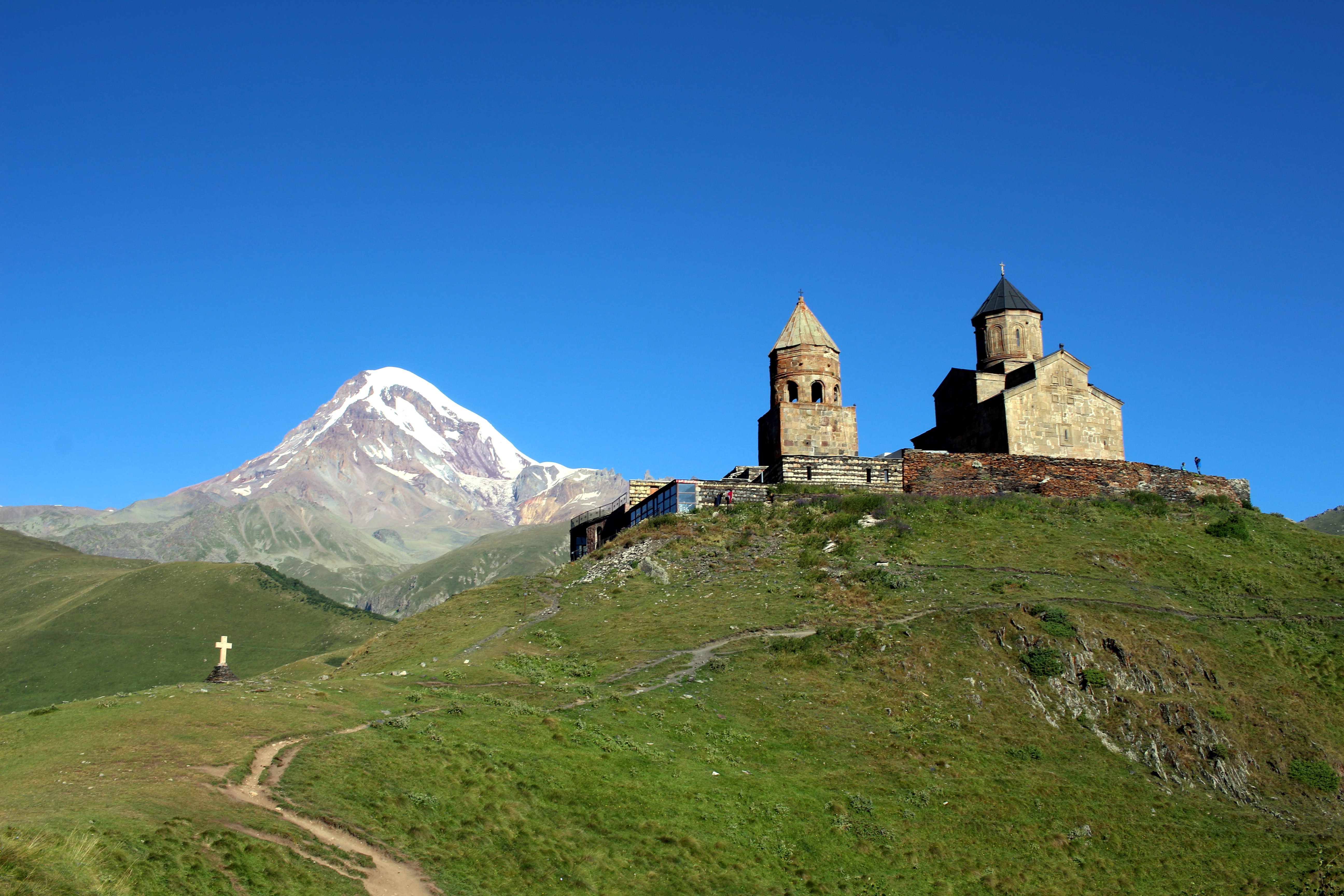
Visit Gergeti Trinity Church when visibility is best. The uphill walk is moderate rather than technical, while a local vehicle saves time and energy. Afterward, choose a short village walk, a nearby valley outing or a café afternoon according to conditions. The correct plan is the one the mountains allow that day, not the longest list you saved before the trip.
Day 7: Return to Tbilisi and reset
Keep the morning available for a missed mountain view, then return to Tbilisi. Do laundry, reorganize luggage and avoid booking an attraction with a strict afternoon entry time. This buffer protects the international transfer from mountain-road delays and makes Day 8 substantially calmer.
Day 8: Cross from Georgia to Armenia
Use a scheduled coach, shared transfer or private driver from Tbilisi to Yerevan and allow most of the day. The sensible road corridor crosses at Sadakhlo-Bagratashen and continues via Vanadzor; border queues make exact arrival times unreliable. Keep your passport, entry documents and insurance accessible rather than buried in your luggage.
The overnight train is a useful alternative when its date matches your trip. South Caucasus Railway currently lists the Tbilisi-Yerevan service at roughly ten hours and on alternating dates, with seasonal timetable changes. Verify the exact operating period before booking instead of building the entire itinerary around an assumed nightly departure.
Days 9-13: Yerevan and Armenia's strongest day trips
Day 9: Central Yerevan
Begin around central Yerevan, climb the Cascade in the cooler part of the day and choose one serious museum such as Matenadaran. The city is compact enough for a walking day, but do not treat it as merely a dormitory for excursions. Cafés, markets, public art and evening streets are part of the experience, and a slower city day is useful after the border transfer.

Day 10: Garni and Geghard
Combine Garni Temple and Geghard Monastery on one eastbound day trip. Start early enough to see both without rushing; a lavash demonstration or lunch in Garni adds more than another distant stop. Add the Symphony of Stones only if access, heat and walking conditions are comfortable. It is an optional geological detour, not a reason to cut Geghard short.
Day 11: Lake Sevan and Dilijan
Travel from Yerevan to the Sevan peninsula, climb to Sevanavank and continue to Dilijan for a forest-town contrast. This is a long but coherent day trip when you keep the Dilijan program modest: a town walk, lunch and perhaps one short nature stop. Do not continue toward Ijevan or Noyemberyan; current travel advice warns against the M16/H26 section near the Azerbaijan border.

Day 12: Khor Virap, Areni and Noravank
Head south early for the classic Vayots Dzor sequence: Khor Virap, Areni-1 Cave and Noravank. The order keeps the route logical and leaves the red-cliff approach to Noravank for later in the day. Mount Ararat views at Khor Virap depend on haze and weather, so treat a clear panorama as a bonus. A driver or organized excursion is much more practical than stitching this day together with local transport.

Day 13: Flexible Yerevan day
Leave the final full day uncommitted until the trip is underway. Use it for a missed museum, food market, contemporary art, a cooking experience or simply a slower neighborhood day. It also absorbs poor weather or a delayed Day 8 transfer. Avoid using this day for another very long excursion unless you know your group still has the energy.
Day 14: Departure
Match the final morning to the flight, keep sightseeing close to the hotel and transfer to Zvartnots Airport with the margin recommended by your airline. This itinerary ends at the airport rather than adding one last rushed monastery.
Transport reality: what to book and what to keep flexible
- Use open-jaw flights. Arriving in Tbilisi and leaving from Yerevan removes an unnecessary international backtrack.
- Walk and use app taxis in the capitals. A rental car is a liability during city days.
- Use drivers selectively. Kakheti, the Georgian Military Highway, Garni-Geghard and the Vayots Dzor day are the places where a driver buys real time and flexibility.
- Do not self-drive on a tasting day. Book a Kakheti driver and confirm winery appointments in advance.
- Recheck mountain and border conditions. Road access and queues can change faster than an article can be updated.
Best season and realistic fallbacks
Late May through June and September into early October offer the best balance for this route: workable mountain conditions, comfortable city days and strong landscapes. July and August suit travelers who tolerate heat and book accommodation early. Winter can still be rewarding, but Kazbegi road restrictions and short daylight require a flexible city-first version. In poor mountain weather, replace extra valley driving with a relaxed Stepantsminda day; in heavy Yerevan heat, move outdoor sights to morning and museums to afternoon.
Entry, insurance and safety checks
Passport and visa requirements depend on nationality, so verify both countries through the Georgian and Armenian foreign ministries. Since 1 January 2026, Georgia requires tourists to carry health and accident insurance valid for the full stay, in Georgian or English, with at least GEL 30,000 coverage. Armenia's foreign ministry states that travelers enter through official border-control points with a valid passport and any required visa or residence document.
Security advice for Armenia remains especially important near the Azerbaijan border. This route stays away from the eastern frontier and does not use the warned-against Noyemberyan-Ijevan road section. Recheck official travel advice shortly before departure and again before any independent detour.
Common mistakes
- Trying to add western Georgia, Svaneti or Batumi to the same 14 days.
- Visiting Kazbegi as a same-day out-and-back and expecting reliable mountain views.
- Scheduling the Georgia-Armenia border transfer immediately after a mountain night.
- Planning four monasteries and three wineries in one Kakheti day.
- Assuming the international train runs nightly in every season.
- Turning Yerevan into six consecutive day trips with no time for the city itself.
Who should choose a different route?
This itinerary is not ideal if you want multi-day hiking, western Georgia, beach time, nightlife every night or a very slow trip with no drives longer than two hours. With only ten or eleven days, choose one country. With sixteen or seventeen days, add one night in Dilijan and another flexible Georgian day instead of collecting more distant highlights.
If you would rather stay in one country, the 7-day Armenia itinerary gives the southern route more attention without an international transfer.