


On this route
Sri Lanka has two monsoons and they hit opposite sides of the island, so "is January a good month" is the wrong question. The right one is which coast. In January the north-east monsoon is still sending rain to Trincomalee and the east, while the west and south coasts sit in their driest, calmest stretch of the year. Long-term normals put Hambantota on the south coast at 68 mm of rain on five days in January, and Trincomalee at 152 mm on eight days after 339 mm in December. The beach half of a January trip therefore belongs somewhere on the arc from Negombo round to Tangalle, and the only real decision is where on that arc.
The short answer for most two-week itineraries: base on the south coast between Galle and Tangalle, with Mirissa or Weligama as the default, because that is where a January trip naturally ends after the hill country, where the whale-watching season is in full swing and where an expressway takes you back to the airport in about three hours. Choose the west coast (Negombo, Bentota) only for a short trip with little driving, and leave the east coast for a May to September visit. The sections below explain the weather behind that answer, compare the beach bases by what you want from them, and show what each choice does to a two-week route.
What the monsoon does in January
Sri Lanka's rain comes in two main seasons and two transitions. The south-west monsoon (roughly May to September) soaks the west, south-west and the hills; the second inter-monsoon (October to November) brings thunderstorms almost everywhere and is the wettest time of year in Colombo; the north-east monsoon (December to February) then pushes the rain to the north and east while the west and south dry out; and the first inter-monsoon (March to April) is hot with afternoon storms. Sri Lanka Tourism puts it simply: the north-east winds make the south-western coast sunny and the sea calm from November to March. The 1991 to 2020 station normals show the same thing in numbers.
| Station | November | December | January | February | March |
|---|---|---|---|---|---|
| Colombo (west coast) | 346 mm, 16 days | 171 mm, 9 days | 80 mm, 5 days | 77 mm, 5 days | 103 mm, 8 days |
| Hambantota (south coast) | 222 mm, 13 days | 132 mm, 9 days | 68 mm, 5 days | 47 mm, 4 days | 47 mm, 4 days |
| Nuwara Eliya (hills, 1,890 m) | n/a | 183 mm, 15 days | 116 mm, 10 days | 73 mm, 7 days | 72 mm, 7 days |
| Trincomalee (east coast) | 376 mm, 18 days | 339 mm, 15 days | 152 mm, 8 days | 96 mm, 5 days | 72 mm, 4 days |
Three things to read from the table. First, January and February are the driest months on both the west and the south coasts, with about five rain days a month and daytime highs around 31 C. Second, December is a transition on the west coast: Colombo still averages 171 mm, roughly double January, so a mid-December beach week around Negombo or Bentota should expect some afternoon showers, while the south coast is already drier. Third, the east is not marginal, it is out: Trincomalee in December gets two and a half times the rain of Hambantota, and even its January figure is double the south coast's. Nuwara Eliya is included because the beach decision is usually made alongside a hill-country stop, and the hills stay cool and showery in January (highs near 20 C, lows near 10 C).
The coasts, one by one
West coast: Negombo to Bentota
Negombo is 15 to 30 minutes from the airport and Bentota about an hour and a half south of Colombo (roughly two hours from the airport). The sand is wide, the sea is calm enough for swimming through the season and the hotels are large. This is the coast for a short trip, a first or last night, or a family that does not want long drives. It is not where you go for the island's best beaches, and in early December it is the wettest of the options in season.
South-west: Hikkaduwa, Galle and Unawatuna
About two and a quarter hours from the airport on the Southern Expressway. Galle Fort is the reason to base here: a walled Dutch town with ramparts, a lighthouse, cafes and a small museum (US$6), and the fort hotels are the most atmospheric on the coast. Unawatuna, ten minutes east, is the swimming bay. Hikkaduwa has the reef and the older backpacker scene. Choose this stretch if you want a town to walk in the evening as much as a beach.
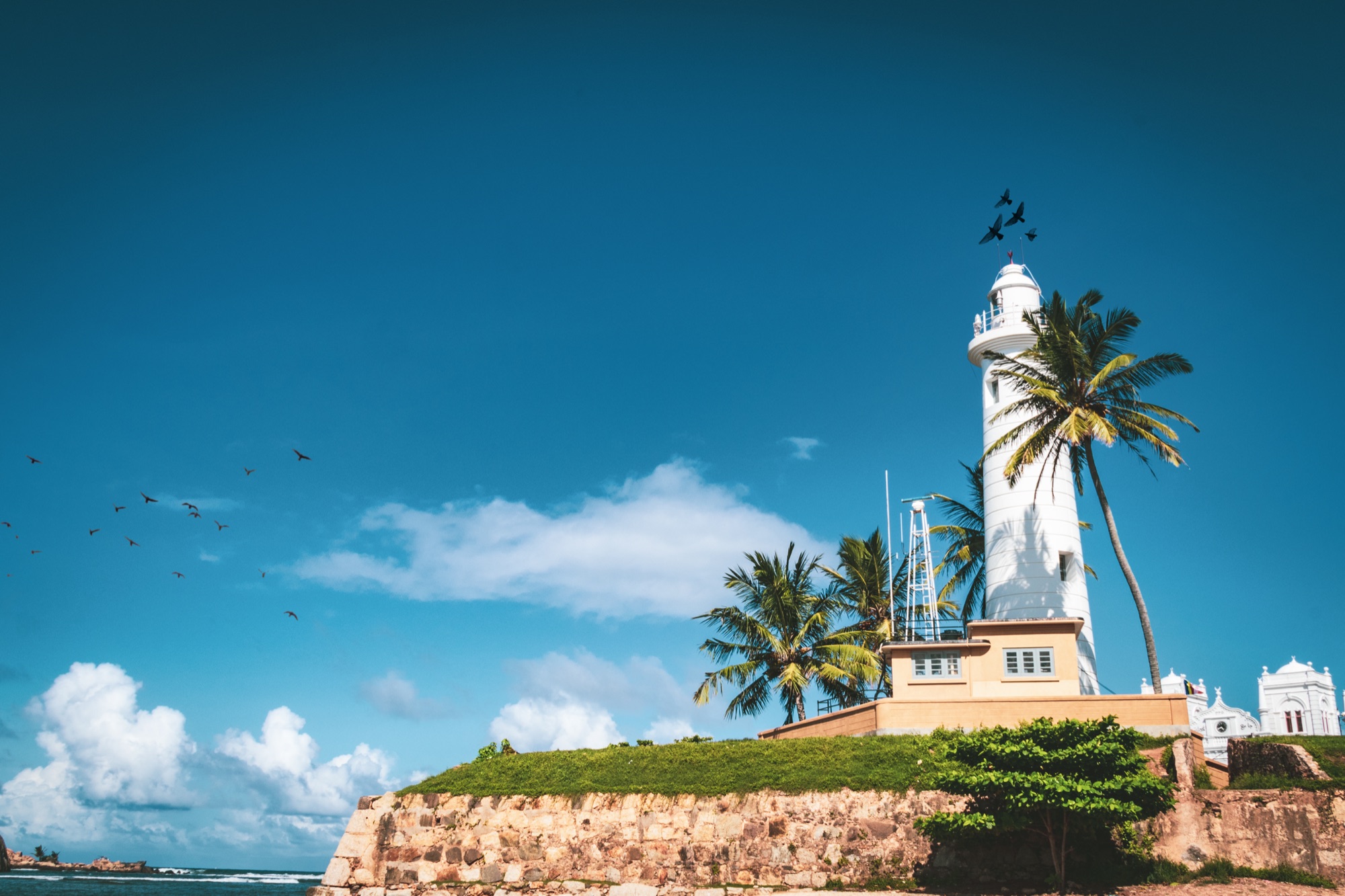
South: Weligama, Mirissa and Tangalle
From Galle the coast road runs east through Weligama's wide surf bay, Mirissa's headland and harbour, and on to the quieter, longer beaches around Tangalle. Mirissa is the whale-watching port, with boats out from November to April and the calmest seas from about December to March. Weligama is where beginners learn to surf. Tangalle is for people who want a long empty beach and do not mind fewer restaurants. Mirissa to the airport is about three to three and a half hours by expressway. This stretch is the default for a two-week trip because it is where the hill-country loop lands and because it has the most to do without a car.
South-east edge: the Yala coast
Tissamaharama and the hotels near Yala's gate are a safari base, not a beach base. The sea there is exposed and the nearest swimming beaches of note are back west around Tangalle. Put Yala or Udawalawe on the way from the hills to the coast, not at the end.
East and north: Trincomalee, Nilaveli, Arugam Bay
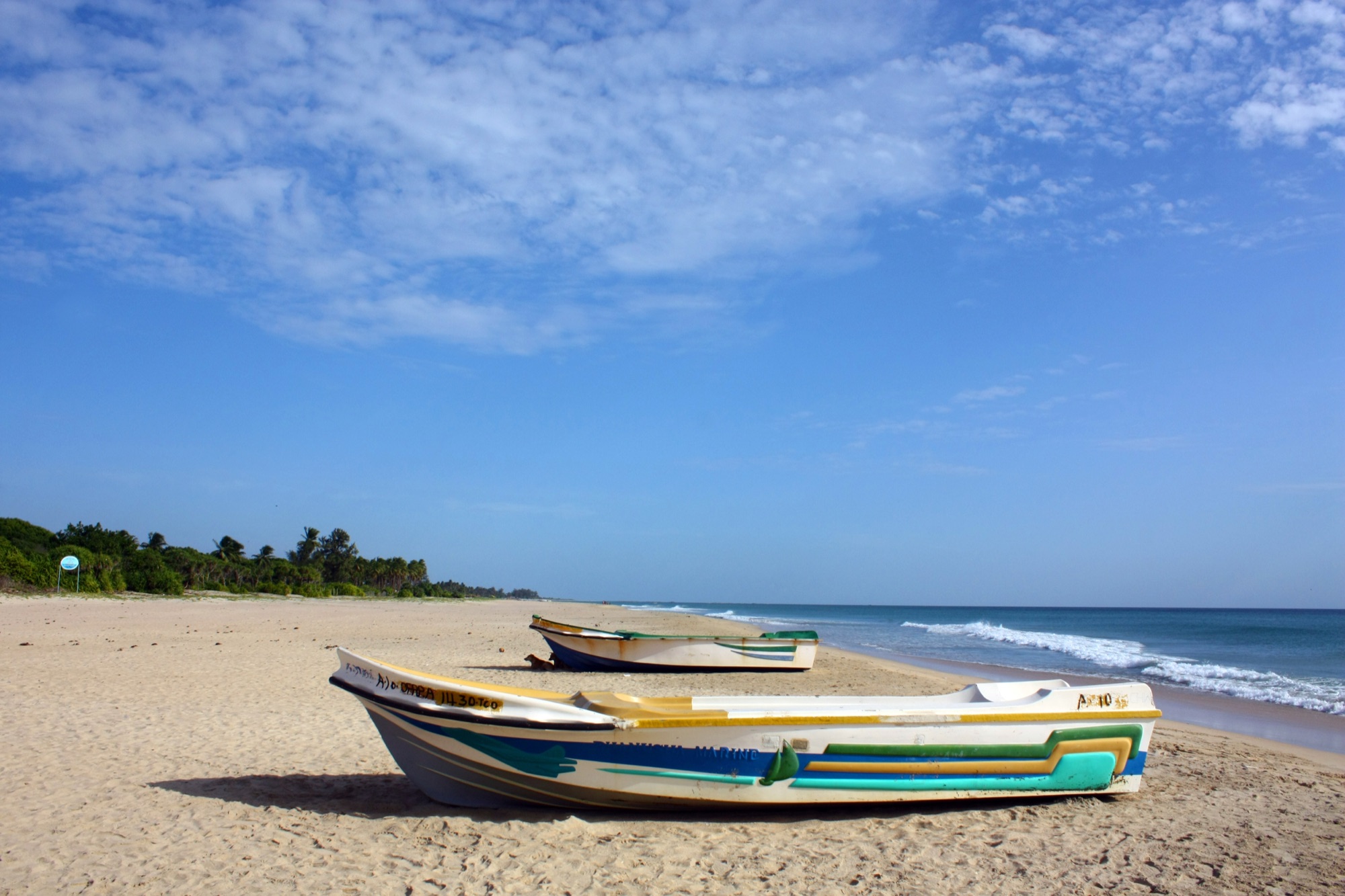
Beautiful, and the wrong season. The east coast's calm, sunny months are roughly May to September, when the south-west monsoon is soaking the other side. In January the beaches at Nilaveli face the north-east monsoon's leftovers, many operators close for the season, and you would spend a full day driving to reach them from the hills. Save them for a summer trip.
Choose by what you want from the beach
| If you want | Base | Why | Airport transfer |
|---|---|---|---|
| Calm swimming for children | Unawatuna or Bentota | Sheltered bays, gentle shelving, hotels with pools | 2 h 15 to 2 h 45 (Unawatuna) or 2 h (Bentota) |
| Whales | Mirissa | Boats from the harbour, calm-sea core December to March | 3 h to 3 h 30 |
| Learning to surf | Weligama | Wide sandy bay, board hire and schools on the beach | 3 h to 3 h 15 |
| A town to walk at night | Galle Fort | Ramparts, cafes, lighthouse, museum | 2 h 15 to 2 h 45 |
| Long empty sand | Tangalle | Fewer hotels, wide beaches, strong currents in places | 3 h 45 to 4 h 15 |
| A first or last night only | Negombo | 15 to 30 minutes from the terminal | 15 to 30 min |
Two habits help. Split the beach time between two of these rather than one if you have five or more coast nights, for example three in Mirissa and two in Galle Fort, because they are 40 minutes apart and feel like different places. And put the whale trip early in the coast block with a spare morning behind it, since boats do not sail on rough days even in January.
What your choice does to the route
A south-coast base is the natural end of the classic loop: Cultural Triangle, Kandy, tea country, Ella, a safari on the way down, then Mirissa or Galle and the expressway home. That is how our 14-day Sri Lanka itinerary is built, with four coast nights at Mirissa and Galle Fort as a day trip. A west-coast base does the opposite: it belongs at the start or end of a short trip, or as a single night beside the airport, and it makes a poor finale after the hills because you drive past the better beaches to reach it. An east-coast base changes the season, not just the route, so it does not belong in a January plan at all.
The coast is also where the train comes back into play. The Colombo to Galle and Matara coastal line runs normally, mostly unreserved second and third class with tickets bought on the day, and Weligama and Mirissa have stations, so Galle Fort is an easy train day trip from a Mirissa base. The train-versus-driver guide covers that leg and the expressway alternative.
Booking notes for January
January is high season on the south coast: the popular Mirissa and Galle Fort hotels fill weeks ahead, and prices peak around Christmas and New Year. Book the coast first if your dates are fixed. Poya (full-moon) days fall once a month and alcohol is not sold on them, which matters more on the beach than in the hills. Whale-watching boats are booked a day or two ahead from the harbour or through your hotel, and the operators cancel for swell rather than rain. If you are adding a second coast base, Galle to Mirissa is 35 km, 40 minutes to an hour by road or a short unreserved train ride.
Questions about Sri Lanka's coasts in January
Which coast is best in Sri Lanka in January?
Is the east coast really unusable in January?
Is December as dry as January on the west coast?
When is whale-watching season in Mirissa?
How far is the south coast from the airport?
Should I split my beach time between two bases?
Photo credits
Cover, Mirissa bay. Photo: Abishek Palraj, CC BY-SA 4.0, via Wikimedia Commons (resized for web display). Galle lighthouse. Photo: Samal Nadeeshan, CC BY-SA 4.0, via Wikimedia Commons (resized for web display). Nilaveli beach. Photo: Anton 17, CC BY-SA 4.0, via Wikimedia Commons (resized for web display).