


On this route
Two weeks is the length at which Sri Lanka stops forcing a choice between the ruins, the tea country and the sea. The island is small enough that no drive in this plan takes more than four hours door to door, and the December to March window puts the Cultural Triangle, the hills and the whole south-west coast on the dry side of the monsoon at the same time. What makes a two-week plan fail is not distance. It is the assumption that the famous Kandy to Ella train runs the way it did before Cyclone Ditwah hit the line in November 2025, and the habit of giving every base one night because the map looks short.
The short answer: land at Colombo and sleep in Negombo, drive to the Sigiriya and Dambulla area for two nights, spend two in Kandy, one in Nuwara Eliya, then take the morning train from Nanu Oya to Ella, the section of the line that reopened in June 2026, for two nights in Ella. Drop down to Udawalawe for an afternoon elephant safari and one night, then finish with four nights on the coast at Mirissa before the expressway run back to the airport. That is 13 nights across seven bases, one reserved-seat train you can actually book, a private driver for everything else, and two deliberately empty days. The variations below show what changes if the through train from Kandy is running again by the time you travel, if you want leopards rather than elephants, or if your flight lands at midnight.
- Duration
- 14 days / 13 nights
- Bases
- 7
- Transport
- Private driver, one reserved-seat hill train, optional coastal train
- Pace
- Balanced: two empty days, no drive over four hours
- Best season
- December to March (south-west coast and hills dry)
Your two weeks at a glance
| Day | Plan | Overnight | How you get there |
|---|---|---|---|
| 1 | Land at Colombo (CMB), rest by the sea | Negombo | Airport taxi or driver, 15 to 30 min |
| 2 | Drive to the Cultural Triangle, Dambulla cave temple in the afternoon | Sigiriya / Dambulla | Driver, 3 h 30 to 4 h |
| 3 | Sigiriya at the 07:00 opening, Polonnaruwa ruins after lunch | Sigiriya / Dambulla | Driver, 1 h 15 each way to Polonnaruwa |
| 4 | Drive to Kandy, evening service at the Temple of the Tooth | Kandy | Driver, 2 h 15 to 2 h 45 |
| 5 | Peradeniya botanical gardens, slow afternoon by the lake | Kandy | Tuk-tuk |
| 6 | Climb into tea country with a factory stop | Nuwara Eliya | Driver, 2 h 30 to 3 h |
| 7 | Morning train Nanu Oya to Ella, afternoon in the village | Ella | Train about 09:00, 2 h 15 to 2 h 30; driver brings the bags |
| 8 | Little Adam's Peak at sunrise, Nine Arch Bridge, rest | Ella | On foot, tuk-tuk |
| 9 | Descend to the dry zone, afternoon jeep safari | Udawalawe | Driver, 2 h 15 to 2 h 45 |
| 10 | Drive to the south coast, first beach afternoon | Mirissa | Driver, 2 h 15 to 2 h 45 |
| 11 | Whale-watching boat at dawn, Weligama bay | Mirissa | Tuk-tuk to the harbour |
| 12 | Galle Fort day trip | Mirissa | Coastal train, driver or tuk-tuk, 40 min to 1 h |
| 13 | Buffer: beach, surf lesson or a rescheduled boat | Mirissa | None |
| 14 | Expressway to the airport, fly home | Departure | Driver, 3 h to 3 h 30 |
Base order and nights
- Negombo 1 night
- Sigiriya / Dambulla 2 nights
- Kandy 2 nights
- Nuwara Eliya 1 night
- Ella 2 nights
- Udawalawe 1 night
- Mirissa 4 nights
Who this route suits, and who should change it
This plan is built for a first visit in the European winter: couples, friends and families who want the three classic layers of the island without driving themselves and without a night bus. It assumes you book hotels ahead, because January is high season on the south coast, and that you hire a car with a driver for the road legs rather than piecing together buses. It also assumes you are content with one long train ride rather than three. The section it uses, Nanu Oya to Ella, is the most photographed part of the line and the part that is running today.
Change it if your priority is the beach: the coast gets four nights here, and if you want a full week of sea, read which coast to choose in January before you cut anything from the hills, because in this window only the south and west coasts are in season. Change it if you want leopards: the Udawalawe night becomes a Tissamaharama night for Yala, which is explained under the decisions below. And if you are torn between a second night in Kandy and a third in Ella, that trade is worked through in Kandy or Ella: where to spend the extra night. Twelve days works by dropping Negombo and one coast night; ten days does not work with all seven bases, so cut the hill country to a single Ella stop instead.
Five decisions to settle before you book
1. The train in winter 2026-27 is not the train in the photos
Cyclone Ditwah damaged the Main Line at more than two hundred locations in November 2025. Since then the railway has reopened it in pieces. Trains between Nanu Oya and Badulla, which is the stretch through Haputale, Ella and Demodara, came back on 20 June 2026. Colombo Fort to Kandy was announced for October 2026. The middle section between Kandy and Nanu Oya, including the Black Bridge at Peradeniya, was still under repair when this was written in September 2026, with an official target of the end of December. So a through train from Kandy to Ella on a January date is possible, not certain. This route does not depend on it: the driver takes you from Kandy to Nuwara Eliya, and you board at Nanu Oya for the part that is open. If the line is whole again when you travel, the alternative version below turns Day 6 into the full ride. The leg-by-leg comparison in train or private driver for a two-week route goes deeper into where each option wins.
2. A driver is the default, not a luxury
A car with an English-speaking driver typically costs US$50 to 75 a day for a sedan in 2026 listings, with fuel, expressway tolls, parking and the driver's meals and accommodation included by reputable operators, and around US$70 to 120 for a van. For 13 days that is roughly the price of one mid-range hotel night per day, and it removes every connection problem on this loop: the airport run, the climb to Nuwara Eliya, the descent to the parks and the transfer to the coast. Get the inclusions in writing, agree the daily kilometre expectation (100 to 150 km is normal), and plan a tip of about US$5 to 10 a day at the end.
3. Udawalawe or Yala
Udawalawe is the safari in this plan because it sits on the road between Ella and the coast, because elephants there are close to guaranteed in the open grassland, and because it has no announced seasonal closure. Yala's Block 1 is the leopard park, and in January it is the busier of the two by a wide margin. It is also the park that closes when the dry zone runs out of water: Blocks 1 and 2 were shut from 14 September to 15 October 2026 for exactly that reason, while the other blocks stayed open. January is normally open at both parks. If leopards matter more than time, swap the Udawalawe night for Tissamaharama and take the dawn drive; it adds about half an hour to the next day's drive to Mirissa.
4. Two nights in Kandy, or one
Kandy gets two nights here so that the temple visit lands in the evening service and the botanical gardens get a morning of their own after two travel days. If you would rather have a third night in Ella or a night inside Galle Fort, take one from Kandy. The comparison article makes the case both ways.
5. The ETA before you fly
Every foreign visitor needs an Electronic Travel Authorization before boarding. Since 25 May 2026 nationals of 40 countries receive the 30-day tourist ETA free of charge with double entry: the list includes the United Kingdom, Germany, France, Italy, Spain, the Netherlands, Belgium, Austria, Denmark, Finland, Sweden, Norway, Poland, the Czech Republic, Switzerland, Canada and the United States. Other EU passports, Ireland and Portugal among them, pay the standard US$50 online (US$60 on arrival). Apply on the official portal only, and check that the free scheme is still in force close to departure, because Sri Lanka's visa rules have changed several times since 2023.
Day-by-day plan
Day 1: Colombo airport to Negombo
Negombo is the reason this route does not start in Colombo. The beach hotels are 15 to 30 minutes from the terminal, which means a morning arrival gets a swim and an early night, and a late-evening arrival gets a bed without a 40-minute ride into the city. There is nothing to achieve today beyond a walk on the sand and, if you are awake early enough tomorrow, the fish market by the lagoon. Have the ETA approval on your phone before you land.
Day 2: Negombo to the Cultural Triangle
The first real drive is also the longest of the trip: 135 to 150 km and 3 h 30 to 4 h door to door with a stop, so leave by 08:30. Dambulla's cave temple is on the way and takes about an hour, five painted caves up a short flight of steps, with the ticket bought at the temple. Stay somewhere between Dambulla and Sigiriya so that tomorrow's early start is short. If you have energy left, Pidurangala is the rock opposite Sigiriya: a 30 to 40 minute scramble to a sunset view of the fortress.
Day 3: Sigiriya at opening time, then Polonnaruwa
Ticket counters at the heritage sites open at 07:00 and this is the hour to be at Sigiriya. The climb with the museum takes two to three hours and the rock has no shade; by ten the stairs are crowded and hot. The foreign adult ticket is US$35 (LKR 11,690 at the Central Cultural Fund's rate on 16 September 2026, which changes daily), it is single entry for that day, and you can buy it at the counter or order online and collect it there. In the afternoon the driver takes you to Polonnaruwa, 56 km and about 1 h 15 each way, for the medieval capital's ruins (US$30). In January this is the better afternoon: the elephant gathering at Minneriya and Kaudulla is a July to October event.
Day 4: Sigiriya to Kandy
Two and a quarter to two and three-quarter hours on the A9 through Matale, with a spice garden or the Nalanda Gedige as an optional stop. Arrive early enough for a walk around Kandy Lake, then the Temple of the Sacred Tooth Relic for the evening service, which runs from 18:30 to 20:00. Foreign visitors pay LKR 3,000, which includes the museum, and the dress code is real: shoulders and knees covered, no sleeveless tops.
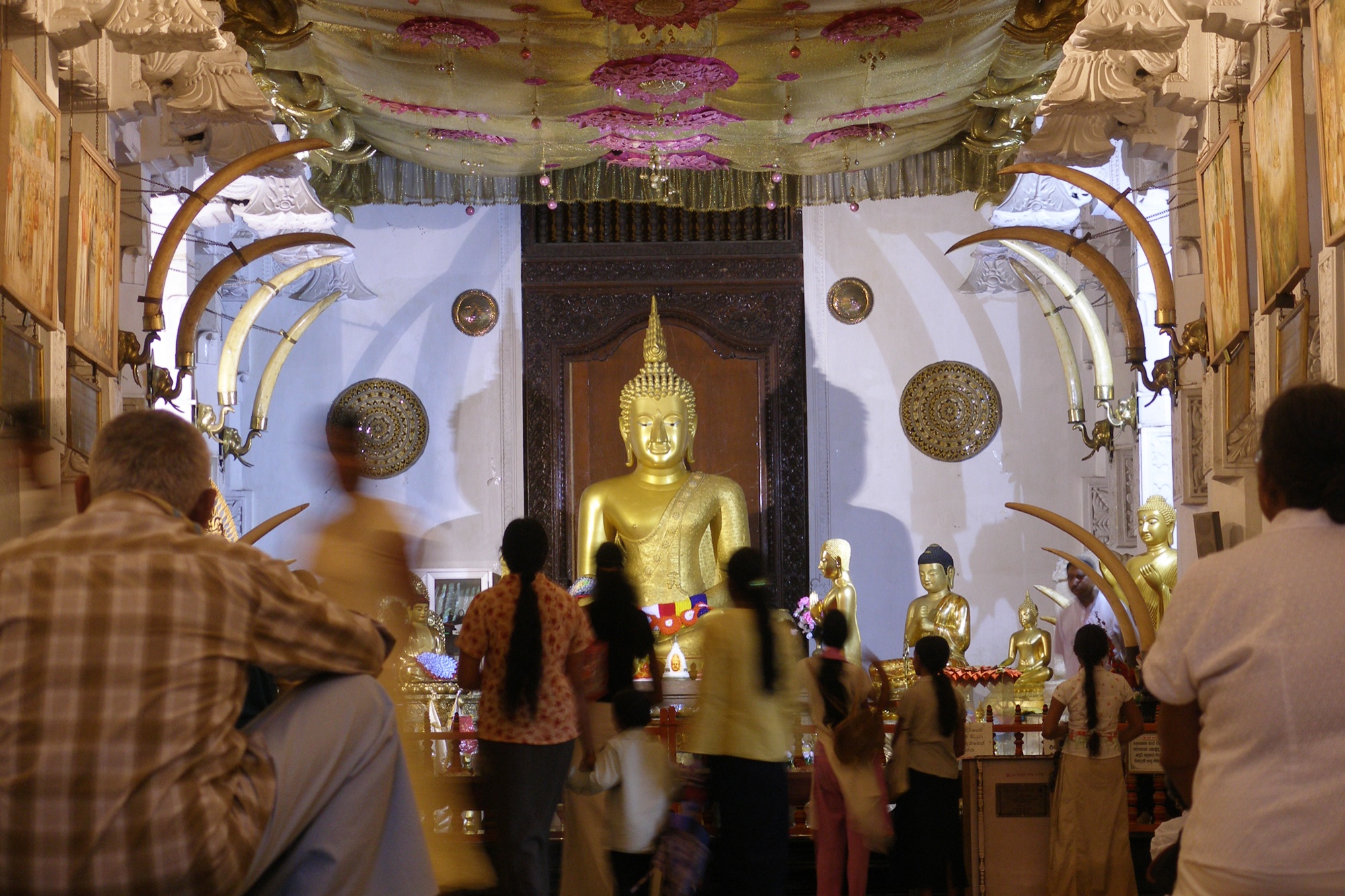
Day 5: Kandy
A slow day on purpose. The Royal Botanical Gardens at Peradeniya are 15 to 25 minutes away by tuk-tuk and want a whole morning. The afternoon is the market, the Ceylon Tea Museum on the Hantana road, or nothing at all. If you are cutting a night from the route, this is the one to cut.
Day 6: Kandy to Nuwara Eliya
The road climbs from about 500 m to nearly 1,900 m in 76 km and takes 2 h 30 to 3 h with a tea factory stop around Ramboda. This is the leg where the train is uncertain in January 2027, so the driver takes it. Nuwara Eliya itself is a cool, damp, oddly English town: pack a fleece, walk Gregory Lake or Victoria Park, and go to bed early for the train.
Day 7: Nanu Oya to Ella by train
Nanu Oya station is about 10 km below Nuwara Eliya, 20 to 30 minutes by car. On the special timetable in use since the reopening, the morning train leaves at about 09:00 and reaches Ella in 2 h 15 to 2 h 30, with a second departure mid-afternoon. Reserved seats go on sale online exactly 30 days before travel, five passengers per booking, seats allocated automatically. If the online quota shows nothing, stations with a reservation counter sometimes hold a few seats, and the unreserved carriages always run. Your driver takes the luggage down the road, 54 km and about an hour and a half, and meets you at Ella station.
Day 8: Ella
Little Adam's Peak at sunrise is an hour's return walk on a good path; Nine Arch Bridge is a 30-minute walk or a short tuk-tuk from the village, and the train crosses it mid-morning and mid-afternoon if you want the photograph. Ella Rock is the longer, steeper option for the afternoon. This is the second car-free day. Use the evening to confirm tomorrow's safari jeep and hotel by phone.
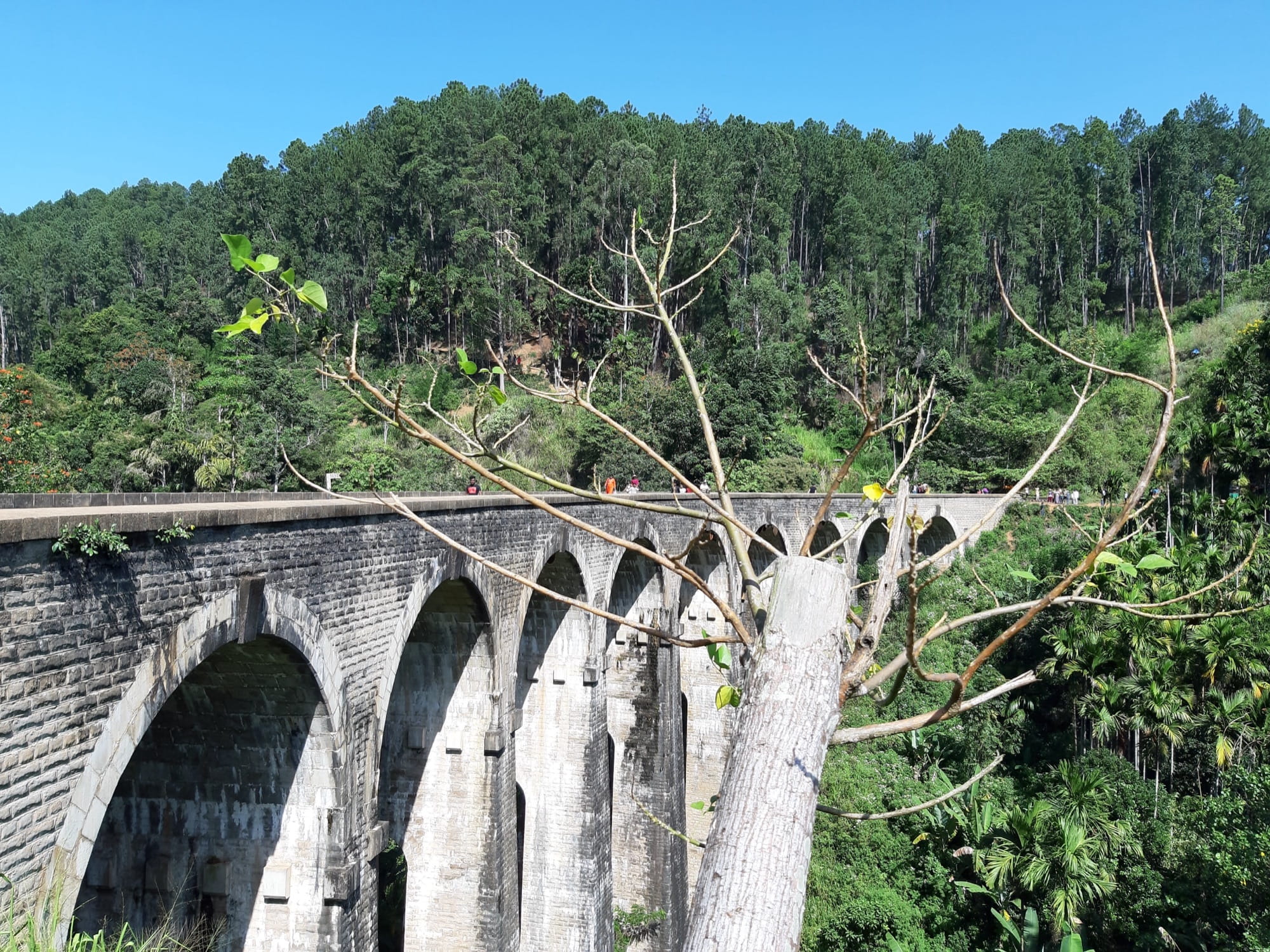
Day 9: Ella to Udawalawe
The descent through Wellawaya to the dry zone is 90 km and 2 h 15 to 2 h 45, past Rawana Falls at the roadside. Leave by 08:30 to be checked in before a 14:00 jeep pickup. An afternoon drive in Udawalawe runs roughly 14:30 to 18:00. Budget about US$30 a person for the park ticket at the gate, and LKR 12,000 to 18,000 for a half-day jeep that seats up to six; the hotel or a local operator arranges the jeep.
Day 10: Udawalawe to Mirissa
If you skipped the afternoon safari, take the dawn one and leave by 09:30. The road south joins the Southern Expressway for part of the way and the run to Mirissa is 106 km, 2 h 15 to 2 h 45. This is where the driver contract can end, with a separate airport transfer on Day 14, or continue if the daily rate is good. Book the whale-watching boat for tomorrow morning as soon as you arrive.

Day 11: Whales
Boats leave Mirissa harbour around 06:30 and are usually back by midday. The season on this coast runs November to April, and January is inside the calm-sea core of it, but boats still cancel on rough mornings. That is why the trip is on Day 11 with a buffer behind it and not on the last day. Weligama's bay, ten minutes east, fills the afternoon.
Day 12: Galle Fort
Galle is 35 km west, 40 minutes to an hour by road, or an unreserved coastal train from Weligama or Mirissa station. The fort is a walk: ramparts, the lighthouse, the Dutch Hospital arcade and the small museum (US$6). The coastal line is running normally, so this is the day to try the train if you skipped the hill country one.
Day 13: Buffer
If everything ran on time, this is a beach day or a surf lesson in Weligama. If the whale boat was cancelled or a hill-country day slipped, this absorbs it. Do not book anything that cannot be moved.
Day 14: Mirissa to the airport
The expressway makes the 184 km run to Colombo airport a 3 h to 3 h 30 drive. Many departures to Europe leave late at night or early in the morning, so a night flight means leaving Mirissa mid-afternoon and a morning flight means an evening transfer and a hotel by the airport or a very long night. Confirm your departure time before you decide whether Day 13 is a full beach day or a half one.
Booking the pieces in the right order
Book in this sequence: flights, then the driver with the inclusions in writing, then hotels for the January dates (Ella and Mirissa fill first), then the train seat when the 30-day window opens, then the Sigiriya ticket online if you want to skip the counter queue, and the whale boat once you are on the coast and can see the sea. The heritage-site tickets can be ordered online and are valid 90 days from the order date, but you still collect the physical ticket at the site counter, so the order saves you the payment queue, not the walk.
Weather and timing for this route
The route works between December and March because the north-east monsoon is dumping its rain on the other side of the island. Long-term normals (1991 to 2020) put Colombo at about 80 mm of rain on five days in January against 359 mm in October, and Hambantota on the south coast at 68 mm in January and 47 mm in February. Trincomalee on the east coast records 376 mm in November, 339 mm in December and 152 mm in January, which is why no east-coast beach is on this route. Nuwara Eliya is cool all year, with January highs near 20 C, lows near 10 C and showers on about ten days, so the tea-country day and the train morning can be misty. December is wetter than January on the west coast (171 mm in Colombo), so a trip in the first half of December should expect some afternoon showers on the coast.
Shorter, reversed and rail-heavy versions
If the through train is back. When the Kandy to Nanu Oya section reopens, Day 6 becomes a train day. Under the normal timetable the Podi Menike leaves Kandy at 08:55 and the Udarata Menike at 11:15, reaching Ella at 16:18 and 17:23 respectively, six to seven and a half hours of the most famous railway scenery in Asia. Drop the Nuwara Eliya night and give it to Ella or the coast; the driver still carries the luggage to Ella. Check the line status on the railway's site before you rely on it.
Coast first. If your flight lands close to midnight, reverse the loop: the expressway takes you to Mirissa or Galle in 2 h 40 to 3 h 30 the next morning, and the hill country comes at the end. The train leg then runs Ella to Nanu Oya, with departures at about 09:52 and 15:52 on the special timetable, and the last night is Negombo.
Twelve days. Cut Negombo (drive straight to the Cultural Triangle if you land before noon) and one Mirissa night. Keep both Ella nights and the buffer.
Leopards. Replace Udawalawe with Tissamaharama and a dawn drive in Yala Block 1; expect a queue of jeeps at the gate in January.
What to leave for another trip
Anuradhapura is a further 70 km north of Dambulla and a full day; Polonnaruwa gives you a ruined capital at a third of the driving. The east coast, Trincomalee and Arugam Bay, is in its wet season in this window. Adam's Peak is in pilgrimage season from December, but it costs a night in Hatton or Dalhousie and a two o'clock start, which is a different kind of trip. Colombo is 40 minutes from the airport and worth a half day on arrival or departure if your flight times give you one, not a base.
Common mistakes
Booking the Kandy to Ella train for a January date on the strength of old blog posts, then discovering the section from Kandy is closed. Giving Sigiriya an afternoon instead of the 07:00 opening. Assuming Yala is open every month. Putting the whale boat on the last morning. Planning a Colombo hotel for the first night when Negombo is 15 minutes from the terminal. And underestimating the hill roads: 76 km from Kandy to Nuwara Eliya is not an hour, it is closer to three with a stop.
Entry rules and money notes
Heritage-site tickets are priced in US dollars and sold in rupees at the day's rate; the Temple of the Tooth and the national parks take rupees at the gate, and jeep operators usually want cash. Carry enough for the Sigiriya morning and the safari day, because card machines at counters are not something to rely on. Alcohol is not sold on poya (full-moon) days, one of which falls in every month.
Questions about this route
Is the Kandy to Ella train running in winter 2026-27?
How far ahead can I book train seats?
Do I need a visa for Sri Lanka from the UK or the EU?
How much does Sigiriya cost and when should I go?
Udawalawe or Yala?
How much is a private driver for two weeks?
Is the east coast an option in January?
Can this be done in ten days?
Photo credits
Cover, Sigiriya from Pidurangala. Photo: Gayomiw, CC BY-SA 4.0, via Wikimedia Commons (resized for web display). Temple of the Tooth. Photo: Vyacheslav Argenberg, CC BY 4.0, via Wikimedia Commons (resized for web display). Nine Arch Bridge. Photo: Ravindu Thaksara, CC BY-SA 4.0, via Wikimedia Commons (resized for web display). Mirissa bay. Photo: Abishek Palraj, CC BY-SA 4.0, via Wikimedia Commons (resized for web display).