


On this route
Phuket and Krabi sit across a bay from each other, share the same dry season and reach the same islands, so the choice is not about weather or scenery in the abstract. It is about what your base does to the rest of the trip: how you arrive, how you leave, how many nights you can afford on the coast, and whether you want a big island with everything on it or a smaller town facing limestone cliffs. This comparison answers that for a two-week Thailand itinerary, where the coast usually gets five to six nights after Bangkok and Chiang Mai.
The short answer: choose Phuket if you are flying home from the coast, travelling with people who want options, or arriving in the Christmas fortnight when flight choice matters. Choose Ao Nang in Krabi if the pictures that made you book were Railay's cliffs and long-tail boats, if you would rather walk to the pier than drive to it, and if you are happy to leave via Bangkok. With six coastal nights, the best answer for many first visits is three in each, joined by a two-hour ferry.

The comparison at a glance
| Criterion | Phuket | Ao Nang, Krabi |
|---|---|---|
| Getting there from Chiang Mai | Non-stop flights, about 2 h, several airlines and times a day | Non-stop, about 1 h 50; Thai AirAsia shows a handful of daily departures, fewer than to Phuket |
| Flying home | Large international airport with long-haul and Gulf-hub flights; more winter Europe routes | Mostly domestic; a few seasonal European winter routes (Helsinki and Copenhagen announced for 2026–27). Everyone else connects via Bangkok |
| Airport to base | About 45 min to the Old Town, 45 min to over an hour to the west-coast beaches | About 45 min to an hour by shuttle van or taxi |
| Character | A large island: Old Town, a dozen beaches, resorts, nightlife, malls, traffic | A beach town facing karst cliffs; quieter, smaller, boat-focused |
| Signature day | Old Town morning, Big Buddha, Phromthep Cape sunset | Long-tail to Railay, Phra Nang Cave Beach, the viewpoint |
| Island trips | Phi Phi, Phang Nga Bay, Similan (in season); larger boats, longer runs | Hong Islands, Four Islands, Phi Phi; shorter runs, cheaper long-tails |
| Getting around | Taxi, Grab, Smart Bus on the west coast; distances are real | Walkable town; songthaews and long-tails |
| Best for | Families wanting choice, nightlife, first-timers nervous about logistics, open-jaw departures | Scenery, climbing, kayaking, couples, travellers who prefer one small place |
| Weak spot | Traffic and sprawl; the wrong beach can feel like anywhere | Ao Nang's own beach is ordinary; you go out by boat for the good ones |
Arriving and leaving: the decision most people get backwards
Start with the flights home, not the beaches. Phuket is one of Thailand's main international gateways, with long-haul services to the Gulf hubs and a growing list of winter routes from Europe; for winter 2026/27, TUI has announced a further weekly London Gatwick flight, and several European carriers run seasonal services. That makes Phuket the natural end of an open-jaw ticket: fly into Bangkok, out of Phuket, no backtracking.
Krabi's airport is smaller and mostly domestic. For winter 2026/27 it has announced seasonal European flights, including Finnair from Helsinki and SAS from Copenhagen at two a week each, so a Nordic traveller could finish in Krabi without a connection. Everyone else leaves via Bangkok, which means a domestic flight to Suvarnabhumi or Don Mueang and a connection there. That is easy, but it is a half day and a second airport, and it decides where your last night goes.
From Chiang Mai, both are one non-stop flight. Phuket has more departures and more airlines (Thai AirAsia, Thai Vietjet, Thai Lion Air, Bangkok Airways and Thai Airways are all named on the route); Krabi has fewer non-stop departures, with Thai AirAsia showing a handful of daily times. In the Christmas fortnight, that difference in choice is worth something.
What each base is like to live in for three nights
Phuket
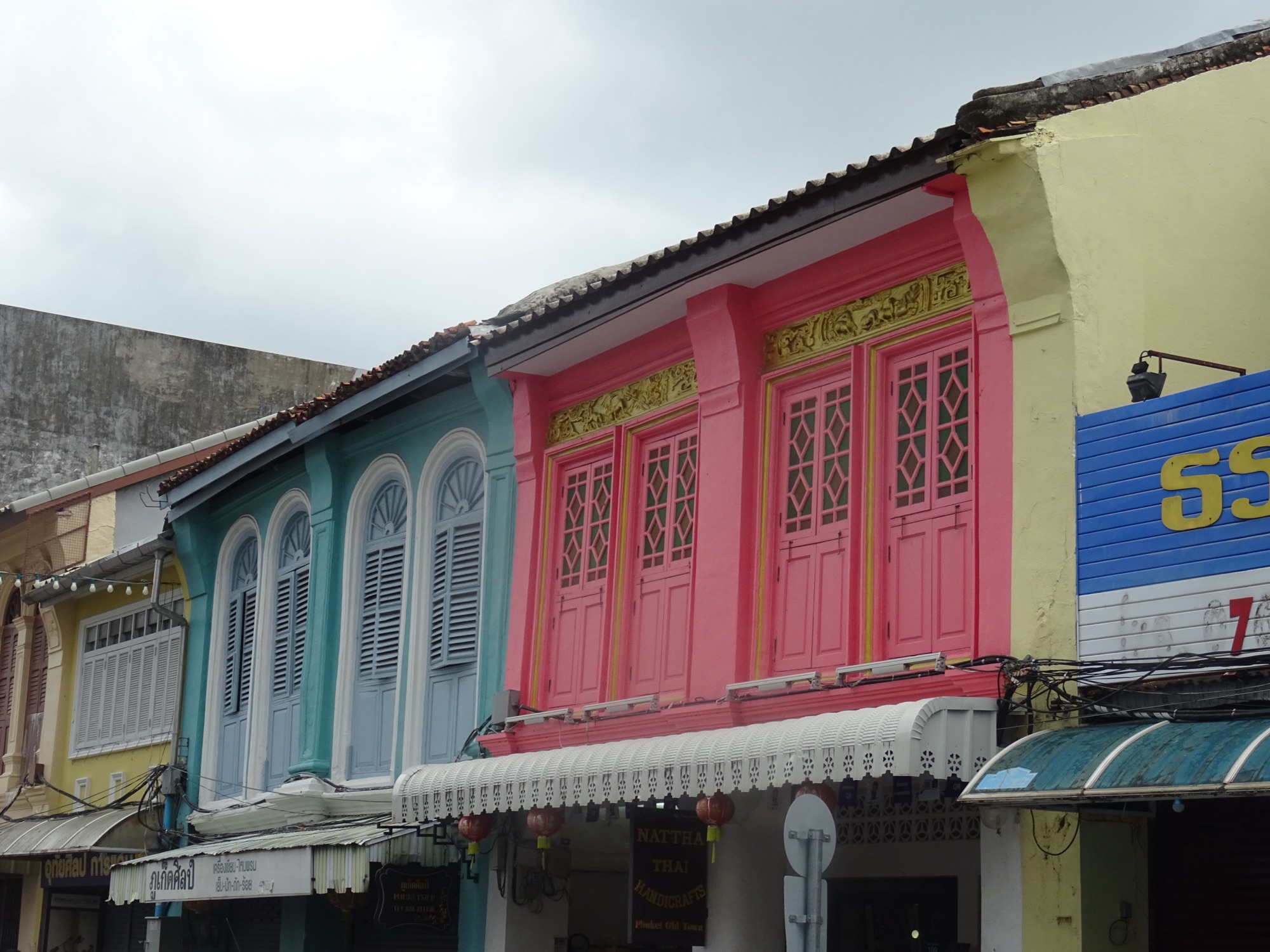
Phuket is an island the size of a small county, and the base you choose within it matters as much as the island itself. The Old Town has the Sino-Portuguese shophouses, the best coffee and food, a Sunday walking street, and no beach; Kata, Karon and Nai Harn have long sand and a quieter evening; Patong has the nightlife and the crowds. Distances between them are 30 to 45 minutes by taxi, so pick one area and do not try to sample all three. Phuket rewards travellers who want a full menu: a temple morning, a beach afternoon, a market evening, and a different beach the next day.
Ao Nang and Railay
Ao Nang is a beach town with a single main road, a promenade and a long-tail boat queue at its western end. The town beach is fine for a walk and unremarkable for swimming; the point of being here is the boat. Railay, fifteen minutes away and reachable only by water, has the limestone towers, Phra Nang Cave Beach and the climbing. The Hong Islands are a morning by long-tail; Phi Phi is a speedboat day. Evenings are quieter than Phuket's, dinner is on the promenade or in the lanes behind it, and you walk to the pier for tomorrow's boat. Staying on Railay itself is possible and beautiful, but it adds a boat to every arrival and departure, which matters on the day you have a ferry or a flight.
What the choice does to your nights and route
Assume six coastal nights after Bangkok and Chiang Mai, the split used in the 14-day itinerary. There are three ways to spend them.
- Ao Nang 3, then Phuket 3. Fly Chiang Mai to Krabi, take the 10:30 ferry from Nopparat Thara pier to Rassada pier in Phuket on the fourth morning (about two hours in season), and fly home from Phuket. You get Railay and the Old Town, one transfer day, and the best departure airport. This is the recommended shape for an open-jaw ticket.
- Phuket 6. Fly Chiang Mai to Phuket and stay put, with Phi Phi or Phang Nga Bay as day trips. No transfer day, the most flexibility with flights, and the easiest option in the Christmas fortnight. Railay becomes a long day trip or is dropped.
- Ao Nang 6. Fly Chiang Mai to Krabi and stay put: Railay, the Hong Islands, a rest day, Phi Phi. The calmest version. Fly home via Bangkok, or on one of the seasonal Nordic routes if they match your home airport.
The difference between the first and second options is one morning on a ferry. The difference between the second and third is a departure airport. If you have only four coastal nights, do not split them: pick one base, and let the departure airport decide which.
Timing and season
Both bases share the Andaman calendar: dry and calm from December to April, wettest from May to October, with November as the transition. In December the ferry between them runs daily in the high season; in the low season sailings are not daily and a road transfer of about three hours replaces the boat. Maya Bay, on Phi Phi Leh, closes from 1 August to 30 September every year and is open through the winter. Neither base is a good idea in the Christmas fortnight without bookings made well ahead, and Phuket's larger hotel stock makes it the easier late booking.
Who should pick which
- First visit, open-jaw ticket, mixed group: Ao Nang 3 then Phuket 3.
- Family with young children, or anyone who wants a pool and a short walk to dinner: Phuket, one beach area, six nights.
- Climbers, kayakers, photographers, couples who want quiet: Ao Nang, six nights, with a night or two on Railay if the departure day is not tight.
- Christmas or New Year dates booked late: Phuket.
- Nordic travellers with a seasonal direct flight to Krabi: Ao Nang, and reverse the whole route to end there.
Whichever you pick, the month matters more than the base. The Thailand in December guide explains why the Andaman side, not the Gulf, is where a winter trip belongs.
Frequently asked questions
Direct answers to the Phuket versus Krabi questions that change a two-week route.
Is Krabi better than Phuket?
Can I fly home from Krabi?
How do I get from Krabi to Phuket?
Should I stay in Ao Nang or on Railay?
Which is better with children?
Which is cheaper?
Photo credits
Railay Beach Limestone Cliffs by Shivashanky, CC BY-SA 4.0 (cover; resized for web display). Buildings in Old Phuket Town by Christophe95, CC BY-SA 4.0. Both via Wikimedia Commons.