


On this route
Seven days in Morocco is enough for two places done properly, not four done badly. This plan gives Marrakech three nights and Essaouira three nights, with one three-hour bus between them and a departure morning that actually works with flight times. It is built for people flying into Marrakech on a normal European short-haul schedule in autumn or winter, and it deliberately leaves the Sahara out. If that last point worries you, the section on what this plan leaves out shows exactly what a desert detour would cost in nights, and the Essaouira or the Sahara comparison goes deeper.
The route at a glance
- Duration
- 7 days / 6 nights
- Bases
- 2 (Marrakech, Essaouira)
- Transport
- Airport taxi or bus 19, on foot in both medinas, one Supratours or CTM bus (3 h), bus or private transfer back to the airport
- Pace
- Relaxed: one transfer day, two buffer half-days
- Best season
- October to March; verified against December 2026 timetables and 1991–2020 climate normals
Nights by base
- Marrakech 3 nights
- Essaouira 3 nights
The order matters more than it looks. Starting in Marrakech puts the bus on Day 4, when you are rested, and ends the week on the coast, where the morning bus back reaches Marrakech by 10:00 or 12:00 for an afternoon flight. Running it the other way round would put a three-hour bus on your first morning after a flight, and the last night in Essaouira would be spent worrying about the road.
Who this plan suits
It suits a first visit with one week, couples or friends who prefer two bases to a loop of one-night stops, and anyone travelling without a car. It works in winter because neither base depends on beach weather: the normals for Essaouira in December and January are 18 to 19 °C by day and 11 to 13 °C at night, and Marrakech is 19 to 20 °C by day with nights of 6 to 7 °C. It does not suit people who must see the dunes in the same week, or anyone whose flight home leaves before about 13:30 (see variant B below).
The seven days
Day 1: arrive in Marrakech, nothing else scheduled
Most European flights land between midday and evening. From Menara airport the medina is about 7 km: a petit taxi takes 15 to 25 minutes on a fare you agree before getting in, or the ALSA airport bus (line 19) runs to Jemaa el-Fna for about 30 dirhams, roughly every half hour until about 21:30. Ask your riad in advance to send someone to meet you at the nearest gate a car can reach. Riads sit inside lanes that taxis cannot enter, and the walk from the gate is the moment when a stranger's "help" costs the most.
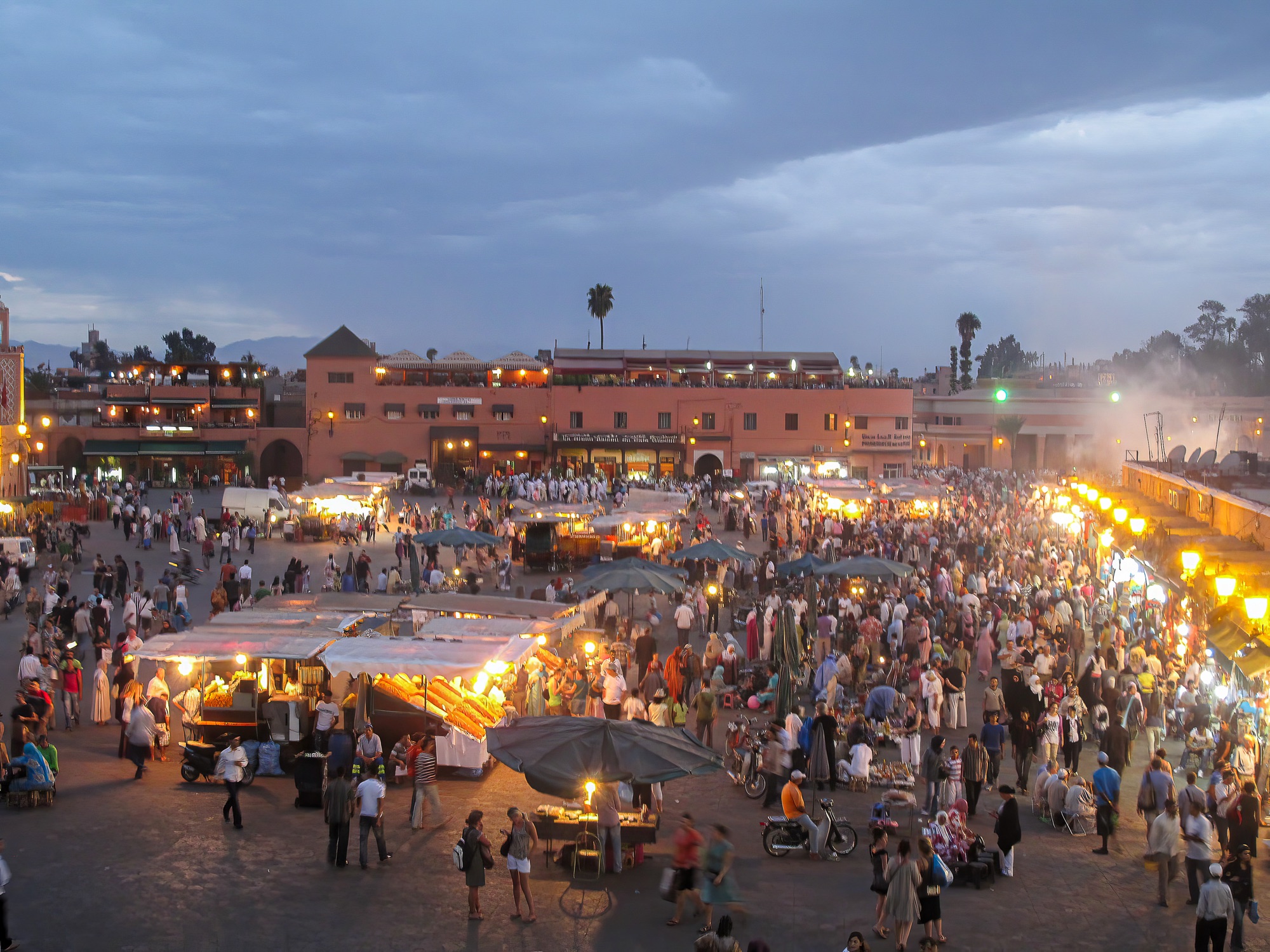
If you arrive by mid-afternoon, walk to Jemaa el-Fna for dusk. In December the sun sets around 17:30, so a 16:00 arrival at the riad still gives you the square as the food stalls light up. That is the whole programme for Day 1.
Day 2: the southern medina on foot
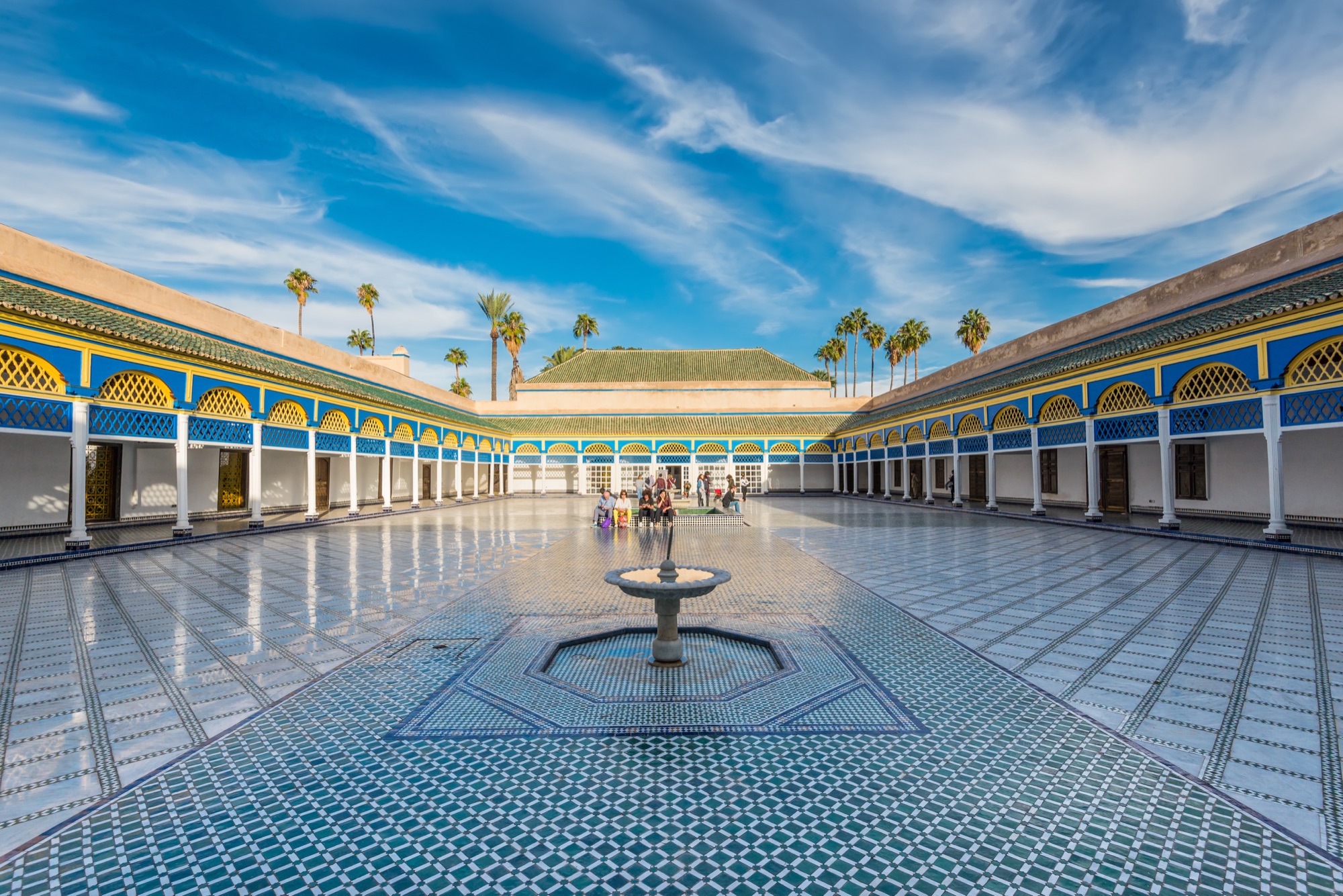
Start at the Bahia Palace when it opens, before the tour groups fill the courtyards. From there the Saadian Tombs and the Kasbah quarter are a ten-minute walk, and the Koutoubia gardens are another fifteen. Take a long lunch. The souks north of the square are for the afternoon, when you are no longer trying to see anything in particular; the Ben Youssef Madrasa at the top end is the one interior worth a detour. December gives you about ten hours of daylight, so plan the last outdoor sight for 16:30 and let the evening be the square again or a rooftop.
Day 3: Majorelle, then a deliberately empty afternoon
Jardin Majorelle sells tickets only online, for a chosen date and time slot, through the garden's own ticketing site. Book the first slot of the morning (the garden opens at 8:00) and combine it with the Berber arts museum inside; the Yves Saint Laurent museum next door opens at 10:00 and closes on Wednesdays. Gueliz, the new town around it, is where you find bakeries, a proper coffee and shops with prices on things.
The afternoon is the buffer. Use it for a hammam, Le Jardin Secret back in the medina, the Menara gardens, or nothing. If you are tempted to fill it with an Atlas day trip, read the Atlas section first: it fits, but only as a swap.
Day 4: the bus to Essaouira, arriving for lunch
Take the Supratours 09:00 from the terminal beside Marrakech railway station (or the 10:30 if the 09:00 is full). Both are timetabled at three hours, with a comfort stop roughly halfway. You arrive at the Supratours station beside Bab Marrakech, at the medina wall, so most riads are a few minutes' walk. Full departure lists, fares and the private-transfer alternative are in the Marrakech to Essaouira transport guide; the short version is that the bus costs about 100 to 125 dirhams (roughly 9 to 12 euros) and a private car about 950 to 1,200 dirhams.
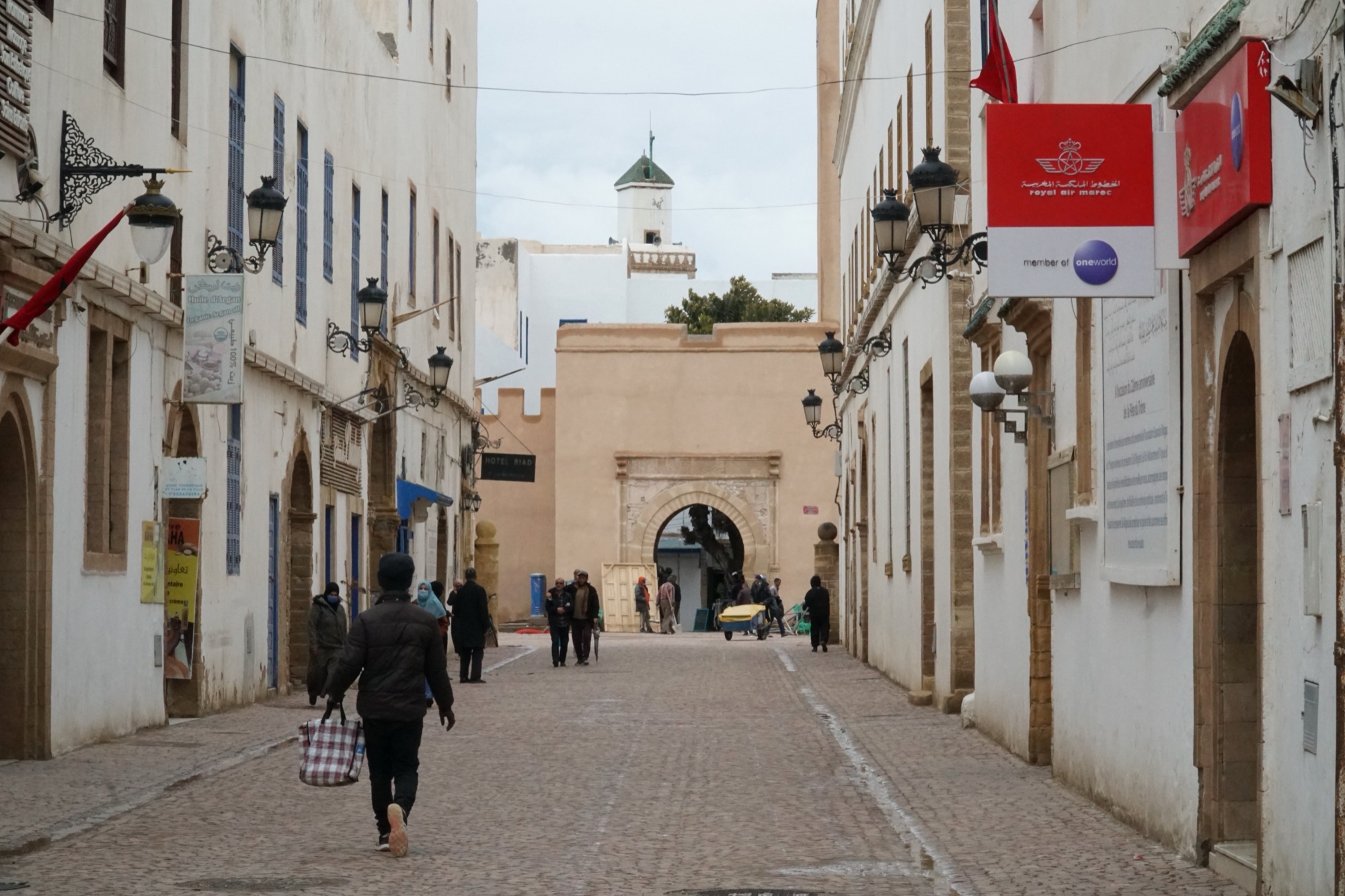
Spend the afternoon inside the walls with no list. Walk the main lane from Bab Marrakech to the port, climb onto the ramparts for the last hour of light (sunset is about 17:40 in mid-December), and eat fish. Expect wind: the Essaouira station records winds of 10 metres per second or more on about twelve days a month right through winter, which is why the town is a kitesurfing base and why you want a windproof layer rather than beachwear.
Day 5: port, ramparts and the bay
Be at the fishing port in the morning when the boats land and the gulls are loudest. The Skala du Port and the Skala de la Ville, the two gun platforms, are the most visible part of what UNESCO listed in 2001 as an exceptional example of a late-18th-century fortified town built on European military principles. After lunch walk the beach south along the bay as far as the wind lets you. This is a full day with no timing constraint, which is the point of giving Essaouira three nights instead of two.
Day 6: Sidi Kaouki, or a slow day in the walls
Sidi Kaouki is a long surf beach with a few cafes about 25 km south; a grand taxi from the rank outside the walls takes 30 to 40 minutes each way, and you agree the return with the driver before you go. Alternatively, an argan cooperative on the Marrakech road, or simply a second unhurried day in the medina. If you chose the Atlas swap in Marrakech, this is the day you gave up.
Day 7: back to Marrakech airport
The arithmetic is simple and worth stating. The Supratours 07:00 reaches Marrakech at 10:00; the 09:00 arrives at 12:00. From the railway station terminal the airport is about 7 km, a 20 to 30 minute taxi. That means the 07:00 bus supports flights from about 13:30 and the 09:00 bus supports flights from about 15:30, allowing two hours at the airport. Anything earlier needs a private transfer leaving Essaouira around 05:00 (the road is 184 km airport to medina, about 2 h 40 min without stops), or variant B below. If a direct flight home exists from Essaouira's own airport, 19 km from the medina, that is a better exit than the road.
The one transfer: what was verified
These are the operator timetables read on 17 September 2026 for the sample dates used to test this plan. Supratours sells about 90 days ahead; CTM about four weeks, so CTM's December departures could not yet be read and its daily pattern is shown from September and October dates.
| Leg | Operator | Departures | Journey | Fare from |
|---|---|---|---|---|
| Marrakech to Essaouira (Sat 5 Dec) | Supratours | 07:30, 09:00, 10:30, 12:00, 15:00, 17:00 | 3 h 00 | 100 MAD (09:00: 125 MAD) |
| Marrakech to Essaouira (daily pattern) | CTM | 08:30 | 3 h 00 | 105 MAD |
| Essaouira to Marrakech (Tue 8 and Wed 9 Dec) | Supratours | 07:00, 09:00, 11:00, 14:00, 15:30, 17:00 | 3 h 00 | 100 MAD (17:00: 125 MAD) |
| Essaouira to Marrakech (daily pattern) | CTM | 17:00 | 2 h 30 | 105 MAD |
Supratours leaves from the terminal next to the railway station and arrives at Bab Marrakech in Essaouira. CTM uses its own agencies: Boulevard Abou Bakr Seddik on the Gueliz side of Marrakech, and Place 11 Janvier in Essaouira, about 1.5 km from the medina. Book the day before in high season; the Supratours "Flex" fare, sold at the same displayed price on the dates checked, is exchangeable before departure and refundable until the day before travel.
Does an Atlas day trip fit without breaking the promise?
Only as a swap. Imlil, the village where the Toubkal trails start, is about 65 km from Marrakech, and a grand taxi or driver needs 1.5 to 2 hours each way on the mountain road, more if there is snow on the higher sections in winter. A day there is a full day. If you add it to the three Marrakech nights, Day 3 loses its Majorelle morning and its buffer afternoon, and the city gets one and a half days instead of two and a half. That is rushing.
The honest version is variant A: give Marrakech four nights and Essaouira two, take Imlil on Day 3, move the bus to the 15:00 on Day 4 or the morning of Day 5, and drop the Sidi Kaouki day. You keep the rule of one transfer day and you keep the buffer, but you lose a coastal day. Choose it if mountains matter more to you than a second slow day by the sea.
What this plan leaves out, and what it would cost to add
The Sahara. From Marrakech the Erg Chebbi dunes at Merzouga are about 550 km away, roughly ten hours of driving each way over the High Atlas. The standard shared tour takes three days: about seven hours of driving on day one to the Dades Valley, five hours on day two to the dunes, and ten hours back on day three, arriving in Marrakech around 18:00 to 19:00. That is two nights away and one full day of nothing but road. The shorter option, Zagora, is about 350 km and seven hours each way for one night among small dunes rather than the big ones. Inside a strict seven days, either replaces every Essaouira night. The Essaouira or the Sahara comparison lays out both trades in detail.
Fes. It is a different trip: the city is about 530 km from Marrakech by road, a full day's travel by train or car, and it deserves two nights of its own. Save it for a second visit or a ten-day route.
Autumn and winter notes
October and November are the sweet spot: Marrakech normals of 28 °C by day in October and 23 °C in November, Essaouira 20 to 22 °C, and sunsets around 18:00 in mid-October. From December to February the plan still works; the main changes are earlier sunsets (Morocco returns to permanent GMT from 20 September 2026, which puts the mid-December sunset in Marrakech at about 17:30), cold nights in unheated riads, and around four to five rain days a month on the coast. Ramadan is expected to begin about 8 February 2027 and run to about 9 or 10 March, subject to the moon sighting; daytime cafes and some restaurants close and evenings become livelier. The Morocco in winter guide covers the month-by-month trade-offs, including why the desert is a different proposition after dark in January.
| Month | Marrakech | Essaouira |
|---|---|---|
| October | 28.5 / 15.7 °C, 19 mm | 22.2 / 17.0 °C, 33 mm |
| November | 23.1 / 10.7 °C, 30 mm | 20.5 / 14.4 °C, 55 mm |
| December | 20.1 / 7.3 °C, 24 mm | 19.4 / 12.6 °C, 56 mm |
| January | 19.1 / 5.9 °C, 25 mm | 18.4 / 11.1 °C, 49 mm |
| February | 20.7 / 7.6 °C, 26 mm | 18.7 / 12.0 °C, 37 mm |
| March | 23.6 / 10.3 °C, 35 mm | 19.4 / 13.3 °C, 38 mm |
Booking and money
- Entry: EU, UK, Swiss, US and Canadian passports are on Morocco's visa-exemption list for tourist stays of up to 90 days; check the consulate list for your own passport before you book.
- Riads: book Marrakech first, then Essaouira; ask both about heating in winter and about the meeting point from the nearest gate.
- Majorelle: online timed tickets only, from the garden's own site; there is no ticket office sale.
- Buses: Supratours and CTM both sell online; Supratours opens about three months ahead, CTM about four weeks.
- Cash: dirhams for taxis, entry tickets and the souks. At the time of writing one euro bought about 10.9 dirhams.
- Flights: easyJet opened a three-aircraft base at Marrakech in April 2026 with 58 Morocco routes, and Ryanair's winter 2026 schedule lists 156 Morocco routes including Essaouira. That is a supply signal, not a promise about fares, but it means a direct winter flight from most large European cities is likely.
Three variants
Questions people ask about a week in Marrakech and Essaouira
Is seven days enough for Marrakech and Essaouira?
Which is the best order, Marrakech first or Essaouira first?
How do I get from Marrakech to Essaouira without a car?
Can I fit an Atlas day trip into this week?
Is Essaouira worth three nights in winter?
What time does the sun set in Marrakech in December?
How this plan was checked
Bus times and fares were read on the Supratours and CTM booking sites on 17 September 2026 for the December dates shown. Distances and driving times are routing-engine estimates on OpenStreetMap data without traffic. Climate figures are the WMO 1991–2020 standard normals published by NOAA from Moroccan meteorological service data. Sunset times are calculated for the stated dates on GMT. Tour shapes and transfer prices are operator listings on the same date. Nothing here is a first-hand account.
Photo credits
- Cover: Essaouira Citadel, Ahmed.magdy, CC BY-SA 4.0, via Wikimedia Commons, resized.
- Jemaa el-fnaa square with evening market, Forbes Johnston from Winchester, UK, CC BY 4.0, via Wikimedia Commons, resized.
- Bahia Palace large court, Val Traveler, CC BY-SA 4.0, via Wikimedia Commons, resized.
- Street and city gate in Essaouira, Adam Harangozó, CC BY-SA 4.0, via Wikimedia Commons, resized.