


On this route
November is the month most guides call the best time to visit Taiwan, and for the west coast south of Taichung that is simply true: Tainan averages two rain days in the whole month and Kaohsiung three, with daytime highs around 28 degrees. It is not true for Taipei, which averages 12 rain days and 96 hours of sunshine, or for the north coast around Keelung, which gets almost 400 mm on 19 days. The country is small enough that both climates fit in one trip, so the planning question is not whether to come in November but how to arrange the days so the rain falls where you have a rain plan.
The short answer: base the flexible, indoor-friendly days in Taipei, keep the north-coast excursion for the driest forecast day, and move south with confidence. Sun Moon Lake sits at altitude and needs a layer, Alishan needs a coat, the east coast and Taroko are a different trip this year, and daylight ends just after 17:00, so mornings are for the outdoors. What follows is the data behind that, base by base, and what changes if your dates slide into October or into winter.
November by the numbers
These are the Central Weather Administration's 1991 to 2020 climate normals, read from the CWA statistics pages in September 2026. Rain days count days with at least 0.1 mm.
| Station | Mean | High | Low | Rain | Rain days | Sunshine |
|---|---|---|---|---|---|---|
| Taipei | 21.9 C | 24.8 C | 19.7 C | 83 mm | 12.3 | 96 h |
| Keelung (north coast) | 21.5 C | 23.6 C | 19.6 C | 397 mm | 18.6 | 65 h |
| Yilan (north-east) | 21.1 C | 24.2 C | 18.7 C | 336 mm | 19.5 | 73 h |
| Taichung | 22.6 C | 27.6 C | 19.0 C | 24 mm | 4.1 | 174 h |
| Sun Moon Lake | 18.6 C | 23.6 C | 15.7 C | 38 mm | 5.3 | 160 h |
| Alishan | 10.7 C | 15.6 C | 7.4 C | 67 mm | 6.6 | 143 h |
| Tainan | 23.4 C | 28.1 C | 20.2 C | 24 mm | 2.4 | 170 h |
| Kaohsiung | 24.5 C | 28.1 C | 21.6 C | 26 mm | 2.8 | 167 h |
| Hualien (east) | 22.5 C | 25.8 C | 19.9 C | 175 mm | 12.4 | 93 h |
Two things stand out. First, the rain line runs roughly through Taichung: everything south of it is dry and sunny in November, everything on the northern and eastern coasts is not. Second, temperature is not the problem anywhere at sea level; the only cold you will meet is altitude, and the lake and Alishan are the two places most trips go up.
What the numbers mean for each base
Taipei: plan in rain-proof pairs
Twelve rain days in 30 means a two-in-five chance that any given day is wet, usually as drizzle or showers rather than a washout. The way to handle that is to pair each outdoor plan with an indoor one for the same part of town, and decide in the morning. Elephant Mountain pairs with the Taipei 101 Observatory (daily 10:00 to 21:00). Dihua Street and the Longshan Temple lanes pair with the covered markets around them. The National Palace Museum (Tuesday to Sunday 09:00 to 17:00, NT$350, with a special Monday opening on 9 November 2026) and the Beitou hot springs make a whole rain-proof day, so keep them in reserve rather than booking them for the first sunny morning. Night markets are covered enough to survive a shower and are the reason evenings do not need a plan B.
The north coast: Jiufen in drizzle, Yehliu in sun
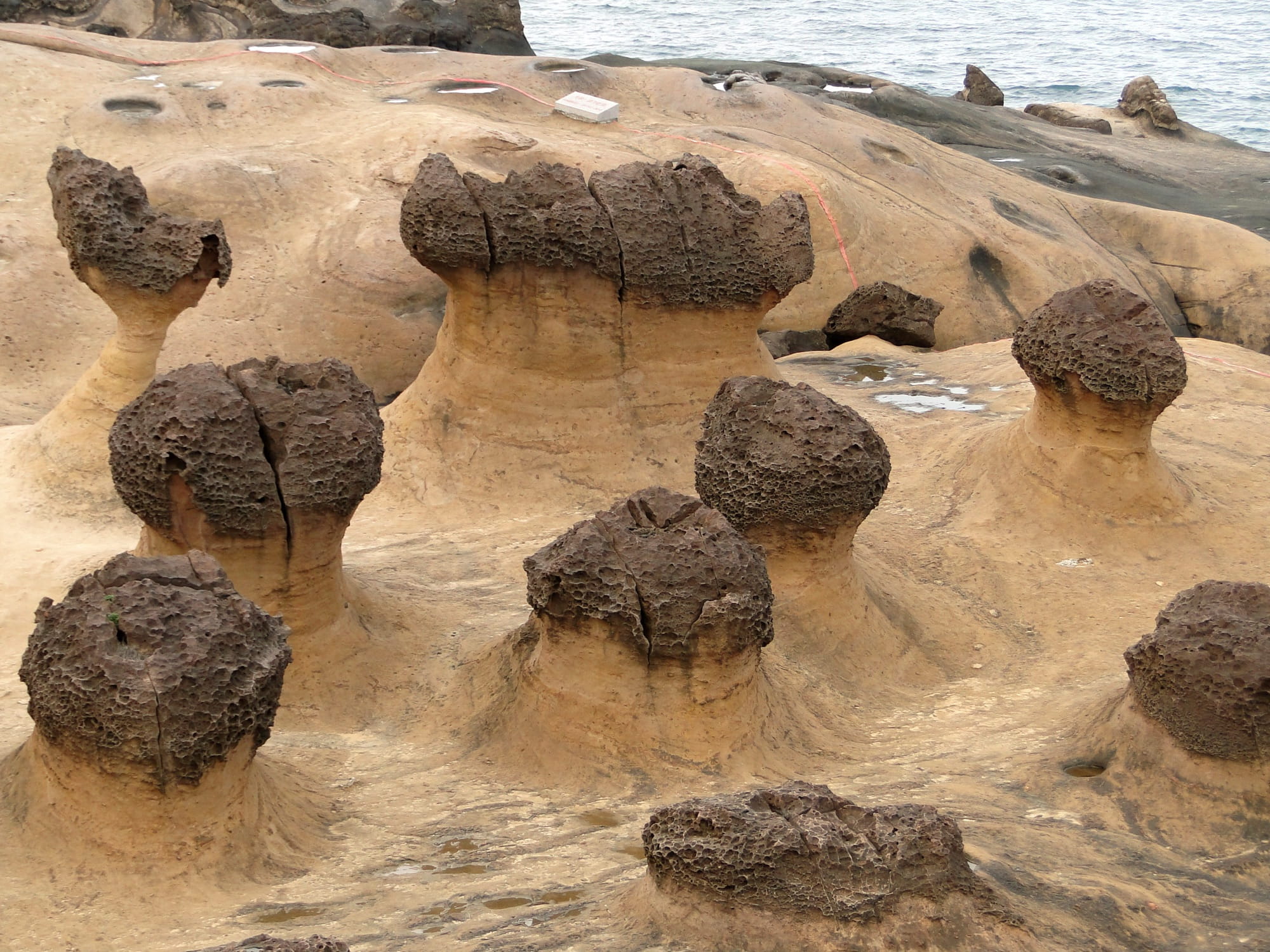
Jiufen's stepped lanes are roofed for much of their length, the tea houses are the point, and the lanterns come on at dusk whatever the sky is doing; it is the day trip that survives a wet forecast. Yehliu Geopark is a bare rock shelf on the open coast, open 08:00 to 17:00 for NT$120, and it is no fun in wind and rain. With Keelung averaging 18.6 rain days, the rule is simple: Jiufen is the default, Yehliu is the bonus for a dry morning, and if you get one, do Yehliu first and Jiufen after. Both are reached by bus from central Taipei (1062 to Jiufen from Zhongxiao Fuxing, Kuo-Kuang 1815 to Yehliu from Taipei Main Station), or by a local train to Ruifang and a short bus ride for Jiufen. The 10-day itinerary puts this day on Day 4 with a swap rule.
Taichung and Sun Moon Lake: dry, but pack a layer
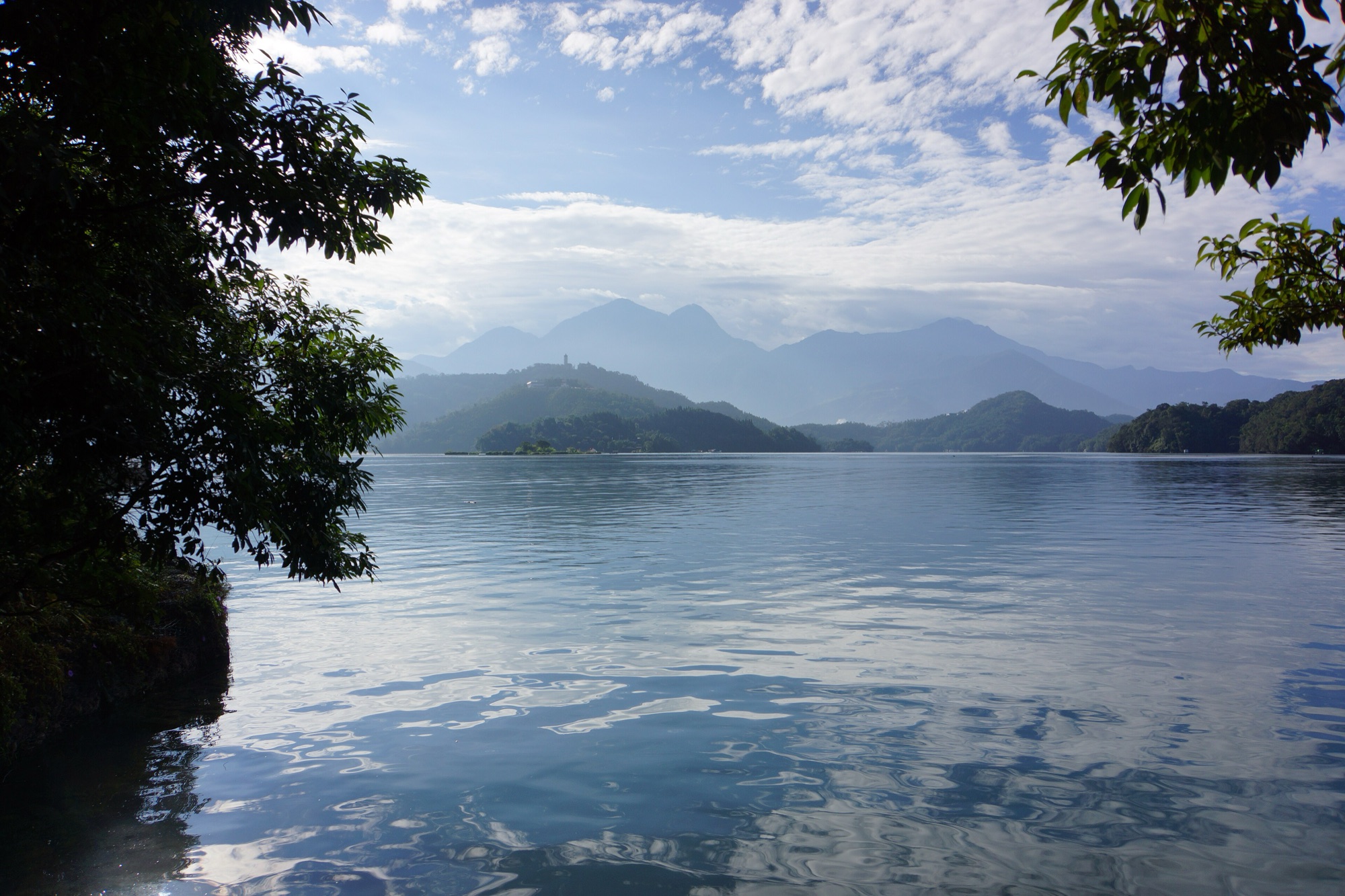
Taichung is the first city where November feels like the season the guides describe: four rain days, 174 hours of sun, highs near 28. Sun Moon Lake sits up in the hills and reads differently, with a mean of 18.6, nights around 15 and five rain days. It is the one place on the west-coast route where a fleece and a light shell earn their space. The tourist shuttle from Taichung takes about 1 hour 40 minutes and runs from 07:23 on weekdays, with the last bus back at 19:25, so a lake day is comfortable even with the early sunset.
Tainan and Kaohsiung: the safe end of the country
Two and three rain days respectively, 170 hours of sunshine, and highs of 28 with lows of 20 to 22. This is beach and temple weather, and it is why the southern half of a November trip needs no contingency at all. The only scheduling constraints in the south are opening days rather than weather: the Chimei Museum closes on Wednesdays, the Fo Guang Shan Buddha Museum on Tuesdays, and Tainan's night markets rotate through the week. If you are choosing between the two cities as a base, Tainan or Kaohsiung works through it by trip length and airport.
Typhoons, daylight and the calendar
Typhoon season is effectively over by November, but not quite. The CWA's warning records for the 35 seasons from 1991 to 2025 show 58 warned typhoons in August, 45 in September, 20 in October and seven in November, so a November warning arrives about once every five years. The two most recent were both in November: Usagi on 14 November 2024 and Fung-wong on 10 November 2025. The practical reading is that a late-October or early-November start carries a small risk of a lost day, and that the first days of the trip, in Taipei, are the right place to keep flexible; by late November the risk is very small.
Daylight is the constraint people forget. In Taipei the sun rises at about 06:09 and sets at about 17:06 in mid-November, and by the 30th it is 06:20 to 17:03; the south is a few minutes later at both ends. That means viewpoints, rock coasts and lake boats are morning and early-afternoon activities, and anything you want to see lit, from Jiufen's lanterns to Chihkan Tower, comes free with the early dusk. Fix your outdoor plans between 08:00 and 16:30 and the short days stop mattering.
Calendar checks worth doing before you fix dates: the National Palace Museum's Monday closures (with 26 October, 9 November and 7 December 2026 as exceptions), the Chimei Museum's Wednesday closure, the Buddha Museum's Tuesday closure, and the Sun Moon Lake shuttle's unusual split between a Monday-to-Thursday timetable and a Friday-to-Sunday one. None of these is a reason to avoid a day of the week, only to order the days correctly.
Which route shape fits November
The west-coast line, Taipei to Taichung to Tainan with the high-speed train, is the shape that turns the climate table into an advantage: you start where the rain plan is easy and end where no plan is needed, and every inter-city leg is under an hour on the fast train. The pillar itinerary is that line with exact nights and transfers. Reverse it if you land early and want the big city last, but keep the north-coast day next to the flexible Taipei days.
The east coast is a different proposition this year. Hualien averages 175 mm on 12 rain days in November, and Taroko Gorge remains only partly open after the April 2024 earthquake: the park's director said in March 2026 that the Shakadang, Swallow Grotto and Baiyang trails would not be repaired before 2031 and the Changchun Shrine trail not before 2029, with Buluowan and the Tunnel of Nine Turns due back later in 2026. The official trail-status page was under maintenance when we checked in September 2026, so if the gorge is on your list, confirm the current list of open trails on the park website before you commit two nights to it.
The mountains are the other November option, and the one that needs kit. Alishan averages 10.7 degrees with lows of 7.4 and 67 mm of rain, and the forest railway runs daily from Chiayi (10:00 up, arriving 14:56, NT$600 one way). It rewards a night for the sunrise, and it is an add-on to the west-coast line rather than a swap for the lake, because it costs a day each way.
If you shift the trip
October
Warmer by two to three degrees everywhere and wetter in the north: Taipei averages 150 mm in October against 83 in November, on a similar number of rain days, and the typhoon tail is real, with 20 warned storms in 35 Octobers. The south is already dry (Tainan 31 mm, 2.8 days). An October trip uses the same route with a slightly higher chance of losing a Taipei day to weather.
December to February
The winter pattern is a cooler, greyer Taipei and an unchanged south. Taipei averages 18.2 degrees in December and 16.4 in January with 89 to 91 mm on 12 to 14 rain days, which is drizzle weather for the hot springs and museums rather than the hills. Tainan averages 19.6 in December and 17.9 in January with 16 to 21 mm on three or four days, and Kaohsiung stays near 20 with almost no rain. The west-coast route still works; the changes are a warmer jacket for the north, an even stronger case for spending the extra night in the south, and a check of the Lunar New Year dates, when trains sell out and many family businesses close for several days. High-speed early-bird seats are still sold until five days ahead in winter, and booking opens 29 days before travel.
Entry and practical notes for November travellers
US, Canadian, British Citizen and all EU passports enter visa-free for up to 90 days, with a passport valid for six months (US passports need only cover the stay) and an onward ticket, according to the Bureau of Consular Affairs page updated in July 2026. Since 1 October 2025 the paper arrival card has been replaced by the free online Taiwan Arrival Card, which you submit within seven days before landing. The Bank of Taiwan quoted about NT$31.7 to the US dollar and NT$36.4 to the euro on 21 September 2026. For the trains themselves, from booking windows to the pass question, see Taiwan high-speed rail or conventional trains.
Frequently asked questions
Is November a good month to visit Taiwan?
How much does it rain in Taipei in November?
Are there typhoons in Taiwan in November?
Is Taroko Gorge open in November 2026?
What should I pack for Taiwan in November?
What time does it get dark in Taiwan in November?
Photo credits
Hero: Taipei 101 from Elephant Mountain, by Jirka Matousek, CC BY 2.0, via Wikimedia Commons. Yehliu mushroom rocks by Bernard Gagnon, CC BY-SA 3.0. Sun Moon Lake by lienyuan lee, CC BY 3.0. All via Wikimedia Commons, resized.